R ARIVANANTHAM
CHENNAI, MAR 3
In a defining leap for precision oncology in India, MGM Cancer Institute and MGM Healthcare Malar, Adyar have successfully administered Chimeric Antigen Receptor T-Cell Therapy (CAR-T Cell Therapy) — a pioneering next-generation, cell-based immunotherapy — saving the lives of two elderly patients battling aggressive blood cancers after conventional treatments had failed.
This landmark achievement reinforces Chennai’s growing stature as a global hub for advanced and affordable cancer care.
- Next-Gen Cell-Based Immunotherapy saves two elderly patients with aggressive blood cancers
- Precision Oncology at Its peak at MGM Cancer Institute and MGM Healthcare Malar
- Personalised, cost-optimised CAR-T protocols expand access to advanced therapy
- Chennai strengthens its global reputation in cutting-edge cancer innovation
When conventional therapy fails, innovation prevails
CAR-T Cell Therapy is a revolutionary form of personalised immunotherapy that involves re-engineering a patient’s own immune cells to identify and destroy cancer cells. Designed especially for relapsed or treatment-resistant cancers, it offers renewed hope where options are otherwise limited.
One of the beneficiaries, a 70-year-old man suffering from lymphoma for over eight months, faced additional cardiac complications that restricted full-dose chemotherapy. After a relapse left him with very few conventional alternatives, he underwent CAR-T therapy at MGM Healthcare Malar, Adyar — and responded successfully.
The second patient, a 62-year-old man diagnosed with refractory Diffuse Large B-Cell Lymphoma (DLBCL), had failed to respond to first-line chemotherapy and was considered to have a poor prognosis. He received CAR-T therapy at MGM Cancer Institute and has shown encouraging recovery.
Precision Oncology in action
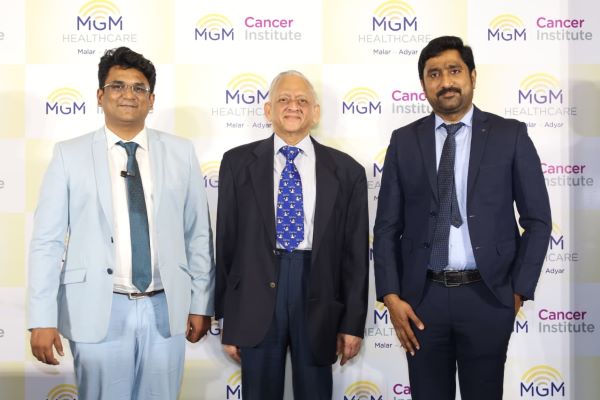
Addressing the media conference to announce the breakthrough, Dr. M.A Raja, Director and Senior Consultant, Medical Oncology, MGM Cancer Institute, said, “Precision oncology continues to create newer, biology-driven treatment pathways tailored to each individual. Even advanced-stage cancers need not mean the end of options. In our hospitals, the CAR-T program has been developed with a strong emphasis on customised care, patient safety, and financial responsibility. By using optimal insurance utilisation, and judicious avoidance of ICU admission wherever clinically appropriate, our team delivered this complex therapy in a cost-effective and sustainable manner, making it more accessible to patients.”
Dr. M. Gopinathan, Consultant, Hemato-Oncology (BMT), MGM Cancer Institute, explained, “This technology works by rebooting the patient’s own immune system. T cells are collected from the patient’s blood through a specialised process and sent to an advanced laboratory, where they are carefully reprogrammed to recognise and attack cancer cells. After thorough quality checks, the modified cells are returned to the hospital and infused back into the patient to fight the disease. This form of cellular therapy represents a major advancement in modern blood cancer treatment.”
He added that the transplant physician customises chemotherapy for each patient and ensures the primary disease is adequately controlled before CAR-T infusion. The process demands a well-equipped apheresis centre, a GMP-certified laboratory, seamless temperature-controlled logistics and a dedicated intensive care unit to deliver comprehensive care. “The research improvisations with CAR-T production and delivery are constantly evolving over time, to reduce side effects, and in future, expanded access to their use in autoimmune disorders is just a footstep away,” he noted.
Structured, Affordable Access to Advanced Care
Dr. Suman Kalyan. N, Senior Consultant – Medical Oncology and Director, CAR-T Program, MGM Healthcare Malar, Adyar, emphasised, “Every patient is different, and every cancer behaves differently. That is why precision oncology is the future of cancer care. With CAR-T and advanced molecular therapies, we can now personalise treatment even in complex and advanced cases.”
Harvard-certified in Precision Oncology, Dr. Suman Kalyan. N has led the development of India’s first structured, cost-effective CAR-T protocols, supported by insurance-backed pathways. “These protocols are designed not only for Indian patients, but also for international patients seeking high-quality, affordable cancer care – reinforcing Chennai’s long-standing reputation as the capital of global health tourism,” he added.
The success of the CAR-T programme underscores the strength of MGM’s fully integrated, in-house multidisciplinary team — uniting oncology, transfusion medicine, pharmacy, nursing and critical care expertise under one roof.
For patients facing advanced cancers, this breakthrough signals more than survival — it represents a future where science rewrites possibility.