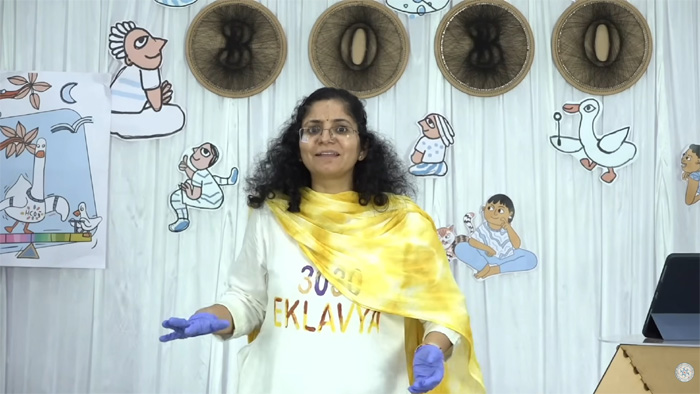
- New 3030 Eklavya season turns matchboxes, cards and puzzles into gateways to Computational Thinking, AI and STEM
- Eight Sunday sessions to make algorithms, machine learning, pattern recognition, AI bias and ethics intuitive through hands-on learning
- Free programme for teachers and students of Class VI and above begins August 15 at 4 pm; registration compulsory
- CBSE teachers can earn 3 CPD hours per certified episode—up to 24 hours across the eight-part series
- National STEM initiative gets fresh thrust as CBSE makes Computational Thinking and AI a key training theme for 2026–27
NE SCIENCE & TECHNOLOGY BUREAU
GANDHINAGAR, AUG 14
What if a matchbox could become a computer, a card game could explain an algorithm and a simple puzzle could unlock the logic behind artificial intelligence? What if the most powerful AI classroom did not begin with an expensive computer lab—but with the curiosity of a child?
That is the intriguing proposition behind the new season of 3030 Eklavya, as the Central Board of Secondary Education (CBSE) and the Centre for Creative Learning (CCL) at IIT Gandhinagar take computational thinking, artificial intelligence and STEM learning beyond screens and into the hands of students and teachers.
The eight-part online series begins Saturday, August 15, 2026, at 4 pm, and will use familiar objects and hands-on activities to demystify technologies that are increasingly shaping education, workplaces and everyday life.
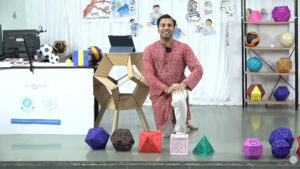
The initiative could not be more timely. CBSE has made “Computational Thinking (CT) and Understanding Artificial Intelligence (AI)” the training theme for 2026–27, while introducing a CT and AI curriculum for Classes 3–8. The Board says the approach is intended to develop logical and systematic problem-solving, pattern recognition and an understanding of the ethical use of AI.
The latest season also builds on a programme that has already demonstrated how powerful experiential learning can be. IIT Gandhinagar and CBSE signed an MoU in January 2026 to continue the nationally recognised 3030 STEM and 3030 Eklavya programmes for five more years, with the initiative having engaged more than 73,800 CBSE teachers and the Eklavya series crossing 1.3 million YouTube views, according to IITGN.
From a matchbox to machine learning
The opening episode, “Computational Thinking and AI with Matchboxes”, will demonstrate how an everyday matchbox can become a surprisingly effective teaching tool for fundamental ideas behind computing and AI.
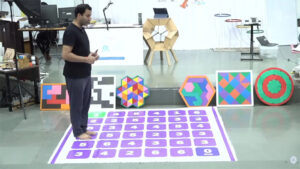
Through games, matchboxes, cards and puzzles, learners will explore algorithms, searching, pattern recognition, reinforcement learning, image recognition, AI bias and ethics.
The philosophy is simple but potentially transformative: make, play, test, observe and reflect.
Instead of asking students merely to memorise what an algorithm or machine learning means, the programme seeks to let them experience the underlying logic themselves—without requiring sophisticated equipment, costly software or specialised laboratories.
That philosophy is consistent with the larger 3030 approach. Earlier episodes have used ordinary objects and familiar phenomena to explain apparently difficult scientific concepts; IITGN has previously highlighted episodes that used calendars, dough and everyday observations to make mathematics, astronomy and computational thinking accessible.
Eight Sundays, one giant STEM playground
The new season will take learners on an interdisciplinary journey through eight live sessions, connecting computational thinking and AI with wider STEM themes.
The planned explorations include:
- Climate action through solar cookers and natural water purification
- Mathematical patterns in sunflowers and tiling
- Electrochemistry and hydrogen
- String art and weaving
- Biodiversity
- DIY computers and logic gates
- Cameras, microscopes and optics
The objective extends beyond learning scientific facts. Students will be encouraged to build models, solve puzzles, conduct experiments and investigate phenomena using materials readily available at home or school.
That makes the programme particularly relevant to schools seeking to strengthen hands-on, inquiry-based and interdisciplinary STEM education.
CBSE’s broader STEM strategy also emphasises experiential learning, advanced pedagogical approaches, coding, robotics, design thinking, mathematics, science projects and 21st-century skills.
Teachers are learners too
The programme is open to teachers and students of Class VI and above, with registration free but compulsory.
The live sessions will be held every Sunday from 4–5 pm, beginning August 15. The sessions will be conducted in Hindi, with English subtitles available after publication.
For teachers, the programme offers an additional professional-development opportunity. CBSE-affiliated schoolteachers who complete the required certification will receive three Continuing Professional Development (CPD) hours per certified episode—up to 24 CPD hours for all eight episodes.
Participants can also undertake assignments and projects and pursue certification.
The programme’s contact point is eklavya@iitgn.ac.in, while registration is available through eklavya.iitgandhinagar.ac.in.
A national experiment in making AI less intimidating
The significance of 3030 Eklavya goes beyond another online educational series.
India is entering an era in which AI literacy is rapidly becoming as important as traditional digital literacy. Yet introducing AI to young learners raises an equally important question: Should children merely learn how to use AI—or should they understand how computational systems think, where they can fail and why ethics matters?
CBSE’s new CT-and-AI framework explicitly places AI, computational thinking, ethics and unplugged learning together, with the broader aim of creating AI-literate learners.
That is where the 3030 Eklavya model could make a distinctive contribution: putting the thinking before the technology.
A child who learns an algorithm using matchboxes may eventually write code. A student who understands patterns through a puzzle may later understand machine learning. And a learner who debates AI bias before becoming dependent on AI tools may grow into a more responsible technology user.
In that sense, the programme’s most important lesson may not be about artificial intelligence at all.
It may be about human curiosity.
PROGRAMME AT A GLANCE
| Programme | 3030 Eklavya: Computational Thinking, AI and STEM |
| Organisers | CBSE in collaboration with CCL, IIT Gandhinagar |
| First episode | August 15, 2026, at 4 pm |
| Thereafter | Every Sunday, 4–5 pm |
| Audience | Teachers and students of Class VI and above |
| Registration | Free and compulsory |
| CPD recognition | 3 hours per certified episode; 24 hours across eight episodes |
| Queries | eklavya@iitgn.ac.in |