NE NATIONAL INTEGRATION BUREAU
GUWAHATI, AUG 18
What happens when journalists step away from the newsroom and walk into a research laboratory, a maritime university, an aquaculture centre, a traditional knowledge community and a centuries-old monument? The answer is a different kind of journalism—one rooted not merely in what is reported, but in what is seen, questioned, understood and experienced first-hand.
- PIB Guwahati media tour takes 11 senior journalists from headlines to laboratories, classrooms, communities and heritage sites
- Maritime education, cutting-edge research, aquaculture and traditional ecological knowledge on the learning trail
- Mahabalipuram’s architectural legacy and Mahindra Research Park add culture and industry to the journalistic journey
- From CSIR laboratories to an Irula community cooperative, editors to encounter stories that rarely make the front page
- First-hand exposure aims to strengthen informed, responsible reporting and deepen Assam-Tamil Nadu connect
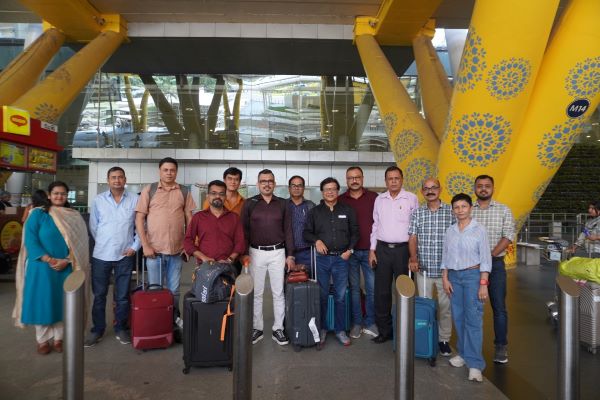
Seeking to create precisely such a knowledge bridge, the Press Information Bureau (PIB), Guwahati, has organised a five-day media tour to Tamil Nadu from August 18 to 22, 2026, bringing together 11 editors and senior media representatives from Assam for an immersive journey across the southern State’s research, development, industrial, cultural and community landscape.
From headlines to the heart of maritime India
The delegation comprises senior media representatives from Niyomiya Barta, Dainik Asom, Dainik Agradoot, Purvanchal Prahari, Dainik Gana Adhikar, Prag News, Northeast Live, News18 Assam, ND24, Assam Talks and DY365.
The delegation is being led by Pavni Gupta, IIS, Joint Director, PIB Guwahati.
The tour opens with a visit to the Indian Maritime University (IMU), where the journalists will attend a briefing and interact with officials to understand the institution’s role in maritime education and the development of India’s maritime capabilities.
For journalists from a geographically distant region such as Assam, such exposure can offer a wider perspective on how India’s coastal and maritime institutions contribute to the country’s larger economic and strategic ambitions.
Inside the laboratories where India builds tomorrow
On August 19, the delegation will visit the CSIR–Structural Engineering Research Centre, gaining first-hand exposure to research and technological developments in structural engineering.
The visit is designed to take journalism beyond statistics and official announcements, allowing media professionals to understand the research process, technological innovation and the practical applications of scientific work.
The delegation will subsequently visit ICAR–Central Institute of Brackishwater Aquaculture (ICAR-CIBA), Muttukadu, where researchers will brief them on developments and innovations in brackishwater aquaculture.
Such interactions can help journalists connect the dots between scientific research, livelihoods, food security, technology and local economic development—subjects that directly affect communities but can often remain hidden behind technical terminology.
A lesson in traditional knowledge from the Irula community
Perhaps one of the most distinctive stops on the itinerary will be the Irula Snake Catchers’ Co-operative Society.
The journalists will interact with members of the community to understand their traditional knowledge, livelihood and role in snake conservation and management.
For the visiting media professionals, the interaction offers an opportunity to explore a less familiar dimension of Indian knowledge systems—the meeting point between traditional ecological expertise, community livelihood and conservation.
It also reinforces an important journalistic principle: meaningful development stories often begin when reporters listen directly to the communities at the centre of them.
From Mahindra’s research ecosystem to Mahabalipuram’s timeless stones
On August 21, the delegation will visit Mahindra Research Park for an institutional briefing and interaction, exposing the journalists to another facet of Tamil Nadu’s innovation and industrial ecosystem.
The itinerary will then shift from cutting-edge research to centuries-old heritage, with visits to the Mahabalipuram Shore Temple and Mahabalipuram Lighthouse.
The Shore Temple, a celebrated symbol of Pallava-era architecture, will offer the delegation an opportunity to explore Tamil Nadu’s rich cultural and architectural heritage, while the lighthouse will provide another perspective on the region’s long maritime connection.
Journalism as a bridge between regions
The media tour is part of PIB Guwahati’s continuing efforts to promote regional awareness and national integration by enabling journalists to witness, document and disseminate development stories from different parts of India.
The underlying idea is both simple and consequential: when journalists travel beyond their familiar geography, they expand the geography of public understanding.
By bringing Assam’s media professionals into direct contact with institutions, scientists, researchers, entrepreneurs, community practitioners and heritage sites in Tamil Nadu, the initiative seeks to encourage more informed and responsible coverage of India’s development journey.
The five-day tour, therefore, is not merely a familiarisation visit. It is a knowledge quest for journalists—an opportunity to replace second-hand information with first-hand understanding and turn unfamiliar stories into informed narratives for readers and viewers back home.