
- Hindi, Urdu editions of acclaimed ‘Earthquake-safe Buildings’ guide put life-saving construction wisdom within public reach
- 25 illustrated articles demystify why buildings collapse—and how safer choices can prevent avoidable loss
- IITGN initiative targets homeowners, builders and stakeholders beyond the engineering fraternity
- Hindi edition adds India’s seismic zones, historical earthquakes and locally relevant examples
- Urdu translation bridges a critical scientific-information gap without compromising technical accuracy
NE SCIENCE & TECHNOLOGY BUREAU
GANDHINAGAR, SEPT 9
Earthquakes may be beyond human control; unsafe buildings are not. Every tremor exposes the same uncomfortable truth: the scale of death and destruction is often determined not only by the force of nature, but by decisions made months or years before the ground begins to shake. Taking earthquake-safety knowledge beyond engineering classrooms and into homes, construction sites and communities, IIT Gandhinagar (IITGN) faculty members have translated an internationally acclaimed guide on safer buildings into Hindi and Urdu.

Prof Manish Kumar and Prof Mohd. Mubashshir Ahsan translated ‘Earthquake-safe Buildings’, originally authored by Andrew Charleson and published by the World Housing Encyclopedia (WHE), into Hindi and Urdu respectively. The initiative seeks to ensure that critical knowledge about earthquake-resistant construction is not confined to specialists but reaches homeowners, builders, contractors, architects, engineers, students, policymakers and others who make or influence decisions about buildings.
From earthquake science to everyday decisions
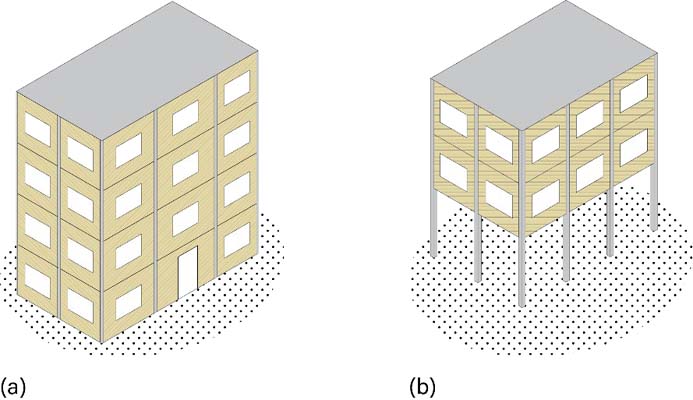
The publication comprises 25 concise, illustrated articles explaining in simple language how earthquakes affect buildings and why some structures withstand shaking while others collapse. It covers earthquake-resistant structural systems, strong foundations, retrofitting, common construction mistakes and the role of building regulations.
Its underlying message is simple but powerful: safer buildings begin with better decisions long before an earthquake strikes.
“Earthquake safety is not something only engineers need to understand. Many of the decisions that determine how a house performs are made long before construction begins,” said Prof Manish Kumar, Dean of Student Affairs, Associate Professor in IITGN’s Department of Civil Engineering, and Co-chair of the World Housing Encyclopaedia Executive Committee.
“If homeowners and builders understand a few basic principles, such as keeping building layouts simple and regular, avoiding changes that can weaken the structure, using appropriate materials, and paying attention to construction quality, they can make much safer choices without necessarily spending much more. Making this knowledge available in languages people are comfortable with is an important part of that effort.”
India’s seismic vulnerability makes knowledge critical
The initiative assumes added significance in India, where large parts of the country—including the Himalayan region, Northeast and several areas of northern and western India—face varying degrees of seismic risk.
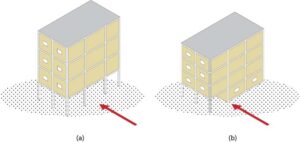
In many regions, limited access to qualified structural engineers can compound vulnerabilities arising from gaps in design compliance, construction practices, material quality control and enforcement. The translations therefore seek to turn scientific understanding into practical awareness for people who may be directly involved in building or buying homes.
The Hindi edition has also been contextualised for India, rather than being a purely literal translation. Its opening chapter introduces readers to India’s seismic zones, historical earthquakes and locally relevant examples while retaining the educational purpose of the original publication.
Urdu translation opens another scientific window
For Prof Ahsan, the challenge extended beyond translating technical terminology. The objective was to make earthquake science readable in natural Urdu without diluting its accuracy.
“My biggest challenge was to balance simplicity with scientific accuracy. At the same time, I wanted to use simple, natural Urdu without compromising the technical meaning of the original text. Since there is very little scientific material on earthquakes available in Urdu, I hope this translation helps make essential earthquake-safety knowledge accessible to readers who may otherwise be excluded because such information is not available in a language they are comfortable reading,” said Prof Mohd. Mubashshir Ahsan, Lecturer in IITGN’s Department of Humanities and Social Sciences.
The effort consequently becomes more than a language exercise: it is an attempt to close an information inequality that can itself translate into physical vulnerability.
Illustrations turn structural engineering into common knowledge
The guide uses diagrams, photographs and everyday examples to explain technical concepts without assuming an engineering background. Readers are introduced to why buildings fail during earthquakes, how structural systems respond to seismic forces, what makes foundations safer, when existing buildings may need retrofitting and how seemingly ordinary construction decisions can influence structural performance.
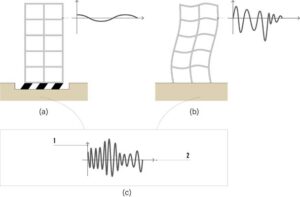
The approach is particularly relevant to homeowners, who often make crucial choices about building layout, materials and construction quality without possessing specialist structural knowledge.
Knowledge as the first layer of resilience
The translation project builds on IITGN’s wider work in earthquake engineering, including research on earthquake-resistant construction, seismic risk, masonry structures and technologies such as seismic isolation.
By making the WHE resource available in two widely used Indian languages, IITGN is seeking to strengthen the human side of disaster resilience: informed homeowners, better-aware builders and communities capable of asking the right questions before construction begins.
The larger lesson is unmistakable—when earthquakes cannot be prevented, knowledge can help prevent an earthquake from becoming a building catastrophe.