NE BUSINESS BUREAU
NEW DELHI, SEPT 14
India Post is no longer just about letters and parcels—it is increasingly becoming a last-mile bridge between the Government and citizens, with postal employee organisations hailing what they described as the Government’s effort to “reinvent” the country’s postal network into a modern, citizen-centric service system.
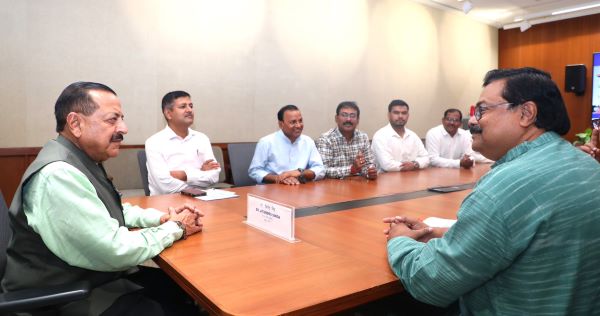
A delegation of All India Postal Employee Organisations called on at #DoPT headquarters, Kartavya Bhavan.
The members of the delegation hailed the Government for 'reinventing' India Post and thanked PM Sh @NarendraModi for turning it into a modern, citizen-centric service… pic.twitter.com/9fKigmCHwc
— Dr Jitendra Singh (@DrJitendraSingh) September 14, 2026
Representatives of All India employee organisations of the Department of Posts conveyed their appreciation to Prime Minister Narendra Modi for the transformation during an interaction with Dr Jitendra Singh, Union Minister of State (Independent Charge) for Science & Technology and Earth Sciences and MoS PMO, Personnel, Public Grievances and Pensions, Atomic Energy and Space, at Kartavya Bhawan, New Delhi, on Monday.
- Dr Jitendra Singh highlights postman’s evolving role in taking banking and essential services to citizens
- India Post Payments Bank and doorstep banking deepen financial access across villages and households
- Aadhaar, PAN, Passport Seva and Digital Life Certificates expand the postal network’s public-service footprint
- Delegation also places employee, pension and long-pending service issues before Union Minister
The delegation discussed the transformation of postal services as well as issues concerning employees, employee organisations and pensioners.
The representatives highlighted how the role of India Post has expanded well beyond traditional mail delivery, with faster delivery services, Aadhaar-related facilities, PAN and Passport Seva services, doorstep banking and digital pension services bringing an expanding basket of citizen services closer to people across the country.
Postman becomes a government-service bridge
Dr Jitendra Singh said the transformation of India Post is particularly visible in the changing role of the postman, who is increasingly taking banking and other essential services directly to citizens.
The postal network, he said, has evolved from a traditional letter-delivery system into a broader platform for financial and citizen services, with its enormous geographical footprint providing an important last-mile connection between government services and the people.
The expansion of India Post Payments Bank and doorstep banking has enabled financial services to reach villages and households, allowing citizens to access banking facilities closer to home.
The network has also expanded services such as Digital Life Certificates for pensioners, making pension-related formalities more accessible and convenient.
COVID experience underlines network’s strategic value
The Minister recalled the critical role played by postal employees during the COVID-19 pandemic, when the nationwide postal network continued functioning despite the lockdown.
Postal personnel helped deliver banking services and cash to citizens at their homes, while postal vehicles and infrastructure were also used for the movement of essential medical and protective supplies.
Dr Jitendra Singh said the Department of Posts’ vast nationwide network remains a valuable public-service asset that can be utilised more extensively for government programmes, citizen outreach and last-mile delivery.
The delegation expressed its willingness to contribute to initiatives aimed at leveraging the postal network further for public-service delivery and government programmes.
Employees flag service and pension concerns
Alongside the transformation of India Post, the delegation placed before the Minister a range of service-related and organisational matters affecting postal employees.
These included issues concerning verification and recognition of employee organisations, representation in departmental forums, pensioners and certain long-pending service matters.
The representatives also raised matters concerning certain categories of employees and service benefits.
Dr Jitendra Singh said issues requiring examination would be considered through the appropriate administrative process, taking into account the applicable rules and legal and financial implications.
The interaction also focused on the need to further strengthen citizen-centric service delivery through the postal network and make effective use of its unparalleled nationwide reach in support of government initiatives.
The delegation thanked Dr Jitendra Singh for the interaction and for providing an opportunity to place its service-related concerns before the Government.