NE LEGAL BUREAU
CHENNAI, SEPT 16
What began with allegations that private schools were being promised government approvals in return for money has now moved into the homes and premises linked to a former School Education Minister—raising a central investigative question: what do the documentary, financial and digital trails reveal about the network behind the alleged approval racket?
- CCB’s Economic Documents Fraud-III wing searches six premises across Chennai and Tiruchy in private-school approval case
- Four properties linked to former School Education Minister Anbil Mahesh; two associated with aide Valadi Karthik
- Approval files, government representations, financial records, phones, computers and hard drives seized for examination
- Probe now spans 177 private schools; more than 250 persons, including School Education Department officials, questioned
- Anbil Mahesh summoned for September 18; says he fully cooperated and alleges political motivation behind searches
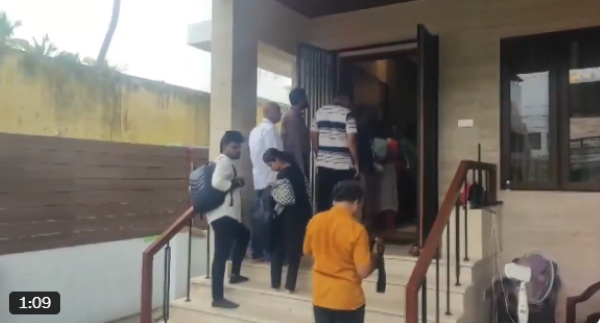
The Chennai Central Crime Branch (CCB) on Wednesday conducted simultaneous searches at six premises in Chennai and Tiruchirappalli linked to former School Education Minister Anbil Mahesh Poyyamozhi and his aide Valadi Karthik, as part of its investigation into an alleged private-school approval fraud involving more than ₹100 crore.
According to police-linked reports, four of the properties were connected to Anbil Mahesh and two to Valadi Karthik. The searches covered residences and other premises connected with the former minister and his associate.
What did the CCB seize?
The latest searches yielded a range of documentary and electronic material that investigators are examining for possible links to the alleged transactions.
Among the material seized were:
- Files relating to private-school approvals
- Petitions and representations submitted to government offices
- Financial records and documents
- Mobile phones
- Computers
- Hard drives and other electronic material
The CCB is examining the material alongside government records, statements and financial transactions to establish the role, if any, of individuals connected with the case.
The searches therefore appear to have shifted the focus from the alleged collection of money by intermediaries to the documentary and digital trail of how government approvals were allegedly facilitated or promised.
177 schools, 250-plus persons under scrutiny
The investigation originated from complaints concerning private-school managements that allegedly paid money after being promised assistance in securing government permissions.
Police have so far examined complaints involving 177 private schools and questioned more than 250 persons, including officials of the School Education Department, according to reports.
The case was widened after the CCB arrested B.T. Arasakumar, 59, of Saligramam, on June 27. Police allege that he collected more than ₹100 crore from school managements by claiming that he could secure government approvals, including permanent recognition, upgradation and other statutory clearances.
The investigation has also involved financial tracing. Police have reportedly frozen or examined bank accounts linked to Arasakumar and his associates, including 20 accounts associated with Arasakumar and his family and 29 accounts linked to another accused, Muthukumar.
Why has the investigation reached the former minister?
Anbil Mahesh headed the School Education Department during the period under investigation. Police have said that statements, departmental records, financial transactions and electronic evidence led investigators to examine his possible role.
A case has been registered against him under provisions of the Prevention of Corruption Act, according to police-linked reports.
The significance of Wednesday’s searches, however, needs to be separated from any conclusion about culpability. A search is an investigative step; the seized material has to be examined and the allegations established through the legal process. The Indian Express, in its analysis of the development, similarly noted that the investigation remains at the stage of allegations, complaints and police inquiry, and that the evidence recovered will determine what can ultimately be established about individual roles.
Anbil Mahesh: ‘I fully cooperated’
Reacting to the searches, Anbil Mahesh said more than 20 CCB personnel from Chennai reached his Tiruchirappalli residence at around 7.40 am and searched the premises for over eight hours, completing the exercise around 3.40 pm.
He said he cooperated with the officers and allowed them to search the rooms and drawers.
The former minister also said he had been asked to appear before the CCB on September 18 to answer questions and stated that he would cooperate with the inquiry.
At the same time, Mahesh alleged that the searches were politically motivated and linked them to his recent criticism of the government. He cited his public comments on the proposed ₹1,200-crore expenditure on a new Secretariat and his campaigning for the Opposition in the Dharapuram bypoll.
He also appealed for a fair investigation, urging that suspects and witnesses should not be pressured to identify any predetermined political target.
The larger legal question
The case now has several investigative strands running simultaneously—complaints from private schools, alleged collection of money, government-approval claims, financial transactions, departmental records and digital evidence.
For investigators, the crucial task will be to establish whether the material seized from the six premises provides a documentary or financial link between the alleged money collection and any government-level intervention.
For the accused and those whose premises were searched, the legal position remains that allegations must ultimately be tested against evidence and due process.
As the CCB prepares to question Anbil Mahesh on September 18, the investigation has entered a more consequential phase: the question is no longer merely who allegedly collected money from schools, but what the paper trail, bank trail and digital trail can actually establish.