
- 1,000+ delegates, 11 committees: Three-day simulation brings governance, diplomacy, business, law and journalism alive
- Beyond textbooks: Students sharpen critical thinking, negotiation, communication and decision-making through real-world challenges
- BrainBot meets Spotlight: Artificial intelligence, prompt engineering and creative expression add new dimensions to experiential learning
- ₹3.5-lakh prize pool: Competition and collaboration combine to help young minds discover their strengths and leadership potential
- Sudhir Nanavati’s leadership: Executive Director Chandni Kapadia helps advance a learning environment centred on innovation and holistic development
NE EDUTAINMENT BUREAU
AHMEDABAD, OCT 11
What if the best way to learn Parliament were to enter one, understand diplomacy by negotiating across international divides, explore business by making boardroom decisions and discover journalism by reporting under pressure? At GLS IGNITOR MUN 5.0, students did not merely study the world as it is—they stepped into its institutions, confronted its challenges and experienced the power of learning by doing.
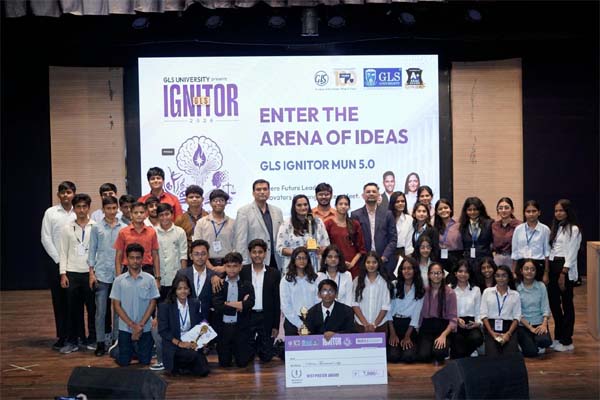
GLS University hosted the fifth edition of GLS IGNITOR MUN 5.0 from September 25 to 27, 2026, bringing together more than 1,000 young delegates across 11 committees for an immersive three-day exploration of learning, innovation and leadership.
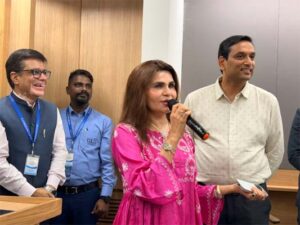
Under the leadership of GLS University President Sudhir Nanavati, the event sought to create opportunities for students to engage with ideas, test their abilities and explore possibilities beyond conventional classroom education. Executive Director Chandni Kapadia played a key role in fostering an environment that encourages experiential learning, innovation and the holistic development of young minds.
Eleven committees, one expansive learning laboratory
Moving beyond the conventional Model United Nations format, IGNITOR MUN 5.0 recreated a spectrum of real-world institutions and professional settings. Its 11 committees comprised Lok Sabha, Gujarat Legislative Assembly, All India Political Parties Meet (AIPPM), United Nations General Assembly Disarmament and International Security Committee (UNGA DISEC), United Nations Human Rights Council (UNHRC), Dalal Street, Young CEO, International Press, Open Design Dimension, The Courtroom and the Economic and Social Council (ECOSOC).
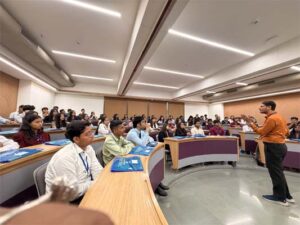
Each committee presented a distinct arena for inquiry, argument, negotiation and decision-making. Participants explored governance and international relations, grappled with business and economic scenarios, examined legal perspectives and experienced the responsibilities of the media.
The format encouraged delegates to move beyond prepared speeches and textbook answers. They had to think on their feet, assess competing viewpoints, communicate persuasively and work collaboratively—skills that matter as much in professional life as they do in academic pursuits.
BrainBot and Spotlight: Where technology meets creativity
A defining feature of IGNITOR MUN 5.0 was its effort to broaden the learning experience through two specially curated workshops, BrainBot and Spotlight.
BrainBot, centred on artificial intelligence and prompt engineering, introduced participants to emerging technologies and their potential applications in creativity, problem-solving and innovation. The workshop encouraged students to explore how AI tools can support new ways of thinking while engaging with a technological landscape that is rapidly reshaping education and work.
Spotlight, meanwhile, offered a creative and performance-oriented space for self-expression. It encouraged participants to build confidence, strengthen communication and discover the value of collaboration while stepping beyond their comfort zones.
Together, the workshops underscored a larger educational principle: learning need not be confined to lectures, examinations or conventional academic exercises. Debate, technology, creative expression and practical simulations can all help students develop a more rounded understanding of themselves and the world around them.
Preparing students for a world beyond examinations
The event’s broader message was that academic knowledge, while indispensable, is only one part of preparedness for the future. The ability to question assumptions, evaluate evidence, listen to opposing viewpoints, adapt to changing circumstances and make informed decisions is increasingly important in a complex and interconnected world.
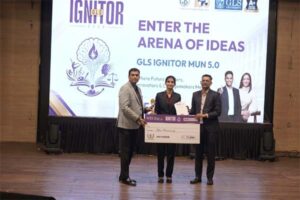
By bringing together 11 committees, immersive workshops and a prize pool of ₹3.5 lakh, IGNITOR MUN 5.0 combined healthy competition with opportunities for discovery, collaboration and personal growth. The experience gave students a platform to identify their strengths, test new interests and explore pathways beyond conventional academic choices.
The successful culmination of the five-day-in-spirit, three-day event reinforces the importance of creating educational spaces where students can experiment with ideas, learn from differing perspectives and develop the confidence to take on new responsibilities.
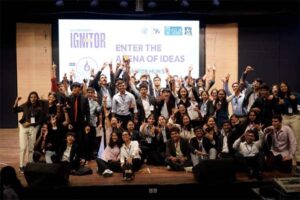
At its core, IGNITOR MUN 5.0 posed a question that every modern educational institution must confront: are students merely being prepared to answer examination questions, or are they being equipped to ask the right questions, solve unfamiliar problems and lead with responsibility?
By turning classrooms into laboratories of governance, diplomacy, business, law, journalism, technology and creativity, GLS University offered its young delegates an opportunity to experience learning as an active process—and to look beyond textbooks towards the challenges and possibilities of the real world.