
NE RAILWAY BUREAU
CHENNAI, NOV 5
Some landmarks are built of brick and stone; others are built on memories, milestones and movements that change the course of a nation. Royapuram Railway Station in Chennai belongs to the latter league. As the historic landmark celebrated Station Mahotsav, the Chennai Division of Southern Railway transformed its heritage premises into a living chronicle of India’s railway journey, bringing together a special steam locomotive run, vintage railway treasures, cultural performances and a celebration of 170 years of rail connectivity in South India.
- 170-year-old railway landmark celebrates Station Mahotsav with a heritage locomotive run, vintage artefacts and a nostalgic journey through South India’s rail legacy
- Historic Royapuram station, inaugurated on June 28, 1856, celebrates its place as South India’s first railway station
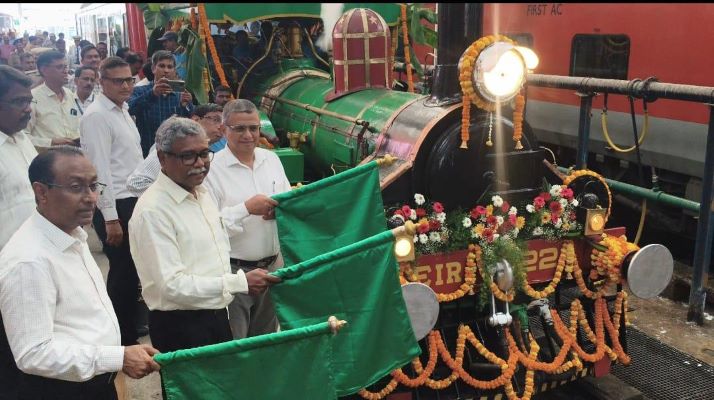
- Heritage steam locomotive EIR-22 makes a special journey from Chennai Egmore to Royapuram, recreating a glorious chapter of railway history
- Guinness-recognised EIR-22, built in England in 1855, remains among the world’s oldest working steam locomotives
- Rare railway memorabilia, including century-old signalling equipment, ticketing machines, lamps and historic station furniture, draws attention
- Cultural performances, heritage exhibitions and enthusiastic participation bring railway history closer to passengers and younger generations
A station that made history
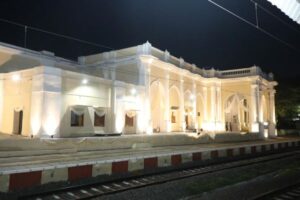
Inaugurated on June 28, 1856, Royapuram holds a distinguished place in Indian railway history as the first railway station in South India. The first passenger train from the station commenced its journey on July 1, 1856, connecting Royapuram with Walajah Road, in present-day Ranipet district.
With a legacy spanning 170 years, the station’s distinctive colonial-era architecture remains a striking reminder of the pioneering phase of railway transportation in the southern part of the country. Its historic building is not merely an architectural landmark but a tangible testimony to the transformative role of railways in connecting communities, facilitating commerce and shaping regional development.
EIR-22: A steam-powered journey into history
One of the major attractions of the celebrations was a special heritage run of EIR-22, which was flagged off from Chennai Egmore by U. Subba Rao, General Manager, Southern Railway, in the presence of Vipin Kumar, Additional General Manager, Shailendra Singh, Divisional Railway Manager, Chennai Division, Principal Heads of Departments and senior railway officials.
The special locomotive operated between Chennai Egmore and Royapuram, with the General Manager and other officials travelling aboard the heritage train before alighting at the historic station to participate in the festivities.
Built in 1855 by Kitson, Thompson and Hewitson in England for the East Indian Railway Company, EIR-22 is among the world’s oldest working steam locomotives. It remained in service from 1855 to 1909, completing 54 years of operations across eastern India before being placed on static display.
The locomotive was subsequently resurrected in 1997 by the Perambur Loco Works, whose painstaking restoration brought the dormant engine back to mainline steam readiness. In 1998, it earned Guinness recognition as the world’s oldest working steam engine in commercial service.
A treasure trove of forgotten railway heritage
The Station Mahotsav celebrations offered visitors an opportunity to explore an extraordinary collection of railway memorabilia housed within the heritage building.
A photographic exhibition traced Royapuram’s historical evolution, from its origins and architectural features to its contribution to the expansion of railway transportation in South India. Subba Rao and other senior officials visited the exhibition and viewed photographs documenting the station’s remarkable journey.
Among the exhibits that caught visitors’ attention were an old weighing bridge, the Station Master’s table and historic stone architectural features.
The vintage collection was particularly fascinating, featuring punched cards associated with the Jacquard loom, an Edmondson ticket machine once used for printing and issuing railway tickets, a vintage concrete bench, a century-old signboard and a cast-iron E-type key used in level crossings and station levers.
The display also brought alive the operational ingenuity of an earlier railway era through leather coin pouches once used for ticket and fare collections, along with more than a century-old lighting equipment. These included marker lamps, hand-signal lamps, flush-mount gas lamps, a vintage point lamp and a heavy-duty carriage lantern.
Together, these objects offered a rare glimpse into the everyday working systems, technologies and practices that once kept the railway network moving.
Culture, community and a living legacy
The celebrations began on a vibrant note with cultural performances featuring songs and dances presented by Chennai Division railway employees and students of Railway Bala Bhavan Higher Secondary School and Railway Higher Secondary School, Perambur.
A specially produced video featuring addresses by railway officers highlighted the historical significance of Royapuram and its contribution to the development of the Indian Railways network.
The enthusiastic participation of passengers, railway enthusiasts, students and employees added to the celebratory spirit, turning the occasion into a collective tribute to the country’s railway heritage.
More than a commemorative event, Station Mahotsav served as an opportunity to reconnect the public, particularly younger generations, with the pioneering milestones of Indian Railways and underline the importance of preserving historic railway infrastructure, artefacts and traditions.
As Royapuram continues to stand as a proud reminder of South India’s railway beginnings, its 170-year-old legacy reinforces a timeless message: while locomotives, technologies and networks may evolve, the heritage that laid the tracks for India’s progress deserves to be preserved for generations to come.