
NE FOREIGN NEWS BUREAU
WASHINGTON, NOV 7
Is Donald Trump preparing to reach across the political aisle—or merely testing the waters after a bruising electoral setback? In the aftermath of the Republican Party’s midterm losses, the US President has opened the door to discussions with Democrats on immigration, taxes and economic development, but offered no concrete proposals or policy assurances. For Indian professionals and families looking to the United States, the much-anticipated question of H-1B visas and employment-based green cards remains unanswered.
- After Republican setbacks, US President signals readiness to explore bipartisan cooperation with Democrats on immigration, taxation and economic development
- “I think we can do a lot of things together,” Trump says, without endorsing any specific Bill or outlining policy concessions
- Indian professionals and families await clarity as H-1B visas and employment-based green cards remain outside his stated commitments
- President urges senators to break the legislative logjam, accusing both parties of standing in the way of progress
- Democrats’ projected takeover of both chambers from January raises the stakes for the White House’s final two years
- Elevation of immigration hardliner Stephen Miller as chief of staff, however, raises questions about how far Trump’s conciliatory signals will translate into policy
Asked which Democratic initiatives he might be willing to support, Trump indicated that several areas could offer scope for cooperation.
“I think a lot. I mean, I said before, immigration’s one, tax cuts, or maybe certain things having to do with taxes to make it more convenient and better,” he told reporters during an evening airport interaction in Florida.
“A lot of economic development initiatives we can do. I think we can do a lot of things together.”
The remarks suggest a possible opening for bipartisan engagement after the November 3 elections, but fall short of signalling any negotiated agreement. Trump neither identified the immigration changes he would consider nor endorsed a particular Democratic Bill. His comments also contained no specific pledge on H-1B visas, employment-based green cards or other provisions directly affecting skilled foreign workers.
The President said some newly elected politicians had expressed interest in meeting him to discuss issues concerning their respective States. He referred to Texas and South Carolina, but did not name the politicians or announce any confirmed meetings.
A Congress on the brink of a power shift
Trump’s outreach comes as Washington prepares for a significant political transition. Democrats are projected to take control of both chambers of Congress when the new legislature convenes in January, following substantial Republican losses in the midterms. Until then, the outgoing Congress retains responsibility for legislation and Senate consideration of presidential nominations.
With the legislative balance set to change, Trump urged senators from both parties to move stalled measures before the new Congress takes office. He accused Democrats of voting as a bloc and some Republicans of obstructing legislation, while calling on Senate Republican leader John Thune to get proposals moving.
He also drew attention to judges and other presidential nominees awaiting confirmation, but offered no timetable for action on the immigration, tax or economic-development discussions he had floated.
Election setback and the White House reshuffle
Acknowledging that Republicans had suffered a bad election, Trump cited Senate inaction and higher oil prices, among other factors, while seeking to distance himself from the verdict by pointing out that he had not personally contested the polls.
“Not because of the election. It’s just time,” he said while dismissing suggestions that the change in his White House team was a response to the results. “Sometimes you change. The election wasn’t my election. I wasn’t on the ballot.”
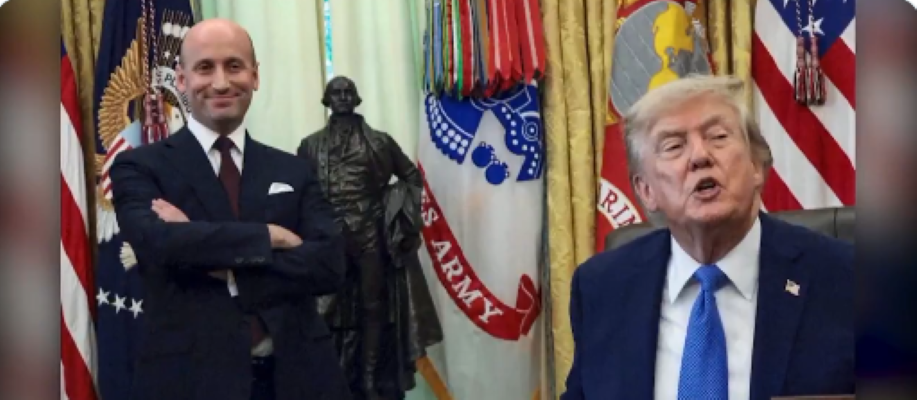
His remarks followed the announcement that Stephen Miller, his deputy chief of staff and a principal architect of the administration’s hard-line immigration agenda, would replace Susie Wiles as White House chief of staff from November 9. Trump praised Miller’s loyalty and political instincts, saying: “Stephen’s been with me from the beginning. He gets it.”
The appointment has added another dimension to the President’s overture to Democrats. The Associated Press reported that Miller’s elevation signals a determination to retain a firm grip on the administration’s “America First” agenda, even as the White House prepares to deal with a newly empowered opposition. The AP also reported that about six in 10 voters in its midterm poll felt the administration’s immigration enforcement had gone too far.
The real test lies in the details
Trump’s willingness to discuss immigration and taxation could create limited common ground with Democrats, particularly on economic measures. But the political arithmetic of a divided Washington will make the passage of legislation difficult, especially where the two parties remain sharply divided over border enforcement and immigration priorities.
For Indian-origin professionals, students and families, the distinction between an expression of willingness and an actionable policy change is crucial. Any meaningful movement on skilled-worker visas, green-card backlogs or family-based immigration would require specific proposals and legislative or administrative follow-through.
For now, Trump has signalled a willingness to talk—but the substance, scope and political viability of any deal remain uncertain. The next test will not be what the President says at an airport microphone, but what his administration is prepared to put on the negotiating table.