
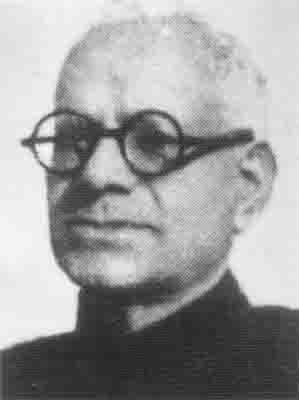
- Hailed by Mahatma Gandhi as the ‘Fighting-Editor’, Rama Rao combined fearless journalism with an unwavering commitment to India’s freedom struggle
- Rajagopalachari called him ‘Dear Dreadnought’, Netaji Subhas Chandra Bose praised his fairness, while Atal Bihari Vajpayee remembered him as the ‘Dronacharya of Indian Journalism’
- From The People and The Times of India to Jawaharlal Nehru’s National Herald, his remarkable career spanned more than 25 newspapers across undivided India
- Imprisoned by the British for his uncompromising editorials, he transformed the newspaper column into an instrument of resistance and national awakening
- A mentor to celebrated journalists, he helped shape the institutional foundations of the All-India Newspaper Editors’ Conference and the Indian Federation of Working Journalists
- From the newsroom to the first Rajya Sabha and national planning, his legacy embodies the enduring relationship between journalism, democracy and nation-building
NE FEATURES BUREAU
NEW DELHI, NOV 9
There are journalists who report history, those who interpret it, and a rare few who risk everything to change its course. Kotamaraju Rama Rao belonged unmistakably to the last category. An uncompromising nationalist editor, fearless freedom fighter, mentor to generations of journalists and parliamentarian, he wielded his pen against British imperialism with a conviction that earned him Mahatma Gandhi’s memorable description: the ‘Fighting-Editor’. As India commemorates his 130th birth anniversary on November 9, 2026, his extraordinary life offers a powerful reminder that journalism, at its finest, is not merely a profession but a public trust and a moral responsibility.
Born on November 9, 1896, in Chirala, in present-day Andhra Pradesh, and passing away in Patna, Bihar, on March 9, 1961, Rama Rao traversed some of the most consequential chapters of India’s political and journalistic history. His life connected the freedom struggle with the emergence of independent India’s democratic institutions, leaving behind a legacy that continues to inspire those who believe that the power of the printed word must never be surrendered to fear or expediency.
The tributes paid to him by some of India’s most distinguished leaders capture the stature he commanded across ideological and institutional boundaries.
Mahatma Gandhi called him a ‘Fighting-Editor’ during his association with Bapu at Sevagram Ashram. C. Rajagopalachari addressed him as ‘Dear Dreadnought’, an unmistakable acknowledgement of his formidable courage.
Netaji Subhas Chandra Bose, despite political differences, found that as editor of Jawaharlal Nehru’s National Herald, Rama Rao was “more than fair to me.”
President S. Radhakrishnan described him as a very active member of the Rajya Sabha who spoke “with knowledge, authority and experience.”
Decades later, former Prime Minister Atal Bihari Vajpayee paid him perhaps one of the most evocative tributes in Indian journalism, calling him the ‘Dronacharya of Indian Journalism’ — a teacher whose influence extended far beyond the pages he edited.
Roots of courage: A family steeped in learning and nationalism
Rama Rao’s formative years were shaped by an unusual combination of intellectual discipline and patriotic conviction.
His father, Kotamaraju Narayana Rao, was a headmaster and Sanskrit scholar. His mother, Venkayamma, demonstrated remarkable political courage by organising a no-tax campaign against the British Collector of Guntur district in 1899.
The spirit of resistance was also evident in his extended family. His cousin, Kotamaraju ‘Bombu’ Ramayya, is credited with producing an indigenous bomb in Andhra in 1910 at Kattheswaram near Tenali.
Rama Rao graduated in English literature from the University of Madras in 1917 and began his professional life as an English teacher at the prestigious Pachaiyappa’s College.
However, the call of journalism proved irresistible.
His entry into the profession came through the Brahmo Samaj weekly Humanity, followed by New Times in Karachi, edited by Acharya T. L. (Sadhu) Vaswani. His first assignment with a daily newspaper was at Karachi’s Sind Observer, edited by his brother, K. Punnaiah.
What began as a professional pursuit soon became a lifelong mission.
A journalist without geographical or ideological boundaries
Few journalists of his generation could match the breadth of Rama Rao’s professional journey.
He worked with more than 25 newspapers across the metropolitan centres of undivided India, including Lahore and Karachi. His professional associations included Lala Lajpat Rai’s The People, The Times of India, The Hindustan Times, Sind Observer, Swarajya and Free India.
His career also took him to prominent regional publications such as The Leader of Allahabad, The Pioneer and Searchlight of Patna.
His newspaper assignments included:
- The Leader — 1920
- The Times of India, Mumbai — 1924
- The Pioneer, Allahabad — 1928
- Free India, Kolkata — 1934
- Swarajya, Chennai — 1935
- The People, Lahore — 1936
- The Hindustan Times, New Delhi — 1938
- Sind Observer, Karachi — 1921
- Searchlight, Patna — 1950
His frequent changes of newspaper became a talking point among colleagues. One contemporary observation captured his professional restlessness with characteristic humour:
“Rama Rao carried editorial in one pocket and his resignation in the other.”
Yet, among the many publications he served, his association with the National Herald occupies a special place in the history of Indian journalism.
Founded by Jawaharlal Nehru in June 1938, when the Congress first came to power in the United Provinces Assembly, the newspaper became an influential voice of the national movement. Rama Rao’s editorial leadership helped establish its reputation for fearless political commentary and nationalist conviction.
When an editorial became an act of defiance
For Rama Rao, the editorial page was never a safe refuge from political reality. It was a frontline of resistance.
Between the two World Wars and through the decisive years of the freedom struggle, he reported on the political upheavals, legislative developments, Congress sessions, political trials and public movements that shaped modern India.
His association with Mahatma Gandhi was particularly significant. Between 1943 and 1946, he served as an exclusive reporter covering Gandhi’s movements at Sevagram, Shimla, Pune and Mahabaleshwar, filing reports for 25 Indian and international newspapers.
He also covered the Central Legislative Assembly, major Congress deliberations and even international cricket Test matches, demonstrating the extraordinary range of his journalistic interests.
But it was his editorial courage that brought him into direct confrontation with British authority.
On August 15, 1942, the last editorial before the forced closure of the National Herald, titled ‘Vande Mataram’, declared that the British rulers would eventually have to leave and India would be free. It ended with two stirring expressions of the national struggle:
“Inquilab Zindabad” and “Vande Mataram.”
The editorial was an emphatic assertion that the freedom movement could not be silenced by colonial repression.
In August 1942, he was sentenced to six months’ imprisonment for another uncompromising editorial, ‘Jail or Jungle’, in which he condemned the British authorities for torturing Congress satyagrahis in the Lucknow camp jail.
The Oudh Chief Court’s judgement convicting him was broadcast by Radio Japan within 30 minutes, highlighting the international attention surrounding the case.
He was confined to the Revolutionary Yard of Lucknow jail, a section that had earlier housed Motilal Nehru, Jawaharlal Nehru and Acharya J. B. Kripalani.
His fellow prisoners included Shiv Verma and Jaidev Kapoor, associated with Bhagat Singh’s Lahore conspiracy case.
He even celebrated his birthday behind prison walls.
For Rama Rao, however, incarceration could restrict his physical freedom but never his editorial independence.
The teacher behind generations of distinguished journalists
Rama Rao’s contribution to Indian journalism cannot be measured solely through the newspapers he edited or the political events he covered. His influence also lived on through the journalists he trained and inspired.
He mentored numerous young professionals who subsequently occupied influential positions in India’s media landscape.
Among them were H. Y. Sharada Prasad, who later became media adviser to Indira Gandhi; Sham Lal, who went on to become Chief Editor of The Times of India; and M. Chalapathi Rau, who joined the National Herald in the 13th position and eventually succeeded Rama Rao as its editor.
His approach to journalism combined professional rigour, intellectual independence and an insistence on fairness.
Vajpayee’s description of him as the ‘Dronacharya of Indian Journalism’ was therefore more than an affectionate tribute. It recognised a mentor whose influence was reflected in the achievements of successive generations of editors and reporters.
Building institutions for a free and responsible press
Rama Rao understood that individual courage, however exceptional, needed the support of strong professional institutions.
He was a founder-member of the All-India Newspaper Editors’ Conference (AINEC), established in 1940 as a professional organisation for editors.
At its Mumbai session in 1942, editors elected him to its standing committee even while he was imprisoned in Lucknow jail — a remarkable acknowledgement of the respect he commanded among his peers.
His contribution to the organised journalist movement was equally significant.
As Vice-President of the Indian Federation of Working Journalists (IFWJ), founded in 1950, he drafted its Constitution, helping establish an institutional framework for journalists’ professional representation and collective interests.
His role in the people’s movement for the formation of Andhra State also demonstrated his commitment to democratic aspirations and regional self-determination.
For him, journalism was inseparable from the larger responsibility of building a democratic society in which citizens could assert their rights and institutions could be held accountable.
From the newsroom to the first Rajya Sabha
Rama Rao’s public life extended beyond the editorial desk.
In 1949, he accompanied India’s Prime Minister on his first visit to the United States, Africa and Europe, reporting for the Hindustan Times group, including The Leader and Searchlight, of which he was editor until 1950.
His international travels took him to the United States, Britain, France, Italy, Egypt, Brazil, Canada, Greece and Switzerland, among other countries.
These assignments exposed him to the emerging international order and India’s evolving role in the post-war world.
In 1952, he was elected to the first Rajya Sabha as a Congress nominee from the undivided Madras State, representing the Andhra region. His candidature was proposed by K. Kamaraj and N. Sanjeeva Reddy, both of whom later became presidents of the Indian National Congress.
His parliamentary interventions earned recognition from President S. Radhakrishnan, who described him as an active member speaking “with knowledge, authority and experience.”
In 1956, the Nehru Government appointed him as India’s first Adviser on Plan Publicity, placing his communication skills and journalistic experience in the service of national development.
He also authored several books, including his autobiography, The Pen as My Sword — a title that fittingly encapsulates the philosophy of his life.
Family, personal life and an enduring legacy
In 1922, Rama Rao married Saras Vani, an astrologer and English poetess. Her father, Professor Chodavarapu Jagannatha Rao, was Principal of the Teachers’ Training College in Machilipatnam.
The marriage was arranged by his cousin, Dr. B. Pattabhi Sitaramayya, a former Congress president and subsequently Governor of Madhya Pradesh.
The couple had four sons.
Their eldest son, K. Pratap Rao, retired from the Indian Foreign Service and settled in the United States. The second, K. Narayan Rao, retired from the Indian Audit and Accounts Service and became an eminent astrologer. The third, K. Vikram Rao, became a distinguished journalist in Lucknow and served as President of the Indian Federation of Working Journalists. Their youngest son, K. Subhas Rao, worked as a bank manager with Syndicate Bank.
Rama Rao breathed his last in Patna on March 9, 1961, bringing to a close a remarkable journey that had traversed the freedom struggle, the evolution of Indian journalism and the formative years of parliamentary democracy.
Yet, his legacy is far from confined to the historical record.
At a time when the independence, credibility and public responsibility of the media remain subjects of intense debate, his life offers a compelling standard against which journalism can measure itself.
He demonstrated that an editor must possess the courage to question authority, the integrity to remain fair even to ideological opponents, the scholarship to inform public debate and the conviction to defend the rights of citizens.
His was a pen that confronted an empire, a mind that shaped generations of journalists and a public life devoted to nation-building.
Kotamaraju Rama Rao did not merely practise journalism during India’s struggle for freedom. He helped define what fearless journalism should mean in a free India.
The article is contributed by Vishwadev Rao K, the grandson of Kotamaraju Rama Rao, who is also the Secretary General of the Indian Federation of Working Journalists (IFWJ).