
NE HEALTH/ENVIRONMENT BUREAU
NEW DELHI, NOV 9
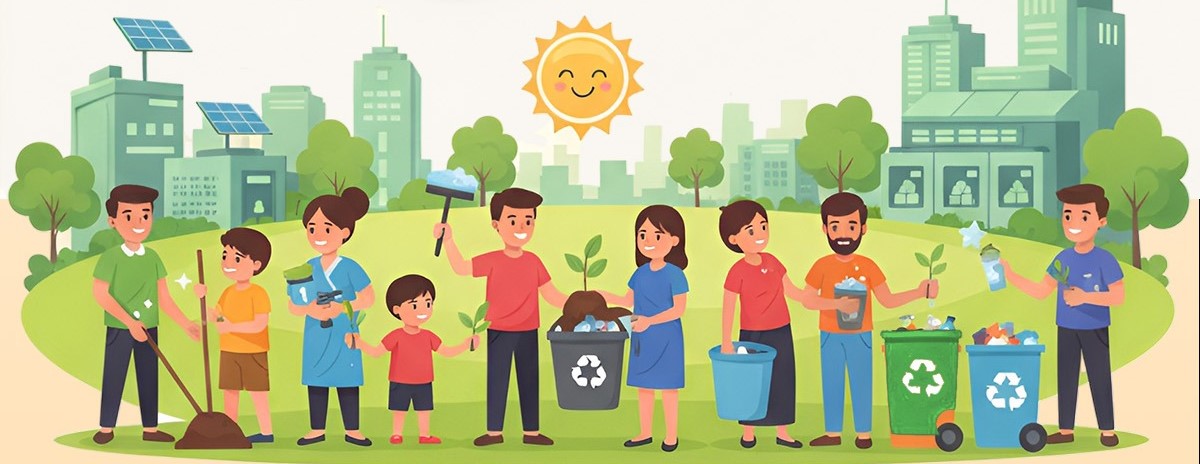
A cleaner India cannot be built by municipal machinery alone; it requires citizens, institutions and cities to work together. Marking a decade of the country’s flagship urban cleanliness assessment, President Droupadi Murmu will confer the 10th edition of the Swachh Survekshan Awards 2025-26 at Vigyan Bhawan, New Delhi, on Wednesday, recognising cities and urban local bodies that have demonstrated outstanding commitment to cleanliness, sanitation and sustainable waste management.
- President Droupadi Murmu to confer the 10th edition of Swachh Survekshan Awards 2025-26 at Vigyan Bhawan, New Delhi, on Wednesday
- Assessment expands from 73 urban local bodies in 2016 to more than 4,751 cities, reflecting a decade of nationwide cleanliness initiatives
- New assessment framework places greater emphasis on citizen participation, urban rivers, coastlines, water bodies and cleanliness of heritage and tourist destinations
- ‘Swachh Shehar Jodi’ initiative recognises mentor-mentee partnerships, with 70 mentor cities guiding 191 cities across 33 States and Union Territories
- Mentee cities record substantial improvements in visible cleanliness, door-to-door waste collection, source segregation and used-water management
The awards ceremony will be attended by Manohar Lal, Union Minister for Housing and Urban Affairs and Power, and Tokhan Sahu, Minister of State for Housing and Urban Affairs.
Held under the theme ‘Swachhata Ki Nayi Pehel – Badhayein Haath, Karein Safai Saath’, the 10th edition celebrates the collective achievements of cities and States under the Swachh Bharat Mission-Urban (SBM-U), while reinforcing the need to sustain and deepen the gains made on the ground.
A decade of transformation: From 73 cities to 4,751-plus
Launched in 2016, Swachh Survekshan has evolved into one of the world’s largest urban cleanliness assessments, expanding its coverage from just 73 Urban Local Bodies (ULBs) in its inaugural edition to more than 4,751 cities in the latest assessment.
Over the years, the exercise has emerged as a powerful instrument for encouraging healthy competition among cities, strengthening municipal accountability and making cleanliness an integral part of urban governance.
The 2025-26 edition introduces several important enhancements, with increased emphasis on citizen feedback, wider assessment of urban riverfronts, coastlines and water bodies, and targeted indicators covering prevention of open defecation and open urination.
The framework also gives greater attention to cleanliness at tourist and heritage destinations, alongside behaviour-change initiatives in schools, recognising that sustainable sanitation depends as much on public participation as on infrastructure.
43 indicators to measure performance on the ground
For the 10th edition, urban local bodies were evaluated against 43 indicators spanning 10 key assessment areas.
These include segregation, collection and transportation of waste, solid waste management, visible cleanliness, access to sanitation, mechanisation of desludging services, ecosystem strengthening and institutional parameters, used-water management, advocacy for Swachhata, overall welfare of sanitation workers, and citizen feedback and grievance redressal.
More than 3,000 trained assessors undertook extensive field evaluations across the country, supported by real-time GPS-enabled monitoring.
The entire assessment process, from evidence submission to verification, was conducted digitally, with transparency and stringent quality checks built into the evaluation framework.
This data-driven approach seeks to ensure that rankings reflect actual service delivery and visible improvements rather than merely official claims or infrastructure creation.
‘Swachh Shehar Jodi’: Cities learn from cities
A significant feature of this year’s awards is the recognition of outstanding performers under the ‘Swachh Shehar Jodi’ initiative, an innovative urban waste-management mentorship programme designed to accelerate improvements through institutional collaboration and peer learning.
Launched by Union Minister Manohar Lal on September 27, 2025, the initiative brought together 70 mentor cities and 191 mentee cities across 33 States and Union Territories.
A Memorandum of Understanding was signed between the participating mentor and mentee cities at the launch to formalise the partnerships and facilitate the exchange of expertise, successful practices and operational strategies.
The initiative’s impact is reflected in the improved performance of mentee cities across several important Swachhata parameters, comparing Swachh Survekshan 2024 with the latest 2025-26 assessment.
Mentorship delivers measurable improvements
The progress recorded by mentee cities highlights the potential of collaborative governance in strengthening urban sanitation systems.
- Visible cleanliness: Performance improved from 48% in Swachh Survekshan 2024 to 70% in the latest assessment.
- Door-to-door waste collection: Increased from 52% to 74%.
- Source segregation: Improved from 16% to 30%.
- Access to sanitation: Rose from 11% to 38%.
- Used-water management: Advanced from 32% to 53%.
- Advocacy for Swachhata: Increased from 48% to 66%.
These improvements underline how structured mentorship, knowledge-sharing and sustained institutional engagement can help cities strengthen essential sanitation services and improve their cleanliness outcomes.
Beyond rankings: Sustaining India’s cleanliness mission
After a year of dedicated efforts, healthy competition and sustained commitment to Swachhata, cities across the country are awaiting the announcement of the 2025-26 award winners.
The 10th edition is more than a recognition exercise. It offers an opportunity to assess how far India’s urban centres have progressed, identify persistent gaps and encourage municipalities to adopt scalable and sustainable solutions.
By bringing citizen participation, sanitation-worker welfare, environmental protection and inter-city collaboration into sharper focus, Swachh Survekshan seeks to reinforce a larger national message: cleanliness is not a one-time achievement or a municipal responsibility alone, but a continuing civic commitment.
The ultimate measure of a clean city lies not merely in its position on a national leaderboard, but in the everyday quality of life it offers its residents.