
- From Diwali to Annakut: 2,526 vegetarian delicacies, sacred Vedic rituals and thousands of devotees turn Vasad Ashram into a vibrant celebration of faith and gratitude.
- Knowledge Is the Antidote to Suffering: Gurudev underscores the inseparable relationship between wisdom, inner peace and lasting happiness.
- A Message to the Young: Meditation, yoga and selfless service can help counter depression, frustration and growing aggression.
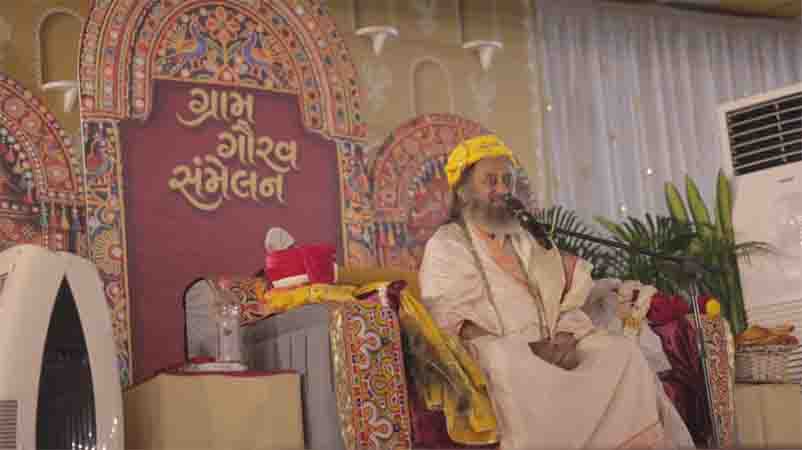
- Beyond Personal Transformation: Gram Gaurav Sammelan brings together more than 4,000 participants to advance rural development, youth leadership and community service.
NE SPIRITUAL BUREAU
VASAD, NOV 13
A spiritual gathering becomes truly transformative when devotion finds expression in wisdom, wisdom inspires compassion, and inner peace translates into service to society. That was the larger message emerging from Gurudev Sri Sri Ravi Shankar’s week-long Gujarat visit, which brought together thousands of devotees, spiritual seekers, children, rural representatives and volunteers in a remarkable celebration of Vedic traditions, meditation and community transformation.
From the sacred chants of the Ashtalakshmi Homa and the grandeur of the Annakut Mahotsav at the Art of Living Gujarat Ashram in Vasad to the outreach of Project Bharat and interactions with the media fraternity, the visit, spanning November 6–13, sought to connect India’s timeless spiritual heritage with the challenges of contemporary life.
The visit also featured programmes in Jetpur, Ahmedabad and Patan, creating a statewide platform for spiritual learning, cultural engagement, youth participation and social service. The Art of Living’s official Gujarat programme confirmed the November 6–12 Guru Sanidhya gathering at Vasad, alongside special events in Jetpur and Ahmedabad.
Knowledge: The pathway from suffering to joy
One of the most profound messages of Gurudev’s visit emerged during the Diwali celebrations at Vasad, where the programme titled Guru Sannidhya brought thousands of devotees into an atmosphere of prayer, contemplation and spiritual fellowship.
A grand Ashtalakshmi Homa was performed, with Vedic mantras accompanying sacred offerings and prayers for prosperity, universal well-being and the welfare of humanity. Rudra Puja and Ganapati Homa were among the other religious observances.
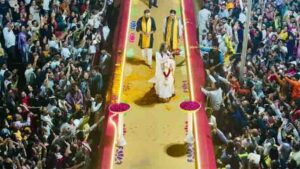
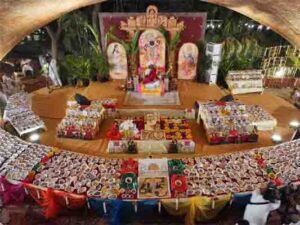
On the occasion of the Gujarati New Year, the traditional Govardhan Puja and Annakut Mahotsav added a spectacular dimension to the celebrations. Devotees collectively prepared an extraordinary array of 2,526 vegetarian delicacies, symbolising gratitude, abundance, devotion and the spirit of sharing.
Addressing devotees, Gurudev reflected on the relationship between knowledge, devotion and inner prosperity, emphasising that material abundance alone cannot guarantee happiness.
He said: “Ignorance cannot be removed without knowledge, and suffering cannot be eliminated until ignorance is removed. If we wish to overcome grief, pain and suffering, knowledge is essential. And where there is knowledge, there is only joy.”
The message underscored a central principle of Indian spiritual thought: true prosperity begins with inner enrichment, and the pursuit of knowledge must ultimately lead to a more joyful and meaningful life.
Project Bharat: Spirituality meets grassroots development
A significant dimension of the Gujarat visit was the Gram Gaurav Sammelan under Project Bharat, which attracted more than 4,000 participants.
Village representatives, Yuvacharyas, members of the Youth Leadership Training Programme (YLTP), rural educators and Art of Living volunteers came together to deliberate on strengthening village-level initiatives.
The discussions focused on rural development, education, youth empowerment, community participation and social transformation.
The initiative reflected an important extension of the Art of Living philosophy: personal development acquires greater significance when individuals channel their capabilities towards the welfare of their communities.
By bringing grassroots representatives and young leaders onto a common platform, Project Bharat sought to strengthen the link between individual responsibility and collective progress.
Gurudev’s media message: Inner calm in an unsettled world
During his interaction with journalists in Vasad on November 11, Gurudev extended Diwali and Gujarati New Year greetings, explaining his decision to celebrate the New Year along with Gujarat.
“I thought, why not celebrate the New Year along with Gujarat?” he remarked, adding that he visits the state regularly every year.
Reflecting on the international situation, he observed that extreme weather events, including droughts and excessive rainfall in different parts of India, had affected communities, while conflicts in various parts of the world were creating wider economic and social challenges.
He pointed out that the world had become increasingly interconnected, making it impossible for developments in one region to remain confined to that geographical area.
Unlike earlier times, when distant international developments might have had limited immediate impact on ordinary people, today’s interconnected world makes countries and communities increasingly dependent on one another.
Despite the challenges, Gurudev expressed confidence in India’s ability to navigate difficult circumstances.
“I travel across the world and closely observe the circumstances in different countries. India’s culture, understanding, traditional values and spirit of living together harmoniously are deeply embedded in our cultural DNA. This is one of the reasons why India continues to be in a relatively better position compared to many other countries.”
Describing the present as a testing period, he emphasised the need for patience, resilience and a balanced outlook.
A word of caution and hope for the young generation
Delivering a particularly relevant message to young people, Gurudev encouraged them to express their views freely but cautioned against falling prey to anti-social influences and extremist ideologies.
He stressed that youthful energy and the desire to question must be channelled constructively rather than allowing individuals to be misled into destructive actions.
Drawing attention to increasing frustration, aggression and depression among young people, he observed that mental well-being had become a serious concern across the world.
His prescription was rooted in the practice of spirituality, with meditation, yoga, service and positive thinking serving as important tools for developing emotional balance and inner strength.
The message was not merely about avoiding negativity; it was about equipping young people with the mental clarity and confidence to face life’s uncertainties without losing hope.
Journalists need mental fitness as much as professional skills
Gurudev also addressed a concern particularly relevant to the media fraternity, recognising the demanding nature of journalism.
Journalists operate under relentless deadlines, rapidly changing developments and the constant pressure of making accurate decisions. Such responsibilities require alertness, concentration, emotional balance and sustained mental energy.
He encouraged media professionals to incorporate meditation into their daily routines, explaining that the practice can help calm the mind, improve concentration and strengthen one’s presence of mind.
He observed that even 20 minutes of meditation could provide a refreshing experience comparable, in terms of rejuvenation, to that associated with eight to ten hours of sleep.
His observation was a powerful reminder that professional efficiency is not determined by technical skills alone; mental composure and clarity are equally important.
The Art of Living’s own guidance describes meditation as a daily practice that can support attention, relaxation and positive energy.
Concluding the interaction, Gurudev conveyed his heartfelt Diwali and New Year greetings, wishing everyone happiness, peace, prosperity, energy and positivity.
Intuition fest: Nurturing the hidden potential of children
Another noteworthy highlight was the Intuition Fest, organised on November 11 for children and teenagers.
Approximately 2,000 children from different parts of Gujarat, who had completed The Art of Living’s Intuition Programme, participated enthusiastically.
The festival sought to encourage concentration, self-confidence, creativity and the development of children’s innate abilities.
The emphasis on nurturing young minds reflected the importance of holistic education, in which intellectual development is complemented by emotional well-being, confidence and awareness.
Satsangs and knowledge sessions with Gurudev were also organised every evening at 6.30 pm, drawing devotees and citizens seeking spiritual guidance and an opportunity for collective reflection.
Jetpur: Mahalakshmi Homa invokes prosperity and well-being
The Gujarat spiritual journey also included a grand Mahalakshmi Homa at the Helipad Ground in Jetpur on November 8.
Performed in Gurudev’s presence, the sacred Vedic ceremony featured traditional rituals and the chanting of mantras, with prayers for prosperity, peace, well-being and the welfare of all.
The large gathering of devotees reflected the enduring appeal of Vedic traditions and the role of collective prayer in bringing communities together.
Ahmedabad and Patan: Knowledge, devotion and divine worship
As part of the concluding phase of the Gujarat visit, a special knowledge session titled Beyond Knowledge was scheduled at the Gujarat University Convention Hall in Ahmedabad on November 12.
The session focused on knowledge, consciousness, life’s deeper meaning, inner peace and the holistic development of individuals.
The Gujarat programme culminates on November 13 with a grand Devi Puja at the NGES Campus (College Ground) in Patan, bringing together Vedic traditions, devotion and spiritual observances.
The Art of Living: From inner peace to a better society
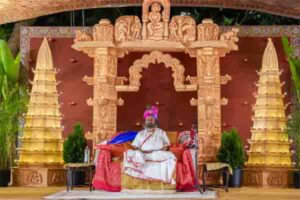
Founded in 1981 by Gurudev Sri Sri Ravi Shankar, The Art of Living has developed into an international non-profit, educational and humanitarian organisation.
Its programmes combine yoga, meditation, pranayama, Sudarshan Kriya and practical spiritual wisdom to promote individual well-being and community development.
According to its official profile, the organisation operates in 182 countries, with more than 10,000 centres worldwide. Its initiatives extend beyond personal wellness to education, rural development, environmental protection, women’s empowerment and humanitarian service.
The organisation’s philosophy is encapsulated in Gurudev’s words:
“Unless we have a stress-free mind and a violence-free society, we cannot achieve world peace.”
Gurudev’s Gujarat visit has thus brought together several dimensions of India’s spiritual and social heritage — devotion, Vedic rituals, knowledge, meditation, youth leadership and grassroots development.
Its larger takeaway is both timeless and contemporary: spirituality should not remain confined to places of worship or ceremonial observances. It must find expression in peaceful minds, compassionate hearts, responsible citizens and communities committed to the common good.