
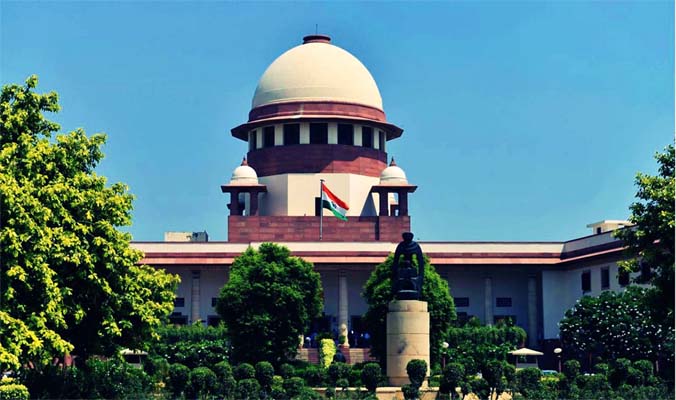
- Apex court permits one-time lighting of Karthigai Deepam at disputed Deepathoon; directs restricted temple-authorised team under district administration’s supervision
- Vijay government moves review petition challenging interim relief, while Madurai administration invokes BNSS Section 163 to prevent gatherings and possible confrontation
- More than 5,600 police personnel deployed; hill declared drone-free Red Zone, with barricades, CCTV surveillance and restrictions on unauthorised access
- BJP Tamil Nadu president Nainar Nagenthran placed under house arrest; party alleges detention of scores of leaders and Hindu Munnani members
- Tiruvannamalai prepares for an estimated 50 lakh devotees, with 15,500 police personnel, medical camps, transport facilities and restricted hill access
- Maha Deepam to illuminate 2,668-foot Annamalai hill at 6 p.m.; 4,500 litres of ghee and a 1,500-metre cotton wick readied for the ceremonial flame
R ARIVANANTHAM
TIRUNELVELI, MADURAI, TIRUVANNAMALAI, CHENNAI, NOVR 24
When faith, judicial authority and public order converge around a centuries-old religious observance, the challenge before the administration is not merely to manage a festival but to uphold the rule of law while respecting the rights and sensitivities of all communities. Tamil Nadu finds itself confronting precisely such a test on Karthigai Deepam day, with the Supreme Court’s one-time permission for lighting the ceremonial lamp at the disputed Deepathoon on Thirupparankundram hill triggering an intense legal and administrative response, even as millions of devotees converge on Tiruvannamalai for the grand Maha Deepam.
The developments have placed the Vijay-led Tamil Nadu government, the Madurai district administration, police authorities and temple administration under considerable scrutiny. While the State’s Hindu Religious and Charitable Endowments (HR&CE) Department has approached the Supreme Court seeking a review of its interim order, the administration has announced sweeping security restrictions to prevent confrontations between groups supporting and opposing the proposed ritual.
Meanwhile, at Tiruvannamalai, the authorities have mobilised an extensive administrative, medical, transport and security apparatus for the annual hilltop lighting, with an estimated 50 lakh devotees expected during the celebrations.
Thirupparankundram: Supreme Court’s one-time relief with safeguards
The immediate flashpoint is the disputed stone pillar, identified as the Deepathoon, atop Thirupparankundram hill near the Sikandar Badusha Dargah in Madurai.
On November 20, a Supreme Court Bench comprising Justices Aravind Kumar and Vipul M Pancholi permitted the ceremonial lamp to be lit at the Deepathoon on November 24 through a restricted team authorised by the Devasthanam.
The order came in proceedings arising from the Madras High Court’s January 6, 2026 judgment concerning the lighting of Karthigai Deepam at the hilltop location.
Importantly, the Supreme Court stayed the relevant findings of the High Court judgment pending further consideration and clarified that its interim arrangement should not be interpreted as a final determination of the competing religious, customary, proprietary or administrative claims.
The Bench observed that the opportunity to perform the ceremony on the particular festival date, if denied, could not be restored through subsequent adjudication. At the same time, it recognised that once performed, the ceremony could not be undone.
Consequently, it considered a narrowly confined, one-time arrangement with stringent safeguards appropriate.
The Court’s clarification is particularly significant:
“Neither the permission granted by this Court nor the performance of the ceremony pursuant thereto shall be relied upon by any party as evidence of an established custom, precedent of religious usage, possessory right, entitlement to access or alteration of the existing legal position till adjudication of these appeals.”
The order also makes clear that the arrangement does not confer any additional right of entry, occupation or control over any portion of the hill.
Who will supervise the ceremony?
The Supreme Court has placed the Madurai District Collector in charge of coordination and supervision.
The composition and number of persons permitted to light the lamp are to be determined by the Collector in consultation with the Temple Executive Officer, the Archaeological Survey of India (ASI) and the Madurai Commissioner of Police.
The Commissioner of Police has been directed to ensure adequate protection and regulate access.
The Court further stipulated that:
- Only the authorised team and essential supervising and security officials may access the Deepathoon.
- Members of the general public cannot accompany the team.
- No procession, public congregation, demonstration or slogan-raising is permitted at the site.
- The ASI must prescribe conditions to protect the monument and its surroundings.
- No excavation, construction, permanent installation or structural alteration is permitted.
- Existing religious observances at customary locations must continue undisturbed.
- Lawful religious activities and access to the Dargah must not be interfered with.
The District Collector has also been directed to submit a compliance report to the Supreme Court within three days after the festival.
Vijay Government’s review petition and administrative response
The Supreme Court’s interim direction was followed by a significant legal move by the Tamil Nadu government.
The Commissioner of the HR&CE Department filed a review petition on November 21, seeking reconsideration of the November 20 order and an immediate stay of the permission granted for lighting the lamp at the disputed pillar.
The State’s principal contention is that the interim relief effectively grants the petitioners the substantive relief sought for this year’s festival even though the underlying dispute remains to be adjudicated.
In its review petition, the HR&CE Commissioner argued:
“The interim arrangement grants to the writ petitioners, for the year 2026, precisely what they prayed for before the High Court, while the challenge carried by the State and the statutory authorities remains to be heard.”
The State has questioned the grant of such relief without first establishing a prima facie entitlement to perform the ritual at the disputed location.
Separately, Law Minister R Nirmal Kumar said the government was consulting legal experts on the Supreme Court’s order and the prevailing situation.
“The government will announce the decision soon following the consultations,” he said on November 21.
The review petition and the administrative arrangements have consequently become two parallel aspects of the government’s response.
Section 163 restrictions, massive police deployment
With competing organisations reportedly mobilising supporters, the Madurai district administration has imposed prohibitory orders across the district.
District Collector and District Magistrate Nishant Krishna invoked Section 163 of the Bharatiya Nagarik Suraksha Sanhita (BNSS), prohibiting assemblies, demonstrations, agitations, processions and public meetings, besides unauthorised climbing of Thirupparankundram hill.
The restrictions came into force at 9 p.m. on November 23 and are scheduled to remain until 10 a.m. on November 25.
Significantly, the Collector’s order specifically exempts activities undertaken to implement the Supreme Court’s November 20 directions.
The Collector cited reports from the City Police Commissioner, the District Superintendent of Police and the Thirumangalam Revenue Divisional Officer about mobilisation by organisations both supporting and opposing the lighting of the lamp at the pillar.
According to the district administration’s assessment, gatherings by people from Madurai and neighbouring districts could result in confrontation and affect public peace and safety.
Security deployment has been intensified considerably.
More than 5,600 police personnel have reportedly been deployed across the hill, temple steps, circumambulation pathways and surrounding localities. The force includes senior officers drawn from southern districts, additional superintendents and police inspectors.
Madurai City Police have also declared Thirupparankundram hill and adjoining areas a temporary drone Red Zone for November 23 and 24.
The restrictions cover the hilltop, Girivalam pathways, foothills and the stretch between the entrance arch and the 16-Pillar Mandapam. Unauthorised drone and unmanned aerial vehicle operations are prohibited under the Drone Rules, 2016.
Reports also indicate the deployment of armed personnel, additional barricades and more than 70 CCTV and facial-recognition cameras as part of the enhanced surveillance arrangements.
BJP president placed under house arrest
The security measures have also triggered political reactions.
BJP Tamil Nadu president Nainar Nagenthran was placed under house arrest in Tirunelveli on Tuesday when he was preparing to proceed to Thirupparankundram.
According to party sources, he intended to visit the hill to ascertain whether the ceremonial lamp would be lit in accordance with the Supreme Court’s direction.
A police contingent was deployed outside his residence.
The BJP has also alleged that scores of its leaders and cadres, along with members of the Hindu Munnani organisation, were detained to prevent them from travelling to Madurai and witnessing the implementation of the apex court’s order.
These claims are attributable to the party; the precise number of persons detained and the individual grounds for their detention require independent confirmation.
The administration, meanwhile, has maintained that the restrictions are intended to prevent a breakdown of public order and apply to unauthorised gatherings and activities, while specifically exempting arrangements necessary to implement the Supreme Court’s directive.
The distinction between enforcing preventive restrictions and facilitating the court-authorised ritual will be crucial in assessing the administration’s compliance.
Tiruvannamalai: 50 lakh devotees expected for Maha Deepam
While Thirupparankundram remains under an extraordinary security arrangement, Tiruvannamalai is witnessing one of Tamil Nadu’s largest annual religious congregations.
The 10-day Karthigai Deepam festival at the historic Arunachaleswarar Temple reaches its culmination on Tuesday, with the Maha Deepam scheduled to be lit at 6 p.m. atop the 2,668-foot Annamalai hill.
The ceremonial cauldron, known as the Kopparai, has been transported to the summit along with approximately 4,500 litres of ghee and a 1,500-metre-long cotton wick.
The copper vessel, measuring approximately 5.75 feet in height and weighing around 310 kg, was carried uphill by temple personnel and devotees following special prayers.
The flame is expected to burn for 11 days, illuminating the hilltop and marking the culmination of the festival.
The day’s rituals began with the Bharani Deepam at 4 a.m. inside the temple. The sacred flame is traditionally taken from the sanctum and used to light five lamps, symbolising the manifestation of the divine from one into many.
The festival commenced on November 15 with the ceremonial flag-hoisting. Daily processions of the principal deities through the four Mada streets, elaborate floral decorations and special worship have drawn large numbers of devotees.
15,500 police personnel, medical camps and transport facilities
With the district administration anticipating approximately 50 lakh devotees, an extensive security and public-service infrastructure has been mobilised.
Around 15,500 police personnel have been deployed to regulate crowds, manage traffic and maintain security during the festival.
The Forest Department has separately deployed 120 personnel and 250 volunteers at 28 locations around Annamalai hill, supported by four checkposts.
The public has been prohibited from climbing the hill, a restriction that has continued since December 2024, when landslides triggered by heavy rainfall during Cyclone Fengal claimed seven lives.
The administration has cited the hill’s protected forest status and the possibility of further natural calamities, particularly during the northeast monsoon.
Collector Vandana Garg has warned that unauthorised climbing could attract action under the Tamil Nadu Forest Act.
Healthcare and food safety
The Health and Family Welfare Department has arranged 120 special medical camps, including:
- 63 along the Girivalam route.
- 25 on major roads.
- 26 at temporary bus stands.
- Six along the outer ring road.
Each camp is to have a doctor, nurse, pharmacist and multipurpose health worker on round-the-clock shifts.
Cardiologists have been assigned to five special medical camps within the temple premises. Emergency arrangements include 45 ambulances, five first-aid jump kits, an Emergency Response Centre and an Emergency Care Centre.
A 24-hour control room is also operating to coordinate emergency medical assistance and field-level arrangements.
For food safety, 297 annadhanam locations have been identified, with organisers receiving food-safety training.
Transport and darshan arrangements
The district has arranged 25 temporary bus stands and one permanent bus stand, with parking capacity for approximately 2,730 buses.
Around 155 temporary parking locations have been identified for cars and other vehicles. Additional special buses and trains have also been planned to manage the extraordinary rush.
In a significant departure from previous years, the temple administration has introduced 3,000 complimentary online passes for witnessing the Bharani Deepam and Maha Deepam ceremonies from inside the temple.
Of these, 1,000 passes have been allocated for Bharani Deepam and 2,000 for Maha Deepam, with the quotas divided equally between local residents and devotees from other districts. Selection was conducted through a computerised lottery.
The district administration has declared November 24 a local holiday, with December 5 designated as a compensatory working day.
Two festivals, two administrative challenges
The contrasting developments at Thirupparankundram and Tiruvannamalai underline the scale and complexity of managing major religious observances in a diverse constitutional democracy.
At Tiruvannamalai, the principal challenge is managing an unprecedented congregation while ensuring public safety, medical assistance, transport, sanitation and protection of a sensitive forest environment.
At Thirupparankundram, the administration faces a more complicated task: implementing a specific judicial direction while maintaining peace around a disputed religious site and respecting the lawful access and worship rights of different institutions and communities.
The Supreme Court itself has emphasised that the observance of religious festivals must remain consistent with mutual respect, public order and the rule of law.
Its concluding observation is particularly relevant to the present situation:
“The limited accommodation made today is not a determination of the dispute; it is an arrangement made precisely because the dispute remains to be determined.”
The apex court has listed the connected proceedings for the second week of January 2027, by which time the pleadings are expected to be completed. It has also sought the Madurai Collector’s report on compliance within three days of the festival.
For the Vijay government, the immediate responsibility is therefore twofold: ensure that the Supreme Court’s limited directions are implemented faithfully, while preventing provocation, confrontation or interference with the lawful religious activities of any community.
Ultimately, the significance of Karthigai Deepam should not be overshadowed by confrontation. Whether at the Deepathoon in Thirupparankundram or atop the Annamalai hill in Tiruvannamalai, the administration’s credibility will be measured by its ability to uphold judicial authority, protect public safety and ensure that faith is not turned into a flashpoint.