
- Ten-year MoU commits Jamnagar-based Vantara to supporting Madagascar’s wildlife rescue, rehabilitation and conservation priorities
- Seized Malagasy animals to be helped home, with veterinary care, safe repatriation and rewilding where scientifically appropriate
- Partnership envisages a National Wildlife Rescue and Rehabilitation Centre under Madagascar’s ownership and government authority
- Local wildlife experts to receive specialised training, research exposure and institutional support
- Agreement fulfils Vantara’s August 19 commitment to India’s CITES Management Authority, reinforcing conservation in animals’ countries of origin
SEO keywords: Vantara Madagascar MoU, Madagascar wildlife conservation, Vantara Jamnagar, lemur conservation, radiated tortoise protection, wildlife trafficking, animal rescue and rehabilitation, CITES, National Wildlife Rescue Centre, in-situ conservation, wildlife repatriation.
NE WILDLIFE & ENVIRONMENT BUREAU
ANTANANARIVO / JAMNAGAR, NOV 25
When a trafficked animal is rescued thousands of kilometres from its natural habitat, is interception enough to save its life? Or does genuine conservation begin only when the animal is safely returned to the land where it belongs? A landmark ten-year partnership between Madagascar and India’s Vantara seeks to address precisely this question, placing the emphasis on returning wildlife to its country of origin, strengthening local conservation institutions and empowering the people entrusted with protecting their natural heritage.
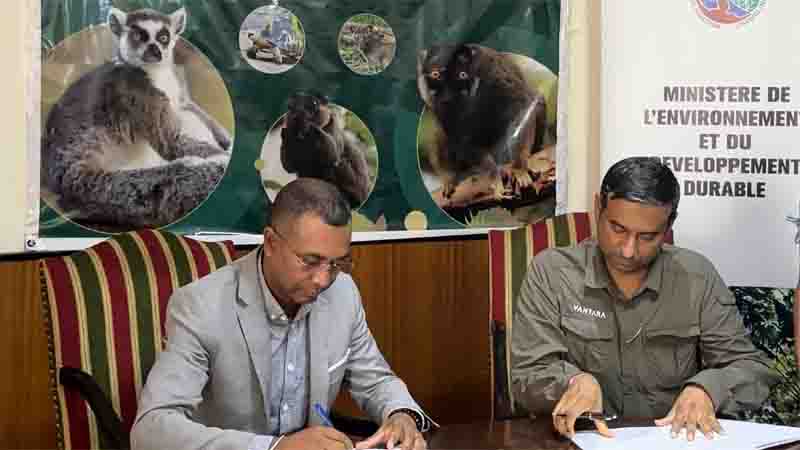
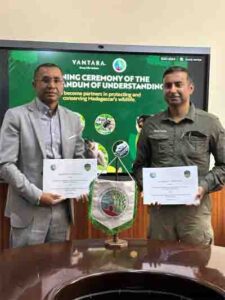
The Ministry of Environment and Sustainable Development of the Republic of Madagascar (MEDD) and the Greens Zoological Rescue and Rehabilitation Centre Society (Vantara), based in Jamnagar, Gujarat, on Tuesday signed a ten-year, non-exclusive Memorandum of Understanding (MoU) on wildlife conservation and animal welfare, recognising Vantara as a conservation partner of Madagascar.
More than a bilateral cooperation agreement, the partnership marks a significant commitment to a conservation philosophy that puts animals, their natural habitats and the countries to which they belong at the centre of international rescue efforts.
The agreement also fulfils a commitment Vantara made to India’s CITES Management Authority on August 19, under which it undertook to support conservation initiatives in the countries of origin of rescued and seized wildlife.
Under the MoU, the two parties will collaborate to facilitate the safe return of Malagasy animals seized abroad, strengthen rescue, rehabilitation and veterinary care within Madagascar, support rewilding wherever scientifically and ecologically appropriate, establish a national conservation, research and training centre, and develop the expertise of local wildlife professionals.
‘These animals belong to the forests that shaped them’
Emphasising the importance of protecting Madagascar’s extraordinary biodiversity, H.E. Nolave Luck Aristide Andriatsihala, Minister of Environment and Sustainable Development, Republic of Madagascar, said:
“Madagascar is a biodiversity hotspot of global importance, and our wildlife is part of who we are as a nation. These animals belong to the forests that shaped them. Protecting them takes cooperation across borders, and we are grateful to the countries and organisations, such as Vantara, who work with us to safeguard Madagascar’s natural heritage.”
Rakotondravoninala Valison Kiady, Director General of Environmental Governance, MEDD, said the partnership would combine specialist expertise with concrete conservation outcomes.
“Vantara brings world-class expertise in animal rescue, veterinary care and welfare, and we look forward to working together to turn this commitment into concrete actions, from immediate deliverables to long-term, results-oriented programmes, all guided by science, regulations and international best practice,” he said.
Vivaan Karani, Chief Executive Officer, Vantara, said protecting wildlife in its natural habitats was central to the organisation’s long-term conservation strategy.
“Madagascar is home to some of the world’s most extraordinary and unique wildlife, and protecting these species in their natural habitats is central to our ten-year conservation strategy. Our priority is to strengthen the people and institutions working to conserve wildlife in its country of origin.
“We thank the Government of Madagascar for this partnership and look forward to supporting its long-term conservation priorities, with every decision resting firmly with Madagascar,” he said.
A biodiversity emergency that demands international cooperation
The timing of the partnership is significant. Madagascar, one of the world’s most distinctive biodiversity hotspots, is confronting mounting threats from habitat destruction, illegal wildlife trafficking and the degradation of fragile ecosystems.
According to the IUCN Red List of Threatened Species, 90% of lemur species, found exclusively in Madagascar, are threatened with extinction, with almost one-third classified as Critically Endangered.
The Turtle Survival Alliance estimates that the wild population of radiated tortoises declined by more than 47% between the late 1990s and 2013. The country also lost around 29% of its tree cover between 2001 and 2023.
Madagascar’s Environment Minister has described illegal wildlife trade as the second leading cause of biodiversity decline after habitat loss. The scale of the challenge was underlined between January and April 2026, when rescuers in Madagascar received more than 1,000 tortoises from six confiscation cases.
The consequences of trafficking can be devastating even after authorities intercept an illegal consignment.
In 2024, when Thai authorities intercepted 48 lemurs and more than 1,000 tortoises, 131 tortoises had already died during transit. Others failed to survive the weeks that followed.
Although Thailand cared for the surviving animals and supported their eventual return, the absence of dedicated funding and complicated international permit procedures delayed their repatriation flights to Madagascar twice.
The experience highlights a critical gap in global wildlife protection: rescuing trafficked animals is only the first step. Their survival also depends on specialised veterinary intervention, appropriate quarantine, safe international transportation, adequate funding and suitable arrangements in their home country.
From rescue to repatriation: making every journey count
This is one of the key areas in which Vantara proposes to support Madagascar.
At the country’s request, Vantara’s teams can assist with different stages of wildlife repatriation, beginning with health assessments and disease screening and extending to transportation, quarantine and veterinary care upon arrival.
The organisation will also share scientific expertise, including support for field research and genetic profiling, to help determine the suitability of rescued animals for eventual release into the wild.
Such decisions will be guided by IUCN guidelines and the ecological requirements of the species concerned. Crucially, the final authority will rest exclusively with the Government of Madagascar, advised by the country’s CITES Scientific Authority.
This distinction is important. Repatriation is not simply about transporting animals across international borders; it requires establishing whether they can safely return to their original habitats without compromising their welfare, genetic integrity or the health of existing wild populations.
A national conservation centre, owned by Madagascar
An important institutional component of the agreement is Vantara’s proposed support for the construction and establishment of Madagascar’s National Wildlife Rescue and Rehabilitation Centre.
The proposed facility is envisaged as a national hub for wildlife conservation, veterinary care, research and professional training.
It will remain the property of the Republic of Madagascar and function under the authority of MEDD, on land provided by the Government of Madagascar.
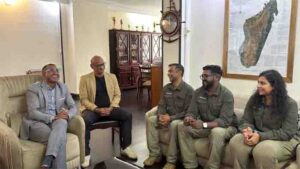
The partnership will also focus on developing local capabilities through specialised training programmes, internships, expert exchanges and applied research.
The objective is to equip Malagasy wildlife professionals with the knowledge, practical skills and institutional resources required to rescue, rehabilitate and care for threatened animals, while enabling their return to the wild wherever conditions permit.
By investing in local expertise and infrastructure, the initiative seeks to ensure that conservation capabilities remain within the country long after individual rescue operations are completed.
Conservation without borders, but with responsibility at home
The Madagascar partnership reflects Vantara’s emphasis on in-situ conservation — protecting wildlife in its natural habitats — alongside ex-situ interventions such as rescue, veterinary treatment and rehabilitation within the countries to which the animals belong.
The distinction carries considerable significance for countries confronting the combined pressures of habitat loss, trafficking and declining wildlife populations.
Rather than treating rescued animals as isolated cases requiring temporary care, the approach seeks to connect their rescue with the larger task of conserving species and restoring ecosystems in their countries of origin.
For Madagascar, the ten-year agreement offers a framework to strengthen national conservation institutions, develop specialist expertise and improve the prospects of wildlife affected by trafficking.
Ultimately, the measure of this partnership will not be the number of facilities established or training programmes conducted, but how effectively it contributes to the survival of threatened species in their natural habitats.
The underlying principle is both simple and consequential: wildlife may cross borders through trafficking, but the responsibility for protecting its future must extend all the way back to the forests, ecosystems and communities where it belongs.