
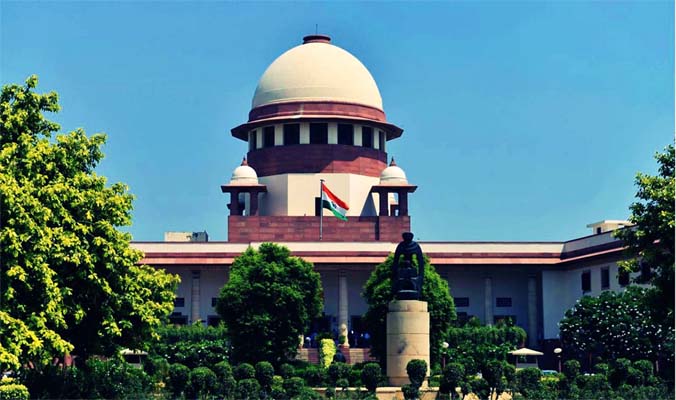
- Apex court issues contempt notices to Tamil Nadu Chief Secretary, DGP, Madurai Collector and other officials over alleged wilful defiance of its November 20 order
- In an extraordinary intervention, suspends temple trustees and appoints two former Madras High Court judges as receivers to oversee administration
- Orders Karthigai Deepam to be lit at the disputed Deepathoon on November 28, with devotees permitted to participate subject to a 50-metre safeguard around Sikandar Dargah
- Hands security of the temple and Dargah to CRPF, questioning the State police’s failure to implement judicial directions
- Chief Secretary directed to appear personally on December 15 and furnish details of official communications, including emails, calls and messages
R ARIVANANTHAM
NEW DELHI, CHENNAI, MADURAI, NOV 27
The Supreme Court on Friday delivered an extraordinary rebuke to the Tamil Nadu administration over the Thiruparankundram Karthigai Deepam controversy, questioning whether constitutional authorities had surrendered their independence to political diktats, issuing contempt notices to senior bureaucrats and temple functionaries, suspending the temple’s Board of Trustees and bringing the hill’s security under the Central Reserve Police Force (CRPF).
In an unprecedented escalation of the dispute, a Bench of Justices Aravind Kumar and Vipul M Pancholi directed that the ceremonial lamp be lit at the disputed Deepathoon on Saturday, November 28, under the supervision of two former Madras High Court judges appointed as receivers. The Court also directed that devotees be permitted to light the lamp, subject to a minimum 50-metre separation from the Sikandar Dargah on all sides, while ensuring the protection of both religious establishments.
The sweeping directions came while hearing contempt petitions alleging wilful disobedience of the Supreme Court’s November 20 order, which had permitted the lighting of the Karthigai Deepam at the hilltop stone pillar as a one-time measure on November 24. The lamp, however, was lit only at the customary Uchaipillaiyar Mandapam and not at the Deepathoon, triggering protests, police deployment and a fresh round of litigation.
‘Iron hand’ warning; constitutional authority at stake
Taking a stern view of the developments, the Bench observed that the conduct of the executive authorities prima facie pointed to administrative chaos and possible political interference in the implementation of judicial orders.
“There is prima facie administrative chaos in the State of Tamil Nadu, at least in Madurai District,” the Bench observed.
In an unusually sharp warning, the judges said: “Executive authorities seem to have acted on the dictates of their political bosses.” The Court directed the Tamil Nadu Chief Secretary, Dr M Sai Kumar, to file a comprehensive personal affidavit explaining the entire sequence of events, including the communications and exchanges of emails, telephone calls and messages among the officials concerned.
The Chief Secretary was also directed to appear personally before the Court on December 15 and explain the circumstances surrounding the alleged non-compliance.
Emphasising the supremacy of the rule of law, the Bench declared: “The concept of rule of law is supreme in a democratic society.”
Invoking Article 144 of the Constitution, which requires all civil and judicial authorities to act in aid of the Supreme Court, it made clear that no executive authority or institution could selectively implement a binding judicial direction.
“The wilful non-compliance of orders of the Court, especially by the executive authorities, cannot go unnoticed and it has to be dealt with an iron hand,” the Bench said, warning that any attempt to undermine the constitutional mandate could lead to constitutional chaos.
It further cautioned that any attempt by anyone, “howsoever high he may be”, to pollute the stream of justice would not be tolerated.
The Court underlined that its order was not an invitation to negotiate or an option that the State could accept or reject. It remained binding on the government, its officers and every statutory or religious institution functioning under the law.
Collector’s explanation rejected; ASI alleges police obstruction
The Court was particularly dissatisfied with the preliminary report submitted by Madurai District Collector Nishant Krishna, who had sought to place responsibility for the failure to light the lamp on the temple administration.
The Collector had earlier apologised to the Supreme Court, maintaining that he had made repeated efforts to implement its November 20 order but that the temple authorities had not authorised the proposed team to light the lamp at the Deepathoon.
The temple’s Board of Trustees, meanwhile, had maintained that the established religious practice permitted the ceremonial lamp to be lit only at the Uchaipillaiyar Mandapam and not at the hilltop pillar, which it described as a survey stone erected during British rule.
Rejecting the Collector’s preliminary explanation, the Bench questioned how a district Collector, who also functions as an executive magistrate, could shift responsibility to the temple trustees when the administration had been entrusted with implementing the Court’s directions.
The judges described the report as “shedding crocodile tears”, expressing dissatisfaction with the attempt to explain away the failure.
The Archaeological Survey of India (ASI), represented by Solicitor General Tushar Mehta, also levelled serious allegations against the Tamil Nadu Police. Mehta informed the Court that ASI officials deputed to assist in the exercise had allegedly been stopped by local police at around 3 pm and prevented from approaching the Deepathoon.
“This is a case of aggravated contempt and administrative arrogance,” the Solicitor General submitted, alleging that the State government had opposed implementation of the order from the beginning.
He urged the Court to direct the officials concerned to first comply with the lamp-lighting order and purge themselves of the alleged contempt before seeking a hearing on their explanations. He also sought independent monitoring of the implementation process.
Senior advocate S Guru Krishna Kumar, appearing for contempt petitioner Karthikeyan, alleged that the State government had decided from the outset not to permit the lamp to be lit at the Deepathoon. He described the preliminary report filed by the authorities as virtually a confession of their failure to implement the judicial direction.
Petitioners seek accountability; Chief Minister’s role under scrutiny
The contempt proceedings have also brought the State’s political decision-making process under scrutiny.
One of the petitions filed by Rama Ravikumar, the main petitioner in the original dispute, sought a direction to the Chief Secretary to disclose the entire decision-making process, including whether the matter had been placed before Chief Minister C Joseph Vijay or the Ministers concerned and whether any instructions had emanated from them against implementing the Supreme Court’s order.
The petitioner sought accountability not merely for the failure to light the lamp but also for establishing where and at what level the decision not to implement the judicial direction had been taken.
During Friday’s hearing, senior advocate J Sai Deepak appeared for the Hindu Dharma Parishad, while senior advocate Gopa Sankaranarayanan represented the Madurai Collector. Senior advocate Abhishek Manu Singhvi appeared virtually for the HR&CE Commissioner.
The Solicitor General’s submissions on behalf of the ASI further strengthened the petitioners’ contention that the failure was not simply a matter of procedural confusion but involved serious questions concerning administrative responsibility and compliance with judicial directions.
Trustees suspended; former judges appointed receivers
In another significant intervention, the Supreme Court suspended the Board of Trustees of the Arulmigu Subramaniaswamy Temple and appointed former Madras High Court judges Justice S Vaidyanathan and Justice V Parthiban as receivers to take charge of the temple’s administration and ensure implementation of the Court’s directions.
The receivers have been entrusted with overseeing the arrangements for lighting the lamp at the Deepathoon on November 28.
The Court also issued show-cause notices to senior officials and temple functionaries, including Chief Secretary Dr M Sai Kumar, DGP Dr Mahesh Agarwala, HR&CE Department Secretary V Rajaram, HR&CE Commissioner T G Vinay, Madurai District Collector Nishant Krishna, Madurai Superintendent of Police L Devanathan, the department’s Madurai Joint Commissioner R Pon Swaminathan, temple Executive Officer G Selvi and members of the Board of Trustees.
They have been called upon to explain why contempt proceedings should not be initiated against them for the alleged wilful violation of the apex court’s directions.
The Chief Secretary was also directed to ensure personal service of the notices on the persons concerned and furnish confirmation to the Court.
CRPF to secure temple and Dargah; safeguards emphasised
The Supreme Court’s decision to entrust security arrangements to the CRPF marks another extraordinary dimension of the proceedings.
Citing the failure of the Tamil Nadu Police to implement its directions, the Bench directed the central force to provide security to the temple and the neighbouring Hazrat Sultan Sikandar Badusha Dargah on Thiruparankundram hill.
The Court directed that the Karthigai Deepam be lit at the Deepathoon on November 28, using the flame from the Uchaipillaiyar Mandapam, provided it was still burning, or through any other suitable arrangement.
It also permitted every devotee to light the lamp at the designated location, maintaining a distance of at least 50 metres from the Dargah on all sides.
The safeguards for the Dargah, which had been incorporated in the earlier order, would continue to apply.
The Court also vacated its earlier interim stay on the Madras High Court’s findings concerning the Deepathoon.
A dispute that has become a test of constitutional governance
The controversy centres on the hilltop stone pillar near the Sikandar Dargah, where Hindu devotees and petitioners sought permission to light an additional ceremonial lamp during Karthigai Deepam. The Tamil Nadu government had defended restricting the annual ritual to the traditional Uchaipillaiyar Mandapam, contending that the Deepathoon was a survey structure and that lighting the lamp there could alter the existing status quo.
On November 20, however, the Supreme Court permitted the one-time lighting of the ceremonial lamp at the Deepathoon, with safeguards to protect the neighbouring Dargah.
When the November 24 ritual was conducted only at the customary location, the issue returned to the apex court through contempt petitions and applications seeking enforcement of its directions.
The Tamil Nadu government had apologised to the Supreme Court on November 25 over the failure and attributed the non-compliance to the temple authorities’ refusal to permit the ritual at the Deepathoon.
Friday’s proceedings have now taken the controversy beyond the immediate question of where a ceremonial flame should be lit. They have brought into sharp focus the constitutional obligations of elected governments, the accountability of public officials, the autonomy of religious institutions and the sanctity of judicial orders.
While the Supreme Court has not yet finally determined the liability of the officials named in the contempt notices, its extraordinary interim measures leave little doubt about the seriousness with which it views the alleged defiance.
The immediate test will be whether the November 28 directions are implemented peacefully, with equal regard for the religious rights of devotees, the protection of the Dargah and the authority of the Constitution.
At the heart of the matter lies a fundamental democratic principle: judicial orders are binding commands of the Constitution, not recommendations that the executive can choose to follow or disregard.