
- A battle over women’s representation, federal balance and the future electoral map heads to Parliament’s special sitting
- PM Narendra Modi says no political opposition can derail one-third reservation for women in the Lok Sabha and State Assemblies
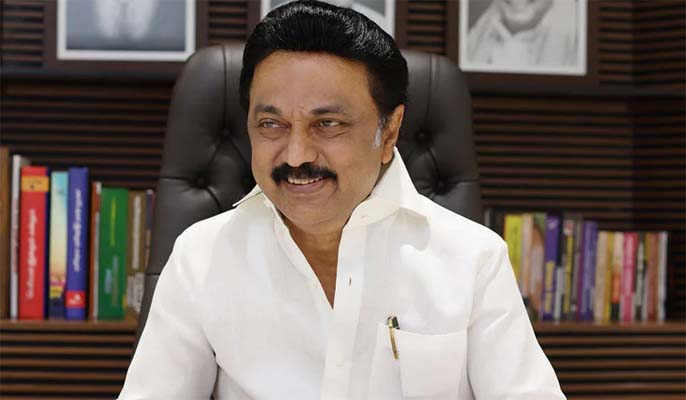
- Stalin announces DMK’s support for revised delimitation Bills, claiming the Centre has incorporated the party’s two key safeguards for Tamil Nadu and southern States
- Congress-led INDIA bloc resolves to oppose the legislation, with Mallikarjun Kharge calling it a “grave threat to democracy”
- BRS and Shiromani Akali Dal back the proposals, while Congress MP Shashi Tharoor accuses the DMK of falling into the BJP’s “trap”
- Proposed 50% expansion of seats and a freeze in inter-State representation until 2051 set the stage for a high-stakes parliamentary showdown from November 30
R ARIVANANTHAM
NEW DELHI, CHENNAI, NOV 28
Can a Bill promising one-third representation for women become the flashpoint for a much larger battle over federalism, political power and the balance between India’s States? As Prime Minister Narendra Modi vows that no party can stop women from entering legislative institutions in greater numbers, the revised delimitation proposal has triggered a striking political realignment: the DMK has moved from opposition to support, the Congress-led INDIA bloc has pledged resistance, and regional parties including the BRS and Shiromani Akali Dal have backed the Centre’s formula.
With Parliament’s special sitting beginning on November 30, the contest is no longer confined to the principle of women’s reservation. It now centres on how constituencies will be redrawn, whether the relative representation of States will be protected, and whether the proposed expansion of legislatures will alter the country’s political equation for a generation.
Modi’s assurance: ‘No party can stop Nari Shakti’
In a video message posted on X on Saturday, Modi reaffirmed his government’s commitment to implementing reservation for women in the Lok Sabha and State Legislative Assemblies, asserting that every obstacle in the way would be removed.
“Our resolve to empower Nari Shakti remains unshaken. I want to assure every woman in the country that we will definitely eliminate and remove every obstacle that comes in the way of women’s reservation,” he said.
Declaring that the resolve of those supporting the legislation remained firm, the Prime Minister added: “Our courage is unbreakable, and our resolve is steadfast.”
He delivered an unmistakable message to political opponents: “The parties opposing women’s reservation will never be able to stop the country’s ‘Nari Shakti’ from increasing its participation in Parliament and the State Assemblies. It is just a matter of time.”
The government’s renewed push follows the Union Cabinet’s approval of the revised constitutional amendment proposal. The Centre is scheduled to introduce the Constitution (132nd Amendment) Bill, 2026, along with the related delimitation legislation in the Lok Sabha on Monday.
The proposed framework seeks to give effect to one-third reservation for women, including women belonging to the Scheduled Castes and Scheduled Tribes, through a delimitation exercise linked to an expansion of legislative strength.
Stalin’s U-turn? DMK calls it a victory for the South
The most consequential political development came from Chennai, where DMK president and former Tamil Nadu Chief Minister M.K. Stalin announced that his party would support the revised delimitation legislation after its two principal demands were incorporated in writing.
At a meeting of the party’s Members of Parliament at Anna Arivalayam, chaired by Stalin, the DMK adopted a resolution backing the revised Bills. The party had opposed the earlier proposal in April, arguing that delimitation based on population could disadvantage States which had successfully pursued population-control measures.
Stalin described the latest development as a vindication of the party’s sustained campaign.
“This is a victory for the sustained struggles waged by the DMK since 2024. A victory for all the southern States, including Tamil Nadu!” he said.
The two safeguards sought by the DMK were that Tamil Nadu’s existing 7.18% share of Lok Sabha seats should not be reduced and that the inter-State proportion of parliamentary representation based on the 1971 Census should remain protected for another 25 years.
The revised proposal, according to the party, provides for a uniform 50% increase in parliamentary constituencies across States while retaining their existing relative share of representation.
Stalin urged political stakeholders to assess the proposal objectively rather than allow emotions to dictate their response. The party, he said, had examined the long-term implications before deciding to support the revised framework, which it considers feasible and beneficial.
Senior DMK leader and Lok Sabha MP Dayanidhi Maran said the Centre had accepted the party’s demand to preserve the existing proportionate representation of States in Parliament.
He argued that the proposed increase in seats would protect the interests of southern States for the next 25 years while facilitating the implementation of women’s reservation.
Rejecting suggestions that the DMK’s decision signalled a political rapprochement with the BJP, Maran asserted: “This is not an alliance with the BJP; we are standing up for our state’s interests.”
Senior DMK leader A. Raja, too, maintained that the party’s position had not changed. The party, he said, had consistently opposed any delimitation exercise that would reduce Tamil Nadu’s rightful share of representation.
However, the DMK has not given an unconditional endorsement to every aspect of the exercise. Raja acknowledged that the party had reservations about how the delimitation commission would redraw constituencies and indicated that amendments could be sought if necessary.
Congress-led INDIA bloc sees ‘grave threat to democracy’
The DMK’s decision has exposed a sharp divergence within the Opposition camp. At a meeting of INDIA bloc leaders in New Delhi on Saturday, Congress president Mallikarjun Kharge said the alliance had collectively decided to oppose the proposed constitutional amendment.
Calling the legislation a “grave threat to democracy”, Kharge accused the Modi government of using the expansion of Parliament to consolidate political power.
Taking a swipe at the BJP’s earlier electoral slogan of ‘400 paar’, he said the government was now pursuing an ‘800 paar’ objective by proposing to raise the maximum strength of the Lok Sabha to 850.
Kharge alleged that the proposed changes could undermine democratic institutions and weaken the representation of Scheduled Castes and Scheduled Tribes. He argued that the legislation did not adequately account for their increased population and questioned the proposed delimitation process.
“Once the power goes into their hands, they will do anything to use this Bill as a weapon to remain in power permanently. We will oppose this Bill,” he said.
The Congress has maintained that the 33% women’s quota, already provided for under the Nari Shakti Vandan Adhiniyam passed unanimously in September 2023, should be implemented without linking it to a fresh delimitation exercise.
Congress general secretary Jairam Ramesh had earlier alleged that the special sitting was being convened not primarily to implement women’s reservation but to push through the delimitation exercise.
He argued that the women’s reservation legislation was already on the statute book and accused the Centre of keeping its implementation in abeyance while seeking a two-thirds majority for the constitutional amendment.
Congress MP Shashi Tharoor was particularly critical of the DMK’s decision to support the revised proposal. He argued that a uniform percentage increase in seats did not necessarily address the larger question of political advantage and the implications for State rights.
“I am disappointed,” Tharoor said, describing the DMK’s reported position as an “abdication of responsibility” towards the people of Tamil Nadu. He warned that the party risked overlooking the BJP’s wider political agenda by focusing only on the proportional increase in seats.
The criticism underlines the widening differences within the Opposition over whether the revised safeguards are sufficient to protect the federal balance.
BRS, SAD back the Centre’s formula
The DMK is not the only regional party to have extended support to the revised proposal. The Bharat Rashtra Samithi (BRS) has also announced that it will back the delimitation and women’s reservation legislation.
BRS working president K.T. Rama Rao said the party had consistently demanded that southern India’s existing 24% share in Parliament be protected.
“The proposed 50% increase in seats, with a safeguard against altering the inter-State representation ratio until 2051, addresses this key concern while increasing Telangana’s Lok Sabha seats from 17 to 26,” he said.
The party said its three Rajya Sabha members would vote in favour of the proposal, while reiterating that the interests of Telangana and the South must remain protected.
In Punjab, Shiromani Akali Dal president Sukhbir Singh Badal also extended his party’s support to both the women’s reservation and delimitation Bills.
“The stand of the Akali Dal is very clear that we support the women’s Bill and we support the delimitation formula that has come,” Badal told reporters.
The announcement comes days after the SAD revived its alliance with the BJP for the forthcoming Punjab Assembly elections following a six-year gap.
BJP leader Sunil Jakhar, responding to questions about the Congress’s position, accused the party of pursuing its own “political ambitions” and alleged that this was why its allies were leaving it.
In Patiala, BJP leader and former MP Preneet Kaur described the proposed legislation as an important step towards women’s empowerment and greater participation in democratic decision-making. She expressed hope that the Bill would secure the necessary parliamentary approval.
What the proposed Bills seek to change
The Constitution (132nd Amendment) Bill, 2026, proposes to raise the maximum strength of the Lok Sabha from 550 to 850 members, comprising up to 815 members representing States and 35 from Union Territories.
It also seeks to increase the upper limit on the strength of State Legislative Assemblies from 500 to 650 members.
The proposed legislation aims to implement one-third reservation for women in the Lok Sabha and State Assemblies, including seats reserved for women belonging to the Scheduled Castes and Scheduled Tribes, through a delimitation exercise.
The revised allocation of seats and boundaries is proposed to remain frozen until 2051, with the stated objective of preserving the relative representation of States even as the total strength of legislatures increases.
The political disagreement, however, is far from settled. While the government presents the proposal as a route to accelerate women’s representation without reducing the relative share of States, the Congress and other Opposition leaders question the timing, design and wider political consequences of linking the women’s quota to delimitation.
With the DMK and BRS backing the revised formula, and the INDIA bloc preparing to oppose it, the special parliamentary sitting beginning Monday is set to test not only the Centre’s numbers but also the ability of regional parties and national Opposition formations to agree on a common understanding of federal fairness.
At stake are two objectives that should ideally reinforce each other: ensuring women their rightful place in legislatures and preserving the constitutional balance among India’s States.