

- Centre has set a target of integrating the criminal justice system with forensic science investigation
- The government will provide a forensic mobile investigation facility in each district of the country: Home Minister
- There are 1,132 students from 21 countries & 51 foreign students here. They will go into society after acquiring knowledge of different fields of forensic science
- Expert on DNA forensics and human identification technologies welcomes NFSU move
NE NEWS SERVICE
GANDHINAGAR, AUG 28
Union Home Minister Amit Shah on Sunday said the Centre has set a target of taking the conviction rate higher than even developed countries and integrate the criminal justice system with forensic science investigation.
Addressing the 1st convocation ceremony of National Forensic Sciences University (NFSU), Gandhinagar. https://t.co/6JWOEytQAR
— Amit Shah (@AmitShah) August 28, 2022
The government aims to make forensic investigation “compulsory and legal” for offences attracting punishment of more than six years, Shah said addressing the graduating students of the National Forensic Sciences University (NFSU), Gandhinagar, at its first convocation.
“Today there are 1,132 students from 21 countries & 51 foreign students here. They will go into society after acquiring knowledge of different fields of forensic science,” said Shah.
@PMOIndia @HMOIndia @MEAIndia @IndiainUganda @CMOGuj @Bhupendrapbjp @PIBHomeAffairs @PIB_India @InfoGujarat#NFSU #Convocation #ForensicScience #Education #HomeMinister pic.twitter.com/G3yyf9NVXk
— NFSU (@NFSU_Official) August 28, 2022
The government will provide a forensic mobile investigation facility in each district of the country and create a legal structure to ensure that independence and partiality of the investigation is maintained, he said.
“Under Prime Minister Narendra Modi’s leadership, the central government is going to make changes in the Indian Penal Code (IPC), Criminal Procedure Code (CrPC) and the Evidence Act, because nobody saw these laws from an Indian perspective after independence,” he said.
“These laws need to be reframed from the perspective of independent India. Therefore, we have been consulting a lot of people to change the IPC, CrPC and the Evidence Act,” he said while addressing the convocation as its chief guest.
“Under this, we are going to make the provision of forensic evidence compulsory and legal for offences attracting more than six years of punishment,” the Union minister said.
His Excellency Mr. Soomilduth Bholah, Honourable Minister of Industrial Development, SMEs & Cooperatives, Mauritius visited NFSU on 23 Aug.'22. Dr. J.M. Vyas, Vice-Chancellor, NFSU welcomed the Honourable Minister & briefed him about various activities of this unique University. pic.twitter.com/aBWgSciO5R
— NFSU (@NFSU_Official) August 23, 2022
“When forensic evidence will be made compulsory and legal for offences with more than six years of punishment, then you can imagine how many forensic science expert graduates and double graduates will be required,” he told the gathering, adding that none of the graduating NFSU students will remain without placement.
On the occasion, Shah also inaugurated three Centres of Excellence in DNA Forensics, Cyber Security, and Investigative and Forensic Psychology at the NFSU, and said he is certain that they will prove beneficial for the country’s criminal justice system.
Hon’ble Minister of Home Affairs and Minister of Cooperation, Govt. of India, Shri Amit Shah performed ‘Bhumi Pujan-Shilanyas’ of National Forensic Sciences University (NFSU)’s Bhopal Campus on 22nd August, 2022. NFSU’s transit campus is located at CFSL, Bhopal. pic.twitter.com/F3CXkVodbK
— NFSU (@NFSU_Official) August 22, 2022
“These three centres will also be the big centres of research and development apart from education and training…I can assure you that with the new journey in the field of research and development, India will become the global hub of forensic science in these three sectors. We will be at the forefront of the world in this direction,” the Union minister said.
It was my esteemed pleasure to attend 1st convocation of the NFSU in the august presence of Hon'ble HM Shri @AmitShah ji in Gandhinagar.
Along with Shri @jitu_vaghani ji, Shri @trajendrabjp ji wished the bright students all the luck & love for their future endeavours. pic.twitter.com/DRAz2vVIjU
— Harsh Sanghavi (@sanghaviharsh) August 28, 2022
Expert on DNA forensics and human identification technologies welcomes NFSU move
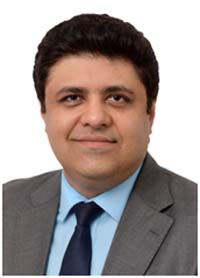
“The launch of a dedicated Centre of Excellence for DNA Forensics at NFSU is a promising step to address some of the long-standing issues in India’s criminal justice system. Firstly, it will help NFSU fill up vacancies for trained DNA analysts at FSLs, thereby reducing sample testing backlogs and case pendency. This entity can also play a key role in encouraging crime labs to adopt global best practices & quality standards for accurate, reliable, and efficient DNA testing across the country,” says Saurabh Marya, Senior Director, Asia Pacific, GTH-GA (a consulting firm specialising in forensic DNA policy)
“The other important contribution that it would make is assisting state agencies in adopting cutting-edge technologies like Rapid DNA and setting up India’s national offender DNA database in the future. As evident from such programs in 60 countries around the world, such a database will go a long way in bringing crime down, solving cases faster, and deterring repeat offenders. The government has already taken a major policy step towards this with the Criminal Procedure (Identification) Act, 2022 that provides legal sanction to the police to collect, store, and share DNA profiles of convicts & arrestees,” adds Saurabh Marya.