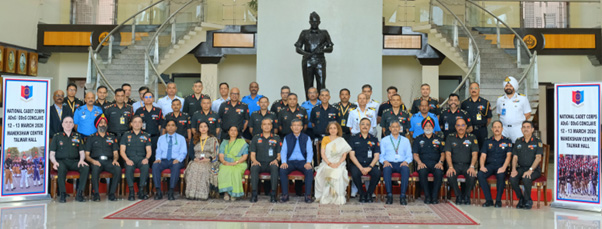
- Defence Secretary Rajesh Kumar Singh calls for transforming the National Cadet Corps in line with Viksit Bharat 2047 vision
- Senior NCC leadership deliberates on modern training, infrastructure expansion and emerging domains like drone and cyber capabilities
- Two-day conference at the Manekshaw Centre sets strategic direction for strengthening India’s premier youth uniformed organisation
NE DEFENCE BUREAU
NEW DELHI, MAR 12
A high-level leadership conference of the National Cadet Corps began in New Delhi on Thursday, bringing together senior officers from across the country to shape the future roadmap of India’s largest youth uniformed movement.
The two-day conference of Additional Directors General (ADGs) and Deputy Directors General (DDGs) commenced at the Manekshaw Centre, where Rajesh Kumar Singh, Defence Secretary, addressed the gathering of senior NCC leadership.
In his address, Singh underscored the need to transform the organisation in alignment with India’s long-term national development vision.
“The National Cadet Corps must continue evolving in step with the aspirations of a Viksit Bharat by 2047. NCC plays a pivotal role in shaping disciplined, responsible and nationally committed youth who will contribute to India’s future growth.”
He also praised the NCC’s expanding footprint in social outreach initiatives across the country.
“Beyond training, NCC cadets have consistently demonstrated leadership in social outreach programmes — from community service and disaster response to awareness campaigns that strengthen civic responsibility.”
During the interaction with senior officers from all NCC directorates, the Defence Secretary stressed the importance of coordinated efforts aligned with the Central Government’s policies and youth development initiatives.
“Synergised efforts across directorates will ensure that the goals and objectives of the NCC are realised more effectively and that the organisation continues to remain a powerful force for nation-building.”
Director General of NCC Virendra Vats highlighted key initiatives undertaken over the past year to expand the organisation’s reach and enhance operational capabilities.
“Over the past year, we have focused on expanding NCC’s presence while strengthening infrastructure and logistical support. Our aim is to ensure that cadets receive world-class training that prepares them for emerging national security and technological challenges.”
He added that the conference would examine critical areas shaping the future of cadet training.
“We are discussing issues ranging from quality of training and infrastructure development to emerging domains such as drone operations and cyber awareness, ensuring that NCC cadets remain future-ready.”
Senior officials participating in the conference also emphasised the importance of modernising training systems to reflect evolving technological and security landscapes.
An NCC official attending the deliberations noted: “The NCC has always been a bridge between youth development and national service. Integrating modern technologies into training will empower cadets with skills relevant to both defence preparedness and civil innovation.”
The conference serves as an important platform for senior NCC leadership to exchange ideas, share best practices and collectively chart a strategic roadmap for strengthening the organisation’s training ecosystem in the years ahead.
With over a million cadets across India, the National Cadet Corps continues to play a crucial role in fostering leadership, discipline and a spirit of national service among young citizens.