NE YOUTH BUREAU
NEW DELHI, AUG 3
For India’s youth, the road to Viksit Bharat is not merely paved with startups, AI, sporting medals and space missions—it must also remain free of addiction. Putting young Indians at the centre of a nationwide battle against substance abuse, Prime Minister Narendra Modi on Sunday launched the ‘Nasha Mukt Yuva for Viksit Bharat Sankalp Abhiyan’, urging citizens to turn the fight against drugs into a sustained social movement.
Speaking at the launch of 'Nasha Mukt Yuva for Viksit Bharat Sankalp Abhiyan', a 100-week campaign against substance abuse. I urge every citizen, especially our youth, to join this movement. https://t.co/ucvrcAyK4C
— Narendra Modi (@narendramodi) August 2, 2026
The launch brought together more than one crore young citizens connected from over 28,000 locations, as Modi underlined that a developed India requires a generation that is physically fit, mentally resilient, confident and free from destructive habits.
- PM launches ‘Nasha Mukt Yuva for Viksit Bharat’ campaign, calls on youth to reject addiction and protect their dreams
- Over one crore young citizens join nationwide launch from more than 28,000 locations, turning anti-drug pledge into a mass movement
- Fit India Sundays on Cycle puts fitness at the heart of the fight against substance abuse as students and young people take the Nasha Mukt Bharat pledge
- PM urges families to replace stigma with medical help and open communication when youngsters fall into addiction
- Professors asked to make campuses active anti-drug spaces through awareness, dialogue and sustained engagement with students
- Recovered youth described as “real warriors” as Modi stresses that addiction is a battle that can be won with support, treatment and determination
“Today, as the nation has set the goal of a Viksit Bharat, it is imperative that the country’s youth remain physically and mentally fit, brimming with self-confidence, and permanently steer clear of destructive habits like drugs,” Modi said.
His message found a powerful parallel at Delhi’s Jawaharlal Nehru Stadium, where students, young people and fitness enthusiasts participated in the 84th Fit India Sundays on Cycle, themed ‘Nasha Mukt Bharat’.
From a pledge to a 100-sunday movement
Modi said the campaign had grown from a pilot initiative launched in Kashi the previous year into a national project backed by more than 125 spiritual organisations and numerous NGOs under the Kashi Declaration.
“The coming 100 Sundays will absolutely become 100 strong steps in the direction of a completely drug-free India,” he said.
The campaign’s 100-week roadmap envisages dedicated activities every Sunday involving art, culture, sports and meditation, creating sustained engagement rather than restricting the anti-drug message to a one-day awareness exercise.
Modi urged every citizen, particularly young people, to join the movement.
“I urge every citizen, especially our youth, to join this movement,” he said.
Calling India’s young generation the country’s ‘Amrit generation’, the Prime Minister said their energy, imagination and talent would be crucial to achieving the nation’s 2047 development goals.
“For the ultimate future of the country and for your own lives, it is absolutely essential to keep yourselves free from addiction,” he said.
When fitness becomes anti-drug armour
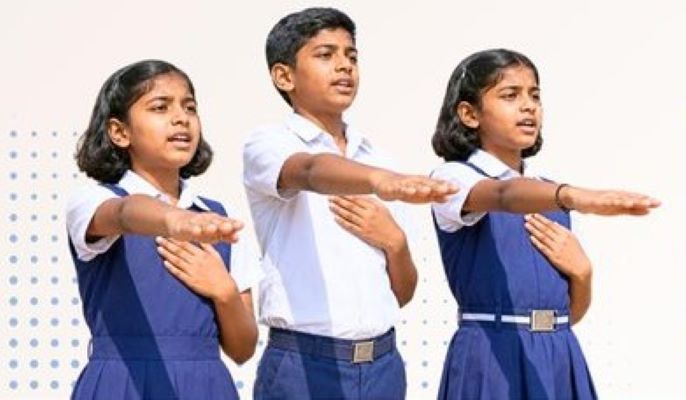
At the Fit India event, hundreds of participants took the ‘Nasha Mukt Bharat’ pledge, reaffirming their commitment to addiction-free lives and encouraging families, friends and communities to make healthier choices.
The pledge was followed by a 5-km cycling rally, while Zumba, yoga, tug-of-war and other recreational activities kept participants engaged. A thought-provoking Nukkad Natak by the Raahgiri Foundation reinforced the anti-drug message through street theatre.
The event also saw Asian U23 Athletics Championships silver medallist Sanjana felicitated as a Fit India Champion, along with other fitness and education advocates.
“Fit India Movement… is not just about fitness—it is about building a healthier way of life. Today’s Sundays on Cycle, themed ‘Nasha Mukt Bharat’, reflects the Prime Minister’s vision of an addiction-free India. Every young person should come forward and become a part of this movement,” Sanjana said.
University student Ritika Sharma said the collective pledge added meaning to the campaign.
“Taking the Nasha Mukt Bharat pledge together made the event much more meaningful. It reminded us that fitness is not only about physical health but also about making the right choices in life,” she said.
Modi: Don’t hide addiction—seek help
The Prime Minister also sought to shift the conversation around addiction from shame to treatment and recovery.
“We must protect every youth from falling into the trap of addiction,” he said.
He stressed that a young person who has already fallen into addiction should not be written off.
“Even if a youth has mistakenly fallen into the trap of addiction, it absolutely does not mean that all doors are closed for them,” Modi said.
He appealed to families to seek professional help rather than conceal addiction out of concern for social prestige.
“We must always remember, if a child in the house falls victim to addiction, do not hide it under the guise of social prestige; Seek help from whoever is needed; Try to free your child from addiction with medical help,” he said.
He also called for open communication between parents and children so that families can intervene before experimentation turns into dependency.
“We should also create a culture of open communication with children in the family, so that you can hold their hand before they get caught in such a whirlpool,” Modi said.
Campuses must join the frontline
The Prime Minister made a specific appeal to college and university professors to take the anti-drug message into classrooms and campuses.
“Alongside regular coursework, please discuss the perils of drug abuse with your students, spearhead a movement against addiction on your campuses; Your efforts can yield significant results,” he said.
His warning came against the backdrop of the remarkable achievements of Indian youth in startups, artificial intelligence, sports and space exploration. Addiction, he cautioned, can derail that potential, destroy careers and inflict lasting pain on families.
“When this devastation happens in a family or society, the overall strength of the entire nation also fundamentally weakens,” Modi said.
He also called for society to reject the normalisation of intoxication and extend dignity and second chances to those recovering from addiction.
“The youth who come out fighting addiction are not weak; they are real warriors whose incredible courage is their true identity,” he said.
The message: Choose dreams over drugs
The twin thrust of the day—Nasha Mukt Yuva for Viksit Bharat and Fit India Sundays on Cycle—sought to place fitness, discipline, mental strength and positive lifestyle choices at the centre of India’s youth-development agenda.
The Government said the Fit India cycling initiative is being conducted simultaneously across States and Union Territories through SAI Regional Centres, National Centres of Excellence, SAI Training Centres, Khelo India State Centres of Excellence and Khelo India Centres.
The campaign is organised by the Ministry of Youth Affairs and Sports in collaboration with the Cycling Federation of India, Raahgiri Foundation and MY Bharat.
Modi said the Government was also intensifying action against drug dealers and smugglers through nationwide enforcement and seizures.
But the deeper battle, his message suggested, cannot be won by enforcement alone.
It must also be fought inside homes, classrooms, playgrounds and communities—with conversation before crisis, treatment instead of stigma, fitness instead of intoxication and hope instead of rejection.
And for a country betting heavily on its young population to power its journey towards 2047, the message is unmistakable: protecting the youth from addiction is not merely a health mission—it is an investment in India’s future.