NE NEWS SERVICE
NEW DELHI, DEC 8
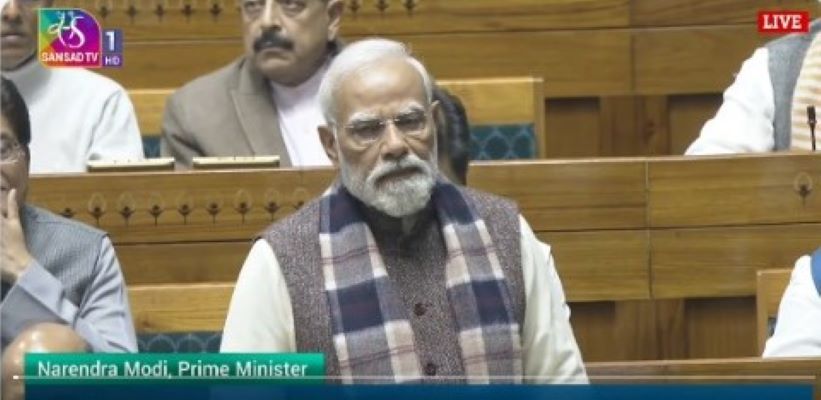
A special discussion was held in the Lok Sabha today to mark 150 years of the national song ‘Vande Mataram’, with Prime Minister Narendra Modi opening the debate. The House collectively reflected on the history, influence and contemporary relevance of the song originally composed by Bankim Chandra Chatterjee in 1875.
Hon. PM Shri @narendramodi ji remarks in the Lok Sabha during special discussion on 150 years of 'Vande Mataram'.#VandeMataram150 https://t.co/DuJR1pjiB3
— Jagat Prakash Nadda (@JPNadda) December 8, 2025
The Prime Minister noted that the country is observing a period of significant historical anniversaries, including Sardar Vallabhbhai Patel, Birsa Munda, and the 350th martyrdom year of Guru Tegh Bahadur. He said the discussion offered an opportunity to revisit events that shaped India’s freedom movement and evaluate the enduring cultural resonance of the national song.
- Prime Minister underscores historical milestones linked to the national song
- House reflects on its role in India’s freedom movement and cultural continuity
- Leaders revisit its journey from Bankim Chandra’s composition to modern significance
- Debate highlights legacy, controversies, and relevance for future generations
Tracing its 150-year journey, the PM recalled earlier milestones—its 50th year under colonial rule and its 100th year during the period of Emergency—to illustrate how its historical context shifted over time. He said the House was united in acknowledging the contribution of the song in shaping national consciousness during the independence struggle.
He also emphasised that ‘Vande Mataram’ emerged during a period when colonial authorities attempted to impose British cultural symbols across India. According to him, Bankim Chandra’s composition countered these pressures and evolved into a rallying cry from the late 19th century through the Swadeshi movement. He referenced its appearance in Anandamath in 1882, which further popularised it.
The Prime Minister recounted several historical episodes where the song became a symbol of civil resistance—including its use during the partition of Bengal in 1905, the rise of the Swadeshi movement, and protests led by students and women across Bengal and other regions. He mentioned freedom fighters including Khudiram Bose, Madan Lal Dhingra, Ram Prasad Bismil, Ashfaqulla Khan and others who reportedly invoked the slogan during their final moments.
He also cited its global imprint, noting references to its use among Indian revolutionaries in London and the publication of journals titled Vande Mataram by leaders such as Bipin Chandra Pal, Aurobindo Ghose, and Bhikaji Cama.
The PM further referred to historical debates around the song, particularly the political disagreements of the 1930s involving the Indian National Congress and the Muslim League, noting that these episodes shaped the discourse on national symbols in the decades before independence.
Addressing post-Independence developments, he said the sentiment associated with ‘Vande Mataram’ continued to surface during national crises and public movements—from food shortages to wars, and more recently during the COVID-19 pandemic. He added that the spirit of national commitment embedded in the song continues to be invoked during Independence Day and Republic Day observances.
He concluded by stating that as India progresses toward long-term goals, including the vision for a developed India by 2047, the discussion on ‘Vande Mataram’ at 150 years serves to highlight its historical significance and inspire future generations.