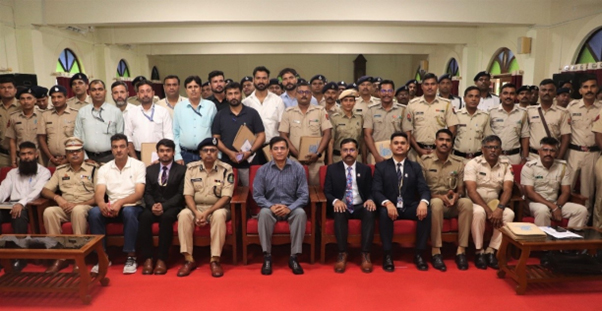
- The programme, inaugurated on September 15 in Goa, brings together police officials from Jammu & Kashmir, Daman & Diu and Dadra & Nagar Haveli, Andaman & Nicobar Islands, Lakshadweep, and Goa
- The opening session was chaired by Alok Kumar, DGP, Goa Police, with K. R. Chaurasia, IGP, Goa Police as Guest of Honour
NE EDUCATION BUREAU
GANDHINAGAR, SEPT 16
The School of Internal Security and SMART Policing (SISSP), Rashtriya Raksha University (RRU), in collaboration with the Goa Police, has launched a pioneering five-day residential training programme on Tourism Policing, marking the creation of a specialised cadre of tourist police in India.
The programme, inaugurated on September 15 in Goa, brings together police officials from Jammu & Kashmir, Daman & Diu and Dadra & Nagar Haveli, Andaman & Nicobar Islands, Lakshadweep, and Goa. Designed to strengthen capacity building, the initiative focuses on upskilling and reskilling officers to handle the unique challenges of tourism policing.
Inaugural Ceremony
The opening session was chaired byAlok Kumar, DGP, Goa Police, with K. R. Chaurasia, IGP, Goa Police as Guest of Honour. Other dignitaries present included Bhawani Sinh Rathore, Director, SISSP, RRU; Vishram Borkar, SP Training, Goa Police; Vishal Katariya, Junior Research Officer, RRU; and Aditya Bhushan, RRU.
Welcoming participants, Katariya described the training as a “first-of-its-kind initiative to ensure safe, sensitive, and professional policing in the tourism sector,” aligned with the national vision of Viksit Bharat @ 2047.
Key Highlights from Speeches
- Bhawanisinh Rathore emphasized the principle of Atithi Devo Bhava, stressing collective efforts to enhance India’s global tourism ranking.
- DGP Alok Kumar underlined the need for robust infrastructure, cultural awareness, and addressing crimes linked to tourism. He elaborated on Goa’s tourism ecosystem and the police response to related challenges.
Training Modules
The programme, scheduled from September 15–19, 2025, covers a wide range of topics, including:
- Tourist rights & emergency response
- Crisis management & conflict resolution
- Communication and soft skills
- Cultural sensitivity & diversity awareness
- Health and pollution control
- Code of conduct and contemporary challenges
- Use of AI and technology in tourism surveillance
Hands-on and practical sessions will complement the classroom modules.
Building Capacity Across States
With 78 participants from five states and UTs, the programme aims to enhance operational skills while fostering cooperation between law enforcement agencies and tourism stakeholders. By equipping officers with specialised training, the initiative seeks to ensure safe, visitor-friendly environments and strengthen India’s image as a global tourism destination.