


R ARIVANANTHAM
NEW DELHI, SEPT 24
The latest round of GST rate rationalisation by the GST Council has opened up a wide spectrum of opportunities for Tamil Nadu, a State that embodies both India’s cultural heritage and industrial modernity.
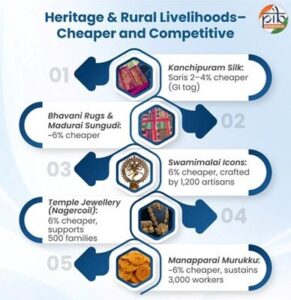
With tax cuts across textiles, handicrafts, coir, processed foods, fisheries, electronics, automobiles, renewable energy and defence, Tamil Nadu is expected to be one of the biggest beneficiaries of the reforms. The move will not only ease household budgets but also boost MSME competitiveness, strengthen exports, and support job creation across traditional and emerging sectors.
- From Tiruppur’s knitwear and Kanchipuram silk to EV hubs, defence corridors and renewable energy, GST cuts promise lower costs, higher competitiveness and stronger livelihoods across the State.
- GST cuts to 5% or nil across textiles, handicrafts, coir, food and fisheries will lower consumer prices by 6–11%.
- Traditional sectors like Kanchipuram silk, Bhavani rugs, Swamimalai icons and Manapparai murukku to gain renewed competitiveness.
- Large industries in automobiles, renewable energy, electronics and defence to benefit from lower input costs.
- Around 10 lakh jobs in Tiruppur knitwear, 22 lakh in automobiles, and 10.5 lakh fisherfolk to see direct impact.

Textiles & Handlooms:
The knitwear industry in Tiruppur, which contributes nearly 90% of India’s cotton knitwear exports, will see margins improve and global competitiveness rise with lower GST on apparel and accessories. Kanchipuram silk saris and other GI-tagged handloom products such as Bhavani Jamakkalam rugs and Madurai Sungudi sarees will also become more affordable, ensuring sustained demand and improved livelihoods for lakhs of weavers and artisans.
Handicrafts & Heritage Industries:
From Swamimalai bronze icons and temple jewellery of Nagercoil to Tanjore paintings and Mamallapuram stone carvings, Tamil Nadu’s handicrafts will gain a sharper edge in domestic and export markets. GST cuts make these heritage products 6–7% cheaper, opening wider avenues in tourism, diaspora and online marketplaces.
Coir, Food & Fisheries:
The coir industry in Pollachi and Cuddalore, dominated by women artisans, will benefit from lower tax rates on mats, ropes and geo-textiles. Dairy cooperatives like Aavin, packaged food MSMEs, and GI-tagged snacks such as Manapparai murukku will also gain from reduced GST. Fisherfolk across 14 coastal districts will find processed seafood exports more competitive, boosting rural livelihoods.
Industrial & High-Tech Sectors:
Tamil Nadu’s robust industrial clusters in Sriperumbudur, Hosur, Avadi and Coimbatore will see direct benefits. Lower GST on auto components, pumps, electronics and renewable energy equipment will reduce costs by 6–8%, supporting expansion and exports. The State’s EV hubs and electronics manufacturing corridors will gain further traction, while renewable energy projects become more viable.
Defence & Rail Manufacturing:
As one of India’s leading defence corridors, Tamil Nadu stands to gain from GST exemptions on military hardware, walkie-talkies, testing equipment and spares. The Integral Coach Factory in Chennai will also benefit from reduced input costs, improving efficiency in the production of modern coaches, including Vande Bharat trains.
A Balanced Growth Story:
The reforms reinforce Tamil Nadu’s unique economic profile – where heritage industries thrive alongside cutting-edge manufacturing. By reducing costs, improving margins, and making exports globally competitive, GST rationalisation is set to strengthen rural livelihoods while cementing Tamil Nadu’s role as an industrial powerhouse.
As India advances towards Atmanirbhar Bharat and Viksit Bharat 2047, Tamil Nadu emerges as a key State where tradition meets technology – and where GST reforms are poised to unlock widespread and lasting growth.