- DST-backed INST scientists develop multifunctional nanoparticles that slow disease progression
- EGCG, dopamine and tryptophan nano-assembly tackles plaques, stress and inflammation together
- BDNF-enhanced platform boosts neuronal repair and cognitive recovery in lab and animal studies
- Discovery published in ‘Small’ signals a promising shift toward comprehensive Alzheimer’s care
NE SCIENCE & TECHNOLOGY BUREAU
GANDHINAGAR, DEC 16
Alzheimer’s disease remains one of the most pressing global health challenges, with ageing populations sharply increasing patient numbers, caregiver burden, and healthcare costs. Existing treatments largely focus on single disease mechanisms such as amyloid plaque formation or oxidative stress, delivering limited clinical success in a condition known to be multifactorial.
Addressing this gap, researchers at the Institute of Nano Science and Technology (INST), Mohali—an autonomous institute under the Department of Science and Technology (DST)—have combined nanotechnology, molecular biology and computational modelling to design a comprehensive therapeutic platform.
Multifunctional nanoparticles at the core
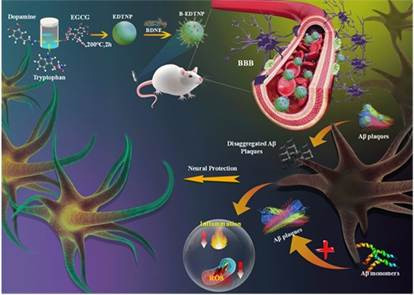
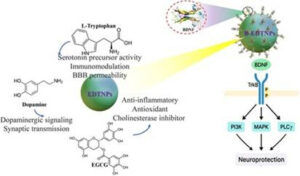
The newly developed nanoparticles integrate epigallocatechin-3-gallate (EGCG), a powerful antioxidant derived from green tea, with dopamine, a key neurotransmitter, and tryptophan, an essential amino acid. The resulting construct—termed EGCG–dopamine–tryptophan nanoparticles (EDTNPs)—is engineered to simultaneously counter four major hallmarks of Alzheimer’s: amyloid aggregation, oxidative stress, neuroinflammation and neuronal degeneration.
This multi-pronged action marks a departure from conventional single-target therapies, positioning EDTNPs as a more holistic intervention against the complex biology of AD.
Boosting brain repair with BDNF
Taking the strategy a step further, the team incorporated Brain-Derived Neurotrophic Factor (BDNF)—a protein critical for neuron survival, growth and synaptic function—onto the nanoparticles. The resulting BDNF-functionalised nanoparticles (B-EDTNPs) form a dual-action platform that not only dismantles neurotoxic amyloid-beta plaques but also actively promotes neuronal regeneration.
Such a combination of antioxidant, anti-amyloid and neurotrophic effects is rare in Alzheimer’s therapeutics and represents a notable innovation in the field.
Promising results in models
The research, led by Dr Jiban Jyoti Panda along with Himanshu Shekhar Panda and Sumit at INST, and supported by collaborators from NIPER Raebareli and Gujarat Biotechnology University, employed biocompatible synthesis techniques including pressure-assisted hydrothermal and electrostatic co-incubation methods.
In laboratory studies and mouse models, the nanoparticles successfully disassembled toxic protein plaques, reduced neuroinflammation, restored cellular balance in brain tissue, and significantly improved learning and memory. Computational simulations further revealed that the nanoparticles bind directly to amyloid-beta fibrils, destabilising and breaking them down at the molecular level.
Toward next-generation Alzheimer’s care
Published in the international journal Small, the study highlights the potential of multifunctional nanomedicine to redefine Alzheimer’s treatment. By acting on multiple disease pathways at once—while also supporting neuronal growth—the therapy could improve patient outcomes, reduce caregiver stress, and pave the way for more personalised and effective interventions.
While further studies and clinical trials are needed, the findings mark an important step toward comprehensive, disease-modifying therapy for Alzheimer’s disease.