- Nature-Inspired Nano-Gateways Promise a Low-Carbon Industrial Future
- CSIR–IIT Gandhinagar–NTU Singapore Team Builds Ultra-Precise ‘POMbranes’
- From Polluted Textile Effluents to High-Purity Generic Drugs—All Through a One-Nanometre Hole
- Technology Targets 40–50% Global Industrial Energy Drain Caused by Outdated Separation Methods
- A Major Boost to India’s Decarbonisation Drive and Circular Water Economy
NE ENVIRONMENTAL BUREAU
GANDHINAGAR, JAN 21
In a breakthrough that could redefine industrial sustainability, scientists from the CSIR–Central Salt and Marine Chemicals Research Institute (CSMCRI), IIT Gandhinagar, Nanyang Technological University (Singapore) and the S N Bose National Centre for Basic Sciences have engineered a crystalline nanoscale membrane capable of transforming textile wastewater recycling and pharmaceutical purification—without the massive carbon footprint of conventional methods.
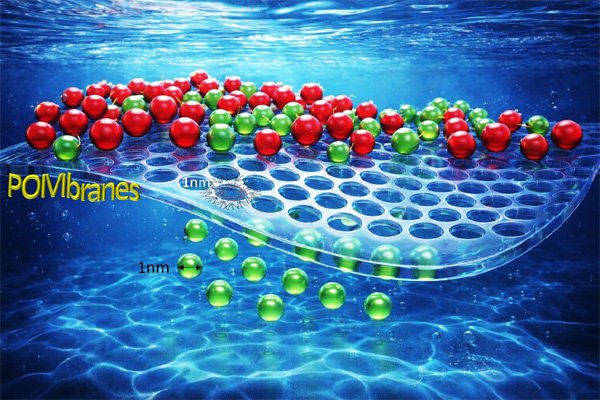
Published in the prestigious Journal of the American Chemical Society, the study introduces “POMbranes”—ultra-selective membranes built around one-nanometre-wide molecular gateways, thousands of times thinner than a human hair, yet precise enough to separate molecules differing by just 100–200 Daltons.
Industrial “separations” such as dye removal, drug purification and solvent recovery currently consume 40–50% of global industrial energy, largely due to heat-intensive processes like distillation and evaporation. The newly developed membranes offer a low-energy, high-precision alternative, directly aligning with India’s national decarbonisation and sustainability goals.
“To address these limitations, we engineered a new class of ultra-selective, crystalline membranes called POMbranes, which contain pores that are about one nanometre wide,” said Dr Shilpi Kushwaha, Senior Scientist at CSMCRI. “This precise pore size mimics biological gatekeepers such as aquaporins.”
At the heart of the innovation are polyoxometalate (POM) clusters—crown-shaped metal molecules with a permanent, perfectly sized central hole.
“These POMs are tiny, crown-shaped metal clusters that have a permanent, perfect hole in their centre that does not change or lose shape, which is the biggest hurdle with traditional plastic filters,” explained Priyanka Dobariya, CSMCRI research scholar and co-first author.
To convert billions of such molecular rings into large, defect-free membranes, the team attached flexible chemical chains that self-assemble when spread on water, forming ultrathin crystalline films.
“This forced molecules to cross the membrane through the only open path—the one-nanometre holes—allowing the membrane to act like a high-tech sieve,” said Dr Raghavan Ranganathan, Associate Professor, Materials Engineering, IIT Gandhinagar.
Molecular simulations carried out by Dr Ranganathan and Vinay Thakur, PhD scholar and co-first author, revealed how the membranes achieve exceptional selectivity and stability.
According to Dr Ketan Patel, Principal Scientist at CSMCRI, the performance leap is dramatic.
“Our membranes show almost ten times better separation performance compared to existing technologies, while remaining flexible, stable, and scalable,” he said. “This combination is essential for wide industrial adoption.”
Big impact for textiles & pharma
The innovation holds particular promise for India’s textile and pharmaceutical sectors, both major economic pillars.
Textiles contribute over 2.3% of India’s GDP and nearly 13% of industrial production, but dyeing and finishing generate vast quantities of polluted wastewater. The new membranes can selectively remove dye molecules while enabling large-scale water reuse, sharply cutting freshwater consumption and chemical discharge.
For pharmaceuticals, where purity is paramount and energy costs are high:
“Processes like drug purification and solvent recovery are both energy-intensive and quality-sensitive,” noted Vinay Thakur. “Highly selective membranes such as these can lower energy use while maintaining stringent quality standards.”
A platform for future green industry
With tunable pore structures, chemical stability across wide pH ranges, and scalability into large sheets, POMbranes are being positioned as a platform technology for next-generation manufacturing—from wastewater treatment to advanced chemical processing.
By borrowing a core principle from biology—absolute molecular precision—and translating it into an industrial-scale material, the researchers have demonstrated how nature-inspired nanotechnology can solve some of the most pressing environmental challenges of modern industry.