R ARIVANANTHAM
CHENNAI, FEB 17
In a transformative leap for climate science and environmental intelligence, Indian Institute of Technology Madras has partnered with the Finnish Meteorological Institute (FMI) to launch ‘VAYYU’—the Virtual Research Centre on Aerosol–Meteorology Interactions, Himalayan Atmosphere-Cryosphere dynamics, and Urban Air systems.
This cutting-edge knowledge hub aims to decode the complex interplay between aerosols, climate systems, Himalayan glacier melt, and air quality in Indian megacities, using advanced simulations, high-resolution observations, and integrated climate modelling frameworks.
- Landmark Indo-Finnish Virtual Research Centre to unlock next-generation climate modelling, air quality forecasting and glacier monitoring
- Advanced simulations and cutting-edge observatories to decode aerosol impact on monsoons, megacity pollution and cryosphere stability
- Global collaboration strengthens climate resilience, hydro-meteorology prediction and sustainable development through science diplomacy
- VAYYU integrates global expertise, Himalayan supersites and Chennai urban observatory to deliver actionable climate intelligence
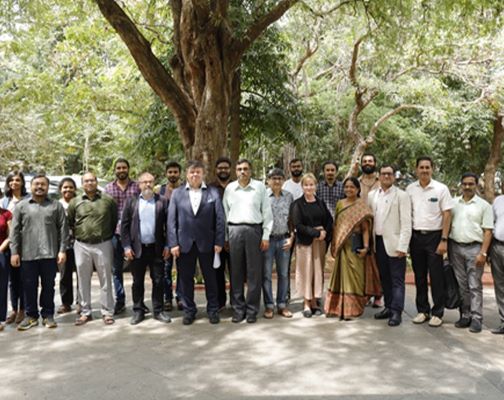
A Memorandum of Understanding formalising this strategic collaboration was signed by senior leadership from both institutions, including Prof. Shanti Pawan, Dean (Research), Prof. Manu Santhanam, Dean (ICSR) and VAYYU research centre coordinator Prof. Chandan Sarangi of IIT Madras, alongside FMI leadership including Prof. Petteri Taalas, Prof. Hannele Korhonen and Dr. Rakesh K. Hooda.
Welcoming the initiative, V. Kamakoti, Director, IIT Madras, said: “Climate change and monitoring is the most important area to be investigated in a global platform. It is very heartening to note that IIT Madras will partner with Finnish Meteorological Institute in this very important topic.”
Highlighting the deepening scientific partnership, Petteri Taalas, Director General, FMI, said: “I am pleased to strengthen our collaboration with IIT Madras through this MoU, building on three years of joint work on Himalayan aerosols to address challenges of importance to India and the wider world.”
Decoding Aerosols, Monsoons and Himalayan Climate Risks
The VAYYU centre will focus on understanding how atmospheric aerosols influence regional hydro-climate patterns, accelerate Himalayan glacier melting, and affect air quality across rapidly urbanising megacities.
By combining advanced atmospheric simulations with state-of-the-art observation platforms, the centre will generate predictive models capable of improving climate forecasting, disaster preparedness, and sustainable urban planning.
The initiative represents a major advancement in Indo-Finnish scientific cooperation, reinforcing global efforts to address climate change through data-driven research and technological innovation.
Underscoring its diplomatic and scientific importance, Hemant H. Kotalwar, Ambassador of India to Finland, said: “The India-Finland collaboration through VAYYU marks a significant milestone in bilateral science diplomacy, bridging IIT Madras’ modelling prowess with FMI’s climate expertise to tackle aerosol-driven risks to our monsoons and urban health. This virtual centre will empower Indian researchers with cutting-edge tools for predictive hydro-meteorology and air quality management, strengthening our shared vision for sustainable development.”
Echoing this sentiment, Kimmo Lähdevirta, Ambassador of Finland to India, said: “This partnership exemplifies Finland’s commitment to collaborative climate science, leveraging FMI’s world-class expertise in aerosol dynamics and weather prediction to address pressing challenges in South Asia. VAYYU will foster innovation in modelling aerosol impacts on monsoons and air quality, paving the way for joint policies that enhance regional resilience.”
Powered by Global Flagship Projects and Advanced Observatories
VAYYU builds upon two major international research initiatives already connecting IIT Madras and FMI.
One is the €10-million CryoSCOPE project, supported by the European Union, Switzerland, and India’s Ministry of Earth Sciences, which deploys advanced monitoring systems in the Himalayas at Kargil to study aerosol-driven glacier melt, drought, and flood risks.
The second is the CO-ENHANCIN project funded by the Research Council of Finland, which enabled the creation of IIT Madras’s state-of-the-art urban observatory in Chennai, valued at approximately ₹5 crore. Located at the IIT Madras satellite campus, this facility features advanced aerosol analysers, lidar profilers, rain radar, and atmospheric monitoring systems to generate real-time data for air quality assessment and climate modelling.
A Global Climate Intelligence Hub for the Future
By bringing together a global consortium of scientists, engineers, and climate experts, VAYYU will create a powerful collaborative platform to generate actionable climate insights and policy-relevant tools.
The centre integrates IIT Madras’ strengths in atmospheric modelling and engineering with FMI’s global leadership in aerosol science and climate prediction, enabling high-precision climate risk assessment and sustainable development planning.
This pioneering initiative positions India at the forefront of global climate research and reinforces IIT Madras’ leadership in advancing science-based solutions to safeguard ecosystems, cities, and future generations.