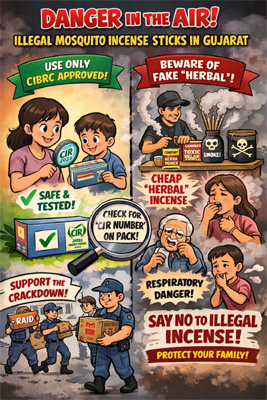
- State emerges as major manufacturing hub for unapproved mosquito repellent incense sticks worth ₹1,800 crore nationwide
- Health experts warn of respiratory risks from smoke-based products made with unapproved chemicals
- Authorities intensify crackdown under Insecticides Act, 1968; over 100 raids supported across India
- Consumers urged to check for CIBRC-approved ‘CIR’ registration number before buying mosquito repellents
NE LAW & BUSINESS BUREAU
AHMEDABAD, FEB 21
Gujarat is confronting a growing yet largely unnoticed public health and regulatory crisis, emerging as one of the biggest manufacturing hubs for illegal mosquito repellent incense sticks in India. Marketed aggressively as “herbal” or “natural,” these unapproved products are entering homes at low prices but may carry serious health risks.
Industry representatives and health experts are warning that illegal mosquito agarbattis, sold at ₹10–15 in local shops, general stores, and even pharmacies, often contain unapproved or illegally imported chemicals. Unlike government-approved mosquito repellents, these products bypass mandatory safety testing and regulatory oversight.
The illegal incense stick market in India is estimated to exceed ₹1,800 crore, with Gujarat identified as one of the largest manufacturing centres for such unsafe products.
Health risks hidden behind “herbal” claims
Many of these unregulated smoke-based repellents lack approval from the Central Insecticides Board & Registration Committee (CIB&RC), the statutory authority under the Ministry of Agriculture and Farmers Welfare responsible for approving chemicals used in mosquito repellents.
Government-approved mosquito repellents carry a Central Insecticide Registration (CIR) number on their packaging, confirming that the product has undergone a mandatory three-year safety and efficacy evaluation. Illegal incense sticks, however, display no registration number, are often manufactured by untraceable operators, and bypass essential testing related to skin, eye, and respiratory safety.
Raising alarm over the health implications, Dr. Mukesh Sanklecha, Consultant Paediatrician at Bombay Hospital Institute of Medical Sciences, said: “Be cautious of smoke-based repellents like unregulated incense sticks. These are often made with illegally imported and unapproved chemicals. While they may seem affordable, they lack quality control and could pose serious health risks. Instead, choose repellents from trusted brands that are CIBRC-approved to ensure both safety and effectiveness.”
Medical experts caution that prolonged exposure to smoke from such products may trigger respiratory issues, particularly among children, the elderly, and individuals with pre-existing health conditions.
Regulatory crackdown gathers pace
Government authorities across multiple states, including Maharashtra, Andhra Pradesh, and Telangana, have intensified enforcement against illegal mosquito agarbattis such as Comfort and Sleepwell. Statewide directives, raids, and action under the Insecticides Act, 1968, signal a stronger regulatory push to curb unapproved mosquito repellent products.
The Home Insect Control Association (HICA), a non-profit industry body promoting safe household insecticide use, has been working with central and state authorities to curb the menace. Between 2018 and 2024, HICA has supported over 100 raids on producers, wholesalers, and sellers of illegal mosquito repellent incense sticks across India.
Jayant Deshpande, Honorary Secretary, HICA, said: “As the threat of mosquito-borne diseases like malaria and dengue is ever increasing, prevention is critical. However, a major critical concern is the rampant use of illegal mosquito repellent incense sticks, which have entered homes across Gujarat. Illegal mosquito repellent incense sticks are sold under dubious names like Comfort, Relax, Power, Extra Power, and contain illegal chemicals, which is not approved by CIBRC. Any mosquito repellent is mandated to undergo rigorous testing for 3 years to ensure they meet safety and efficacy standards, providing people with the peace of mind of knowing that using these products won’t harm them in any way. These illegal repellent incense sticks manufactured by unscrupulous players do not go through the government regulated manufacturing processes and bypass essential checks on safety parameters of skin, eye and respiratory system which is mandated for all home insecticide products.”
He further added: “Gujarat has emerged as one of the biggest manufacturing hub for illegal mosquito repellent incense sticks. These illegal repellents bypass both legal and financial processes, leading to tax evasion as well. To safeguard against mosquito-borne disease, people should only use government-approved mosquito repellents with a registration number (starting with CIR) printed on the packaging. The registration number (CIR number) is mentioned followed by the year of approval by the government which guarantees the authenticity and safety of the product.”
Public awareness critical in fight against mosquito-borne diseases
The widespread availability of unapproved mosquito repellent incense sticks not only poses potential health hazards but also undermines India’s fight against mosquito-borne diseases such as dengue and malaria, as their efficacy remains untested and unreliable.
Experts and industry bodies are urging consumers to:
- Check for a valid CIR number on packaging
- Avoid products marketed vaguely as “herbal” or “natural” without regulatory approval
- Purchase only CIB&RC-approved mosquito repellents from trusted brands
As enforcement tightens, public awareness remains the most powerful defense against unsafe products entering homes. Ensuring the use of certified mosquito repellents is critical to protecting families while strengthening India’s broader public health safeguards.