
- SHE platform for women entrepreneurs partnered with financial professionals, bankers and government departments to empower women entrepreneurs to take decisions about credits, loans, business accounting and wealth creation
- Experts decode investing, banking, credit access and business finance for homepreneurs and MSME leaders
- Seminar hghlights women’s proven strength as disciplined investors and resilient wealth builders
- Government schemes, digital platforms and collateral-free loans open new pathways to enterprise growth
- Initiative aims to build financially confident women who can lead businesses, secure futures and shape India’s economic rise
NE WOMEN EMPOWERMENT BUREAU
AHMEDABAD, MAR 1
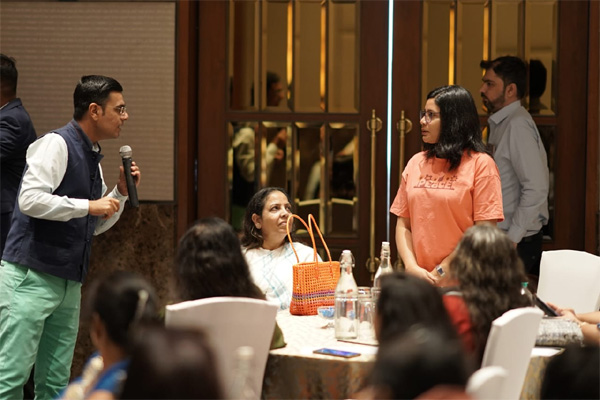
In a decisive push towards economic independence and entrepreneurial leadership, SHE—a platform dedicated to women entrepreneurs—along with Kalyani Sahasik Mahila Vikas Sangh and the Innovative Food Entrepreneurs Association, organised a powerful seminar on Financial Literacy for Women Entrepreneurs in Ahmedabad.
The seminar brought together financial experts, bankers and industry leaders to equip women with practical tools to move beyond traditional saving habits and embrace structured investing, business finance and wealth creation—key pillars of long-term empowerment.

Addressing the gathering, Pravin Sumesara of Franklin Templeton highlighted the emerging strength of women investors and the urgent need to bridge the financial confidence gap.
“Research and industry data increasingly show that women are effective, sensible, and often superior long-term investors, characterized by a disciplined approach that prioritizes goal-based planning over rapid, impulsive trading. While historically underrepresented in financial markets, women are rapidly closing the investing gap, with studies revealing they often achieve higher returns than their male counterparts.”
Emphasising the urgency of financial independence, he said: “Women live longer than men. Unfortunately, traditional gender roles have often left women in charge of housework, budgeting and saving, while men have managed enterprises, investment and wealth creation. These women face problems in events like being widowed, husbands getting disabled, ill or bedridden, divorce or family’s misfortunes, as they are not equipped to take over family businesses or take independent decisions about investment. Because of lower confidence or training in investment women hold money in cash or saving, which can be eroded by inflation.”
He further underlined the accessibility of investing for women at any stage of life: “Investing is not gambling. Mutual funds and other investments can help a young woman in her 20s or 30s build wealth even if she starts by investing 1,500-2,500 per month in systematic investment plans.”
Empowering woman entrepreneurs to build sustainable businesses
Providing a business finance perspective, Chartered Accountant Siddharth Bhatt of Ahmedabad Chamber of Commerce Welfare Fund highlighted the growing leadership role of women across India’s entrepreneurial landscape.
“Many MSMEs, startups and other businesses have woman promoters. Many women are micro-entrepreneurs like home chefs, cloud kitchen operators, fashion designers, etc. For homepreneurs and other micro-entrepreneurs, it is important to separate personal and professional expenses when acccounting. They must know their revenue and costs, understand the breakeven point, and monitor cash flow regularly.”
He stressed that modern digital infrastructure has transformed opportunities for woman entrepreneurs. “It is possible to start and grow low-capital intensive, asset-light businesses that do not need big money to start and grow. Digital India has been a game-changer – women are now able to use online selling platforms, get digital credit access, use digital payment channels and get a nation-wide reach while staying in their city or town.”
Highlighting easier access to funding, he added: “Collateral-free bank loans are not difficult to get these days, and the interest is not a very high cost to get access to capital. The many schemes of the government for women and other entrepreneurs can lower the overall cost of borrowing.”

Understanding credit, loans and banking for business growth
Explaining how women entrepreneurs can leverage banking support, Gagan Gupta, Assistant General Manager of UCO Bank, said: “A bank loan provides immediate access to capital for growth, expansion, or inventory, while allowing owners to maintain full company ownership and control. Various options, such as term loans, working capital loans and limits, exist and it is important that you understand which one fits your needs.”
He emphasised the importance of planning and credibility in securing finance: “Whether you are looking at expansion by increasing production capacity, buying new equipment or increasing market penetration, or keeping operations running during off-season or when waiting for client payments, you can get the appropriate loan from the banks. However, it is important to gain the confidence of bankers by ensuring that you have a clear vision for your business, a business plan, and a positive credit profile. The bank manager will evaluate the applicant’s character, cash flow, and the purpose of the loan, and judge the applicant’s ability for repayment.”
Government schemes accelerating women-led enterprise growth
Highlighting institutional support, Tejas Mehta from District Industries Centres (DIC) explained the wide range of government initiatives designed to enable women entrepreneurs.
“They facilitate several schemes for women entrepreneurs, offering collateral-free loans, subsidies, training to start or expand businesses, export and participate or exhibit at trade events. Key initiatives include the PMEGP (Prime Minister’s Employment Generation Programme), Stand-Up India and Mahila Udyam Nidhi Scheme, which provide financial assistance and support for small manufacturing/service units. There are also small schemes for artisans.”
Building financially confident women, building a stronger nation
The seminar reinforced a powerful truth: financial literacy is not just about money—it is about independence, resilience and leadership.
By equipping women entrepreneurs with knowledge on investing, credit access, business planning and government schemes, the initiative is helping transform savers into investors, homepreneurs into business leaders, and financial participants into wealth creators.
Such efforts are essential in unlocking the immense economic potential of women, strengthening families, communities and the nation’s entrepreneurial ecosystem.
f