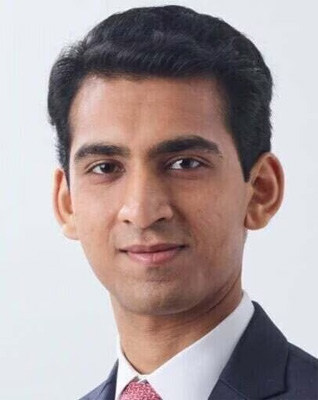
- Sagar Adani calls energy the “foundation of national resilience” at Economist Summit
- India must add ~2,000 GW capacity to fuel Viksit Bharat 2047 vision
- Electrification, domestic resources and diversified mix key to stability
- Adani Group bets big on integrated energy, logistics and digital backbone
NE BUSINESS BUREAU
NEW DELHI, APR 29
At the Resilient Futures Summit in New Delhi, Sagar Adani delivered a compelling blueprint for India’s economic resilience, placing energy security at the heart of the nation’s growth strategy.
“In this century, access to energy will define resilience,” he said, underscoring how global conflicts and market shocks are reshaping economic priorities worldwide.
Energy: From Growth Enabler to Survival Imperative
Highlighting the shifting global landscape, Adani noted that resilience is no longer theoretical.
“Today, resilience is no longer a concept confined to classrooms… It is real. It is present. And it is affecting all of us—right now,” he said.
He pointed out that nations are now judged not just by growth rates but by their ability to absorb disruptions: “The question… is no longer just how fast can you grow—it is: How well can you withstand disruption.”
India’s Defining Constraint—and Opportunity
Positioning India at a critical inflection point, Adani said: “If you step back and look at India’s development challenge, almost every major constraint converges into one: Energy.”
From agriculture and water to AI and economic stability, he emphasized that energy underpins every sector. Yet, India’s per capita consumption remains significantly below global benchmarks.
“We are talking about a structural leap… adding nearly 2,000 gigawatts of new capacity over the next two decades,” he stated, calling it both a challenge and a historic opportunity.
Electrification and Energy Independence the Way Forward
Adani laid out a clear roadmap: “We must electrify everything. We must reduce structural dependence on imported energy.”
He stressed that electrification offers India its “most credible path to long-term stability,” but warned that scaling electricity supply would require pragmatic choices.
“Renewables will—and must—scale rapidly… But… India must adopt a portfolio approach.”
That mix, he said, must include: renewables, hydro, efficient thermal, and nuclear power.
“Without firm, scalable baseload power, the math simply does not work.”
Policy Continuity Fuelling Investor Confidence
Acknowledging policy support, Adani credited India’s governance framework for enabling growth: “There has been both clarity of intent and continuity of action… and that continuity is a critical enabler of resilience.”
He highlighted reforms ranging from infrastructure expansion to regulatory simplification as key drivers of business confidence.
Adani Group’s $100 Billion Energy Bet
Detailing the conglomerate’s strategy, Adani said the Adani Group is positioning itself as a long-term infrastructure builder.
“We see ourselves not just as operators… but as builders of India’s energy backbone.”
He reiterated Chairman Gautam Adani’s commitment: “Over $100 billion towards the energy transition—one of the largest private-sector commitments globally.”
The group’s approach integrates renewable energy, storage, transmission, green hydrogen, and allied sectors like ports, logistics, airports, and data centres.
“Resilience is never built in silos. It is built through integrated systems.”
Execution Will Define India’s Energy Future
Concluding on a note of urgency, Adani framed the challenge ahead: “The real question is not whether India will need more energy… The real question is: How fast can we build it?”
He added: “Resilience is not built through intent alone. It is built through execution.”
If India succeeds, he said, the impact will extend far beyond its borders: “We will not just secure our own future… We will help stabilize the future of the global economy.”