- A 200-year legacy anchoring India’s cultural renaissance in a changing world
- From Ayodhya excavations to heritage preservation, archaeology shapes national discourse
- Institution that nurtured icons now seeks renewed national backing
- Bridging Vikas and Virasat through archaeology, indology and living heritage
ALOK KUMAR KANUNGO
In an age once expected to dissolve identities into a global sameness, the world is instead witnessing a resurgence of cultural consciousness. This renewed assertion has placed disciplines like archaeology, linguistics, and ancient studies at the heart of civilisational continuity—where heritage is not merely preserved but constantly interpreted and reaffirmed.
India’s own cultural reawakening has been marked by decisive moments and institutions that shaped national discourse. “A turning point came on 1st August 2002, when the Lucknow Bench of the Allahabad High Court ordered excavations at Ayodhya, affirming the importance of archaeological methods in resolving even legal disputes.”
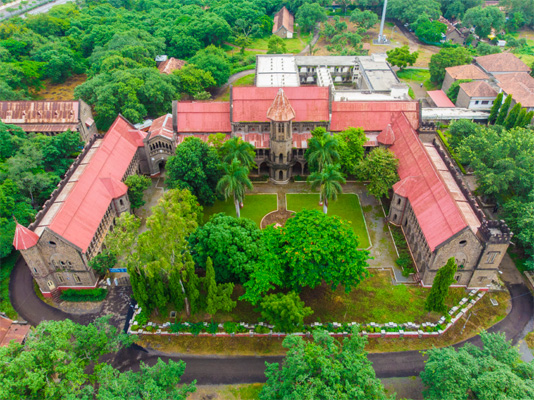
At the centre of this intellectual and cultural resurgence stands Deccan College Post-Graduate & Research Institute—an institution that has not only witnessed history but actively shaped it. Established in 1821, it remains one of India’s oldest centres of higher learning and a pioneering force in archaeology, Indology, and linguistics.
Located on the historic grounds of the Third Anglo-Maratha War, the institution carries within it the legacy of a civilisational struggle and revival. Over decades, it evolved into a crucible of thought, producing leaders like Bal Gangadhar Tilak and Gopal Ganesh Agarkar, while hosting eminent scholars such as R.G. Bhandarkar.
Its revival in 1939 marked the beginning of modern Indian archaeology, social sciences and linguistics, led by pioneering minds like H.D. Sankalia, Irawati Karve and S.M. Katre. Since then, the institution has remained a cornerstone of interdisciplinary scholarship.
From path-breaking excavations like Inamgaon to its monumental Sanskrit Dictionary project, Deccan College has built an unparalleled repository of knowledge. Its vast library, rare manuscripts, and specialised labs have made it a global hub for heritage studies.
Yet, despite its towering contributions, the institution has faced challenges in recent decades, as funding priorities shifted toward applied sciences. This imbalance, experts argue, risks weakening the very foundations of cultural scholarship at a time when it is most needed.
Today, however, the tide appears to be turning. Across India, initiatives in cities like Varanasi, Patna and projects in Gujarat signal a renewed focus on heritage. The revival of Nalanda University and the newly built Indian Institute of Heritage and Conservation reflect a broader national vision.
Against this backdrop, Deccan College stands ready—not merely as a legacy institution, but as a future-ready centre of excellence.
If India seeks to anchor its cultural renaissance in scholarship and authenticity, the answer may already exist in Pune—a living institution where history, knowledge, and identity converge.
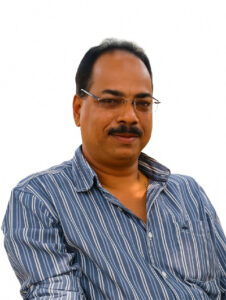
Alok Kumar Kanungo (kanungo.co.in), author/editor of 19 books on Indian culture, is an HSS faculty in IIT Gandhinagar and an alumnus of Deccan College. He can be contacted at kanungo71@gmail.com