

R ARIVANANTHAM
CHENNAI, MAY 21
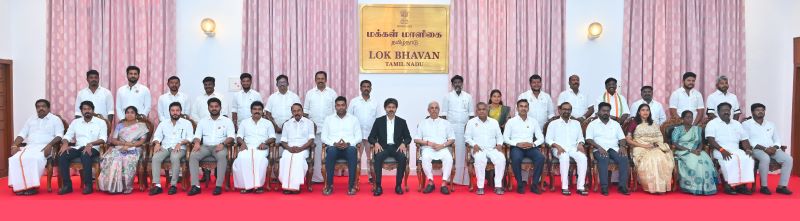
In a politically calibrated and administratively significant move, Tamil Nadu Chief Minister C. Joseph Vijay on Wednesday unveiled a carefully structured expansion of his ministry, balancing regional representation, governance priorities and political strategy as the new government settles into office.
LOK BHAVAN, TAMIL NADU – PRESS RELEASE Tamil Nadu Ministers Portfolios Details #CMJosephVijay @rashtrapatibhvn @VPIndia @PMOIndia @HMOIndia@rajendraarlekar @KeralaGovernor @CMOTamilnadu@MIB_India @PIB_India @pibchennai @DDNewslive@DDTamilNews @airnewsalert… pic.twitter.com/yH8H26uH4d
— LOK BHAVAN, TAMIL NADU (@lokbhavan_tn) May 21, 2026
The latest cabinet exercise is being viewed as a major attempt by the Vijay-led administration to ensure equitable representation for all regions of Tamil Nadu while simultaneously aligning portfolios with administrative expertise, electoral influence and future governance goals.
- C. Joseph Vijay expands Tamil Nadu ministry with emphasis on balanced regional representation and administrative efficiency
- Portfolio allocation designed to ensure equal political weightage across northern, western, southern and delta districts of Tamil Nadu
- Key ministries distributed strategically among experienced faces, technocrats and emerging political leaders
- Cabinet expansion seen as an attempt to strengthen governance delivery, coalition management and district-level political outreach
- Move signals Vijay government’s focus on inclusive administration, infrastructure growth, welfare delivery and industrial development
Highly placed sources indicated that the Chief Minister personally oversaw the allocation of portfolios with a clear emphasis on maintaining geographical balance between northern Tamil Nadu, western industrial belts, southern districts, delta regions and urban centres including Chennai.
Regional Representation Takes Centre Stage
Political observers noted that the ministry expansion reflects a conscious effort by the government to avoid regional imbalances that have historically triggered political criticism in Tamil Nadu politics.
Ministers from the western Kongu belt, southern districts, northern Tamil Nadu and Cauvery delta regions have reportedly been accommodated in significant departments, ensuring statewide political outreach and governance penetration.
Political Message Beyond Cabinet Formation
Beyond governance, the ministry expansion carries significant political messaging. Observers believe the Chief Minister has attempted to carefully manage caste equations, alliance expectations, regional aspirations and generational representation without triggering internal discontent. The balancing exercise is being viewed as one of the earliest major political tests for the Vijay-led administration since assuming office. Government insiders said further administrative restructuring, appointments to boards and corporations and departmental reviews are expected in the coming weeks as the new government accelerates policy implementation across Tamil Nadu.
Sources in the government said the allocation exercise aimed at giving equal political visibility to leaders representing rural, urban, industrial and agrarian constituencies.
The move is also expected to strengthen the government’s grassroots administrative connect and district-level monitoring mechanisms.
Key Portfolios Allocated with Governance Focus
According to officials, the Chief Minister adopted a “performance-and-specialisation” approach while distributing portfolios.
Critical departments linked to:
- Infrastructure
- Industries
- Finance
- Home
- Health
- Education
- Rural Development
- Welfare Schemes
- Information Technology
- Transport
have reportedly been assigned after extensive internal consultations and political assessments.
The government is understood to have prioritised administrative continuity, faster project execution and policy coordination while assigning ministries.
Balancing Experience with Emerging Leadership
The ministry expansion also reflects an effort to strike a balance between experienced political leaders and younger faces within the ruling establishment.
Senior leaders with legislative and administrative experience have been entrusted with heavyweight portfolios, while emerging leaders have been given developmental and people-centric departments to strengthen future leadership pipelines.
Political analysts say the move helps the Vijay government consolidate both governance stability and long-term political positioning ahead of upcoming parliamentary and local body electoral cycles.
Focus on Welfare, Investments and Infrastructure
Sources indicated that the Chief Minister wants ministries to function with measurable targets and district-level accountability mechanisms.
The government is expected to focus heavily on:
- Welfare delivery
- Women-centric schemes
- Employment generation
- Industrial investments
- Urban infrastructure
- Public transport modernisation
- Healthcare access
- Education reforms
- Rural connectivity
The portfolio allocation exercise is also seen as part of the government’s larger attempt to project administrative seriousness and policy-driven governance under the new political dispensation.