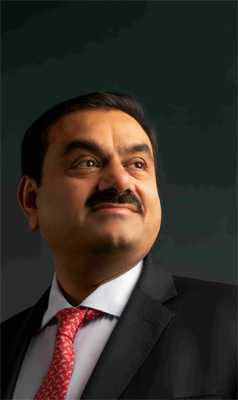
- At AGM 2026, Gautam Adani pitches a high-voltage blueprint that fuses hard infrastructure with artificial intelligence to power India’s next growth cycle
- Ahmedabad, Bhuj and Kutch emerge as key nodes in the Group’s healthcare, education, skilling and cement-linked expansion strategy
- Chairman says Adani built through scrutiny and volatility, backed by one of India Inc’s biggest rights issues and a record private-sector capex outlay
- Ports, airports, power, logistics, data centres, defence and healthcare form the backbone of the conglomerate’s next-decade growth architecture
- ‘Infrastructure gives a nation muscle, intelligence gives a nation mastery,’ Adani tells shareholders, framing the Group as a strategic nation-building platform
R MANICKAVASAGAM
AHMEDABAD, JUNE 24
Putting Gujarat squarely at the centre of his next-phase growth narrative, Adani Group chairman Gautam Adani on Tuesday unveiled an aggressive investment and expansion roadmap that ties Ahmedabad, Bhuj and Kutch to a wider national play spanning power, ports, airports, cement, healthcare, skilling and AI-driven digital infrastructure.
At the Group’s AGM, Adani said the conglomerate had invested more than ₹1.5 lakh crore in hard infrastructure in FY 2025-26, a scale he said accounted for over 30 per cent of India’s total new private-sector capital expenditure during the year. Framing the Group’s next chapter around the twin engines of infrastructure and intelligence, he argued that India’s rise would increasingly depend on the integration of physical assets with data, automation and artificial intelligence.
For Gujarat, the address carried a pronounced regional imprint. Adani linked the state to some of the Group’s most visible social and industrial bets — from Adani Health City in Ahmedabad and the Gujarat Adani Institute of Medical Sciences in Bhuj to ITI-led skilling initiatives in Kutch and cement supplies for landmark projects including the Umiya Dham foundation in Ahmedabad.
“Infrastructure gives a nation muscle. Intelligence gives a nation mastery. And, today, the two are inseparable,” Adani said, using the AGM to present the Group as a national infrastructure platform aligned with India’s energy security, digital sovereignty and industrial expansion goals.
Gujarat gets a front-row role in Adani’s social infra push
Among the biggest Gujarat-linked announcements was the Group’s healthcare push. Adani said Adani Health City would come up in Ahmedabad as an integrated campus bringing together a 1,000-bed multi-speciality hospital, medical college, transitional care and research facilities. He also highlighted the role of the Adani University of Higher Education and Research and Gujarat Adani Institute of Medical Sciences, Bhuj, in building affordable healthcare education and delivery systems.
The chairman said the Group was also deepening its workforce and community footprint in Kutch, where the Karma Utsav initiative and adoption of ITIs are aimed at creating a local employment engine and reducing migration of skilled youth.
The Gujarat references were not incidental. They formed part of a wider attempt to show how the Group’s industrial growth, social spending and institution-building agenda are increasingly being anchored in its home state even as its business footprint expands nationally and globally.
Record capex, rights issue and a message of resilience
Adani described FY26 as one of the most defining years in the Group’s history, saying it had pressed ahead with expansion despite global volatility and intense scrutiny. “We did not bend. We did not pause,” he told shareholders.
He said the ₹25,000-crore rights issue earlier this year was “more than a capital event” and amounted to “a referendum on our credibility”, calling it one of the largest rights issues in the history of India Inc.
The AGM speech repeatedly sought to turn the page from past turbulence and recast the Group’s scale of investment as a marker of confidence, execution and national relevance. “There can be no stronger testimony to our commitment to nation-building than the scale at which we continue to invest,” Adani said.
Power, ports, airports and data centres form the next growth spine
Across sectors, the Group outlined a broad-based expansion pipeline.
In transmission, Adani Energy Solutions closed FY26 with an order book of ₹72,000 crore, including the Khavda South-Olpad HVDC line, strengthening its position in high-voltage direct current transmission. In generation, Adani Power is implementing what the chairman described as India’s largest private-sector power capex programme of over ₹2 lakh crore, targeting 45 GW capacity over the next five years.
Adani also flagged the Group’s entry into nuclear energy through Adani Atomic Energy, with a 10 GW target by 2035, and its partnership with Bhutan’s Druk Green Power Corporation for 5,000 MW of hydropower projects.
In logistics, Adani Ports handled more than 500 million tonnes of cargo in FY26, with the Group targeting 1 billion tonnes by 2030. Adani highlighted Vizhinjam port’s first-year crossing of 1 million TEUs, calling it the fastest such milestone achieved by an Indian port.
In aviation, he cited the opening of Navi Mumbai International Airport and the new integrated terminal at Guwahati Airport as major milestones for the Group’s airports business.
A central pillar of the AGM address, however, was digital infrastructure. Adani said the Group’s data centre business is on track for a 3 GW platform by 2030, and pointed to the binding MoU for a gigawatt-scale data centre with Google in Visakhapatnam as evidence of the scale of demand and the confidence global technology firms were placing in the Group’s platform.
Defence, mining and cement deepen the industrial play
The chairman also underscored Adani’s ambitions in defence and aerospace, saying partnerships with Leonardo and Embraer were laying the groundwork for integrated helicopter and regional aircraft manufacturing ecosystems in India. He added that the Group’s drones, anti-drone systems, missiles and ammunition had supported the Armed Forces during Operation Sindoor.
In mining services, four new MDO agreements took the Group’s capacity to 145 million tonnes per annum, while Adani Cement expanded to 110 MMTPA. Adani said the cement business had contributed to marquee projects ranging from the Chenab Railway Bridge and Navi Mumbai International Airport to Umiya Dham in Ahmedabad.
Financials remain strong as Group sharpens execution model
On the financial front, Adani said the Group’s consolidated portfolio revenue stood at ₹2.92 lakh crore in FY26, up 7.4 per cent year-on-year, while EBITDA rose to ₹94,834 crore. Profit after tax increased 13.9 per cent to ₹46,376 crore, and cash flow stood at ₹67,995 crore. The Group’s net debt-to-EBITDA ratio was 3.3x, which he described as healthy and supportive of its capex plans.
He also outlined a three-part internal transformation agenda: a three-layer organisational structure to cut bureaucracy and improve accountability; deeper, more stable partnerships with contractors; and a renewed emphasis on worker dignity across the Group’s own and contractor workforce of nearly four lakh people.
Bigger than a balance-sheet story
The larger message of the AGM was that Adani wants to be seen not merely as a conglomerate reporting earnings, but as a long-horizon builder of strategic national capacity — in energy, transport, logistics, digital infrastructure and social institutions.
For Ahmedabad and Gujarat, that message came with tangible local markers: a healthcare city, medical education hubs, cement-linked landmark projects and rural skilling networks that place the state prominently within the Group’s next chapter.
As Adani closed his address, the business proposition and the political subtext converged into one theme: the future, he said, will belong to those who keep building through uncertainty.
“The future will demand more ambition, more discipline and more execution than ever before. But together, we stand ready — ready to build, ready to serve, and ready to help shape the India whose greatest days lie ahead,” he said.