- Parimal Nathwani’s ‘Gir ki Amulya Dharohar’ captures a conservation saga spanning generations
- Lion population surges more than 70% in a decade to 891 in 2025; lionesses emerge as the quiet force behind the revival
- From Gir to Barda, Asiatic lions now command a 35,000-sq-km landscape across 58 talukas in 11 Saurashtra districts
- Maldharis, forest warriors, trackers and researchers form the human backbone of Gujarat’s lion conservation story
NE ENVIRONMENT BUREAU
AHMEDABAD, AUG 10
For more than a century, the Asiatic lion’s story has been one of survival against the odds. Today, its roar carries far beyond the forests of Gir — across a conservation landscape where a once-fragile population is reclaiming space, expanding its range and writing a remarkable new chapter in the wild.
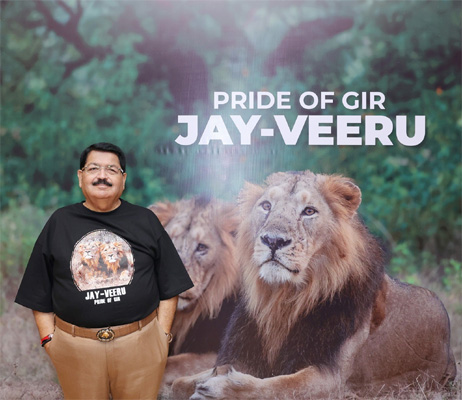
On World Lion Day 2026, Parimal Nathwani, Member of Parliament, Rajya Sabha, has turned the spotlight on this extraordinary journey with the release of ‘Gir ki Amulya Dharohar’, a documentary that chronicles Gir’s conservation saga while celebrating the people, communities and frontline guardians who have helped secure the future of the majestic Asiatic lion.
More than a documentary, it is a visual tribute to a living conservation legacy — one that connects the lion’s survival with the people who have shared its landscape for generations.
The lioness: Gir’s quiet architect of the future
At the heart of the film is a creature whose contribution to the lion’s resurgence is as profound as it is often overlooked — the lioness.
From raising cubs and nurturing prides to sustaining the next generation, lionesses are central to the continued repopulation of the species. Their survival is inseparable from the survival of the Asiatic lion itself.
The documentary follows generations of coexistence between wildlife and the Maldhari community, while also spotlighting forest officials, frontline staff and trackers whose everyday work rarely makes headlines but remains indispensable to conservation.
Protecting breeding habitats from human disturbance, safeguarding vulnerable cubs and maintaining ecological conditions in which lions can hunt, reproduce and disperse have together created the foundations for this remarkable recovery.
The message is clear: a lion’s expanding territory must be matched by an expanding culture of coexistence.
891 lions — and a landscape getting bigger
The numbers tell a remarkable conservation story.
Over the last decade, the Asiatic lion population has grown by more than 70%, reaching 891 in 2025, while the number of adult lionesses has climbed to 330.
Even more striking is the geographical transformation.
The lion’s range now extends across approximately 35,000 sq km, encompassing 58 talukas in 11 districts of Saurashtra.
And then there is Barda, emerging as a second home for the Asiatic lion — a powerful symbol of the species’ ability to adapt, disperse and establish itself beyond the traditional confines of Gir.
But an expanding range brings an equally expanding responsibility.
More lions.
More territory.
More human-wildlife interfaces.
And a greater obligation to give the animals the space to remain wild.
As the lions move into new landscapes, respecting their space and avoiding unnecessary disturbance become essential ingredients of coexistence. The safest encounter is often the one in which humans give the lion room to remain a lion — unprovoked, unharassed and free to follow its natural rhythms.
35 years of watching Gir write its own history
For Parimal Nathwani, the documentary is also deeply personal.
Having visited Gir for more than 35 years, Nathwani has witnessed the conservation journey at close quarters — from the painstaking protection of habitat to the gradual expansion of the lion’s range.
Speaking on the release, Parimal Nathwani, Member of Parliament, Rajya Sabha, said: “This extraordinary conservation success is fundamentally driven by the vision of Prime Minister Shri Narendra Modi and the unwavering dedication of our forest officials and frontline teams. Together with researchers and local communities, they have given the Majestic Asiatic lion a stronger future. Having visited Gir for more than 35 years, I have seen this conservation journey closely. As their territory expands, the next phase must be about safeguarding the Asiatic lions and their pride. By protecting their habitat, respecting their space, and ensuring that people who share this landscape understand their responsibility towards wildlife, we can ensure the gains of conservation endure for generations. Through Gir ki Amulya Dharohar, I wanted to document this journey and carry that responsibility forward.”
That responsibility now extends beyond counting lions.
It is about ensuring that every new generation of lions inherits a landscape in which it can roam, breed and thrive — and every generation of people learns that conservation is not about keeping wildlife away from humans, but about giving wildlife enough room to remain wild.
The roar is growing — so must the responsibility
Gir’s Asiatic lion is no longer merely a symbol of survival. It has become a symbol of what sustained conservation, community participation and determined frontline protection can achieve.
But the next chapter may be the most consequential yet.
As the lion’s kingdom expands from Gir towards Barda and beyond, Gujarat faces a defining conservation challenge: ensuring that population growth does not outpace habitat protection and responsible coexistence.
The roar has returned stronger.
Now the mission is to make sure it never falls silent.