NE COOPERATION BUREAU
NEW DELHI, AUG 19
Can five southern States and three Union Territories turn competing regional priorities into a common agenda—and can dialogue succeed where inter-State differences often prove difficult to resolve?
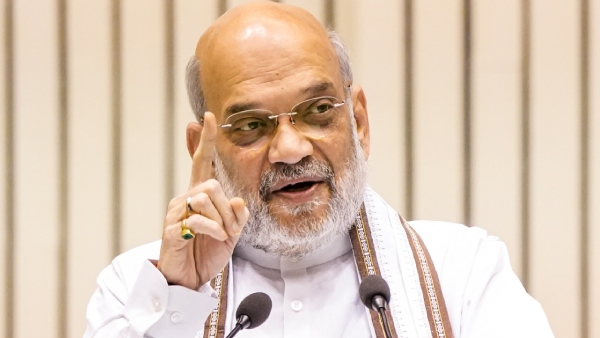
That question will be at the heart of the 31st meeting of the Southern Zonal Council (SZC), which Union Home Minister and Minister of Cooperation Amit Shah will chair at Mahabalipuram in Tamil Nadu on August 20, bringing the Centre and the southern region’s political and administrative leadership to one table.
The meeting assumes significance as the Southern Zonal Council provides a formal platform where issues cutting across State boundaries—from water sharing and regional infrastructure to implementation of Central schemes and inter-State disputes—can be discussed collectively rather than pursued through isolated negotiations.
The Southern Zonal Council comprises Andhra Pradesh, Karnataka, Kerala, Tamil Nadu and Telangana, besides the Union Territories of Puducherry, Andaman and Nicobar Islands and Lakshadweep.
The Tamil Nadu Government is hosting the meeting, which is being organised by the Inter-State Council Secretariat under the Ministry of Home Affairs.
Mahabalipuram becomes the southern dialogue table
The meeting will bring together the Chief Ministers, Lieutenant Governors and Administrators of the member States and Union Territories, along with two senior ministers from each State.
Chief Secretaries, Advisors, senior State Government officials and senior officers of the Central Government will also participate.
The constitutional and political architecture of the Council is designed to ensure that issues involving more than one State—or the Centre and one or more States—can be examined collectively.
Under Sections 15 to 22 of the States Reorganisation Act, 1956, five Zonal Councils were established, including the Southern Zonal Council.
Amit Shah is the Chairman of the Southern Zonal Council, while Tamil Nadu Chief Minister C. Joseph Vijay is its Vice-Chairman. Chief Ministers of member States serve as Vice-Chairman by rotation.
From Chief Secretaries’ table to Chief Ministers’ table
The Council does not take up every issue directly at the political level.
A Standing Committee of Chief Secretaries has been constituted to examine matters proposed by the States. Issues are first deliberated upon by the Standing Committee, after which unresolved or significant matters are placed before the full Zonal Council.
This mechanism is intended to ensure that political discussions are backed by administrative scrutiny and that issues reaching the ministerial level have already undergone detailed examination.
The model also creates an institutional route for disputes that might otherwise require prolonged bilateral negotiations.
Water, housing and regional projects on the wider agenda
Among the subjects that have figured in Zonal Council deliberations are water-sharing projects, issues arising from the Andhra Pradesh Reorganisation Act, Pradhan Mantri Awas Yojana (Gramin), civil aviation and other infrastructure and development matters.
The Councils also discuss issues of broader national importance, including implementation of Fast Track Special Courts (FTSCs) for speedy investigation and disposal of cases involving rape against women and children, besides education-related matters.
For the southern region, where rivers, transport networks, economic corridors and development projects frequently transcend State boundaries, such a common forum can assume particular importance.
‘TEAM BHARAT’ as the governing philosophy
The Centre has positioned the Zonal Councils as an important institutional expression of Prime Minister Narendra Modi’s vision of ‘TEAM BHARAT’, built around cooperative federalism.
The Government has emphasised the principle that “strong states make a strong nation”, arguing that development is strengthened when States and the Centre work collectively rather than in silos.
The Zonal Councils, though advisory in nature, have increasingly been projected as platforms for building consensus, resolving differences and improving coordination among neighbouring States and Union Territories.
The Government said that under Modi’s leadership, Zonal Council meetings have evolved into a platform where solutions can emerge through dialogue.
69 meetings underline institutional momentum
The Government has highlighted the growing frequency of such deliberations.
With the cooperation of State Governments, Central Ministries and Departments, 69 meetings of various Zonal Councils and their Standing Committees have been held over approximately 12 years, from June 2014 to August 2026.
While the Councils do not possess judicial or executive powers to impose solutions, their importance lies in creating a structured forum where competing interests can be placed on the same table and negotiated through institutional dialogue.
Their broader role extends from resolving issues between the Centre and States to facilitating cooperation among States and Union Territories within a region.
Can consensus travel beyond the conference room?
The Mahabalipuram meeting comes against the backdrop of a southern region whose States have strong individual political identities but are also deeply interconnected economically, geographically and environmentally.
Water resources do not follow State borders. Industrial corridors depend on seamless logistics. Tourism circuits cross administrative boundaries. Air connectivity, migration, housing and implementation of Central schemes similarly create interdependencies.
That makes the effectiveness of the Southern Zonal Council dependent not merely on the number of issues discussed, but on how many remain unresolved after the meeting—and how quickly agreed solutions translate into action.
The Centre’s stated objective is cooperative federalism. The real test, therefore, lies in converting the spirit of ‘TEAM BHARAT’ into measurable cooperation on the ground.
Mahabalipuram, on August 20, will provide yet another opportunity for the southern region to demonstrate whether dialogue can turn diversity of interests into a shared development agenda.