NE HEALTH BUREAU
CHENNAI, SEPT 9
When healthcare is truly patient-centric, treatment does not end at the doctor’s consultation room—it extends to dialysis, nutrition, hygiene, comfort and the dignity of the patient’s hospital stay. In a significant push towards that broader definition of public healthcare, Tamil Nadu Health Minister K G Arunraj on Wednesday inaugurated a series of upgraded and modernised facilities at the Rajiv Gandhi Government General Hospital (RGGGH) in Chennai.
— Arunraaj TVK (@arunraajkg) September 9, 2026
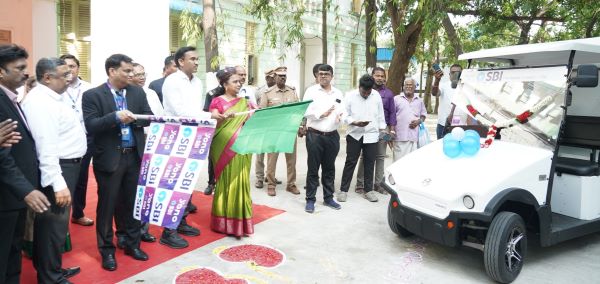
The initiatives bring together clinical care and patient-support infrastructure under one umbrella—from a 50-bedded dialysis centre established at a cost of ₹2.24 crore to a modern centralised kitchen, three vehicles donated by the State Bank of India (SBI) for the kitchen’s operations and six air-conditioned paid patient rooms.
- 50-bed dialysis centre, modern centralised kitchen and six AC paid rooms inaugurated at Chennai’s premier government hospital
- ₹2.24-crore dialysis facility expands access to renal care for patients
- SBI-backed kitchen infrastructure seeks to raise the bar on hospital nutrition and hygiene
- Three donated vehicles strengthen the hospital’s centralised food-distribution system
- New patient rooms add comfort to a hospital serving people from across Tamil Nadu
The inauguration comes at a time when RGGGH continues to serve patients from Chennai as well as districts across Tamil Nadu, reinforcing its role as one of the State’s major public healthcare institutions. Recent reports have also highlighted the hospital’s continuing adoption of patient-friendly systems, including QR-code-based outpatient registration.
A stronger lifeline for kidney patients
The centrepiece of the new infrastructure is the 50-bedded dialysis centre, set up at an investment of ₹2.24 crore.
For patients requiring regular dialysis, access to dependable treatment close to home can make a profound difference to both health outcomes and family finances. The expansion of dialysis capacity at a major government hospital therefore represents more than an infrastructure addition—it strengthens the public healthcare safety net for patients who require continuing renal-care support.
The facility is expected to augment the hospital’s ability to handle the growing need for dialysis services while strengthening access to specialised treatment within the government healthcare system.
Where a hospital kitchen becomes part of treatment
The other major addition is the modern centralised kitchen at RGGGH, bringing food preparation and distribution into a more organised institutional framework.
In a large government hospital, nutrition is not merely an ancillary service. For patients recovering from illness, undergoing procedures or living with chronic conditions, appropriate food, hygiene and timely distribution form an important part of the recovery ecosystem.
The new kitchen seeks to bring greater efficiency and standardisation to this crucial service while improving the systems through which meals reach patients.
The initiative has also received support from SBI, which donated three vehicles for the operations of the hospital’s centralised kitchen. The vehicles are expected to strengthen the logistics of food movement and distribution within the hospital ecosystem.
Healthcare with a touch of dignity
The inauguration of six air-conditioned paid patient rooms adds another dimension to the hospital’s patient-care infrastructure.
Government hospitals are often associated primarily with affordability and access. By adding better-equipped accommodation options within the public hospital environment, RGGGH is also acknowledging another aspect of patient care—the need for greater comfort and privacy during hospitalisation.
The six AC rooms offer an additional choice for patients and families seeking enhanced accommodation while remaining within the government hospital ecosystem.
Beyond treatment: building the complete patient experience
Taken together, the initiatives point to a broader approach to public healthcare infrastructure—one in which clinical treatment, renal care, nutrition, logistics, hygiene and patient comfort are treated as interconnected components of healing.
Arunraj’s visit also comes against the backdrop of several patient-oriented initiatives at RGGGH. The hospital has recently introduced a QR-code facility for obtaining outpatient slips, aimed at making registration more convenient for patients.
The Health Minister also inspected the newly created facilities during Wednesday’s programme.
The message emerging from RGGGH is therefore bigger than the inauguration of individual facilities: a modern government hospital must not merely treat disease; it must redesign the patient’s entire journey through care.
And at RGGGH, that journey is increasingly being rebuilt—from the dialysis chair to the hospital kitchen, and from the meal tray to the patient’s room.