- UdgAM Music Festival’s eighth edition weaves Hindustani classical, Haveli Sangeet, Pakhawaj, Jal Tarang and Tabla into one vibrant celebration
- Odissi, Mewati Gharana and diverse vocal traditions enrich the three-day cultural tapestry
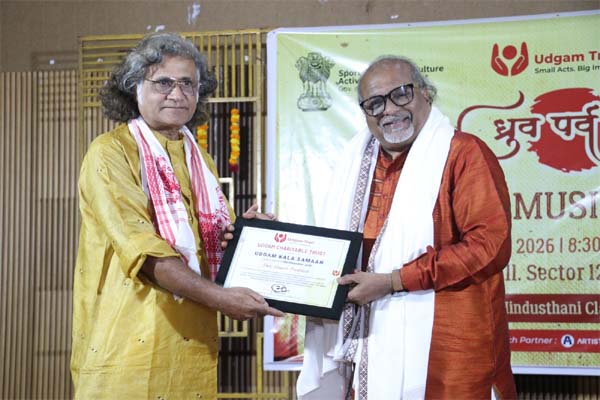
- ‘Dhruv Kala Samman’ honours Nayanbhai Pancholi and Dr. Pranav Pandya for contributions to art and music
- Young artistes and disciples showcase the enduring strength of India’s guru-shishya tradition
- Festival concludes with vibrant Tabla recital after three days of music, rhythm, devotion and dance
NE FEATURES BUREAU
GANDHINAGAR, SEPT 28
What happens when melody becomes meditation, rhythm becomes a language and devotion finds expression through music and movement? Gandhinagar found its answer in ‘Dhruv Parva’, the eighth edition of the UdgAM Music Festival, which brought together a remarkable spectrum of India’s classical music and dance traditions over three soulful days.
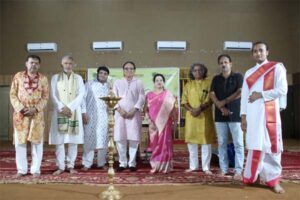
Organised by UdgAM Charitable Trust from September 25 to 27, the festival concluded on Sunday with an eclectic celebration featuring Hindustani classical music, Haveli Sangeet, Pakhawaj, Jal Tarang, Tabla and Odissi. Music lovers turned up enthusiastically across all three days, warmly receiving both established artistes and young performers.
A festival rooted in tradition, reaching the next generation
Mayurbhai Joshi, Chairman, UdgAM Charitable Trust, said, “Dhruv Parva is our humble effort to bring the richness of Indian classical arts closer to audiences while creating a meaningful platform for both established and young artistes. Through this festival, we hope to celebrate our musical traditions, strengthen the guru-shishya legacy and encourage the next generation to connect with India’s cultural heritage. The response from audiences over these three days has been deeply encouraging.”
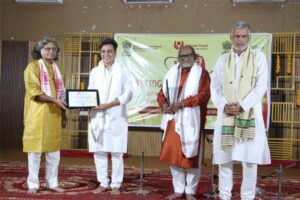
The opening day also witnessed the presentation of the ‘Dhruv Kala Samman’, recognising distinguished contributions to art and music. Nayanbhai Pancholi was honoured for his contribution to Sugam Sangeet, while Dr. Pranav Pandya of Gandhinagar was felicitated for his contribution and service to the field of art and music.
From Puriya Kalyan to the poetry of rhythm
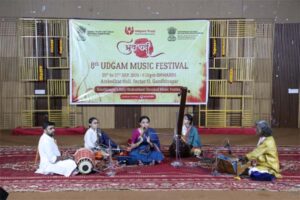
The festival opened with a classical vocal recital by Shashwati Bhattacharya, who presented compositions in Raga Puriya Kalyan, followed by an Ashtapadi from the Gita Govinda. She was accompanied by Bimal Bhattacharya on Tabla and Priyansh Rajput on harmonium.
The rhythmic dimensions of Indian classical music came alive with Purushottam Rayji on Pakhawaj, presenting traditional compositions, paran, tukda, tihai and intricate rhythmic patterns.
The day concluded on a devotional note with a special Haveli Sangeet presentation by Goswami Jigisha Betiji, accompanied by her daughters Krishnarup and Yamunaji. Drawing from the devotional tradition of Shri Vallabhacharya and compositions of the Ashtachhap poets, the presentation explored the intimate relationship between raga, time, season and the Haveli singing tradition.
Jal Tarang, young voices and the guru-shishya continuum
The second day opened with a Jal Tarang recital by Shishir Chandra Bhatt, featuring Raga Kirwani and a blend of melodic and rhythmic traditions. He was accompanied by Vijay More on Tabla, Hemant Bhatt on Pakhawaj and Priyansh Rajput on harmonium.
Young artistes Krishnarupa Chenur and Yamuna Chenur followed with a classical vocal presentation in Raga Bageshri, alongside devotional compositions.
The programme also featured group Pakhawaj performances by disciples of Lakshman Bawaji, followed by a group classical vocal presentation by students of Sharanyam Academy, disciples of Shivani Kinarivala.
Together, the performances underlined the living strength of the guru-shishya tradition—where knowledge is not merely taught but transmitted from one generation to another.
Odissi, Mewati Gharana and a rhythmic finale
The concluding day opened with the Odissi dance-drama ‘Gandhari’, presented by renowned Odissi dancer Dr. Suprava Mishra and her disciples. Through classical movements, mudras and abhinaya, the production explored the character and emotional world of Gandhari.
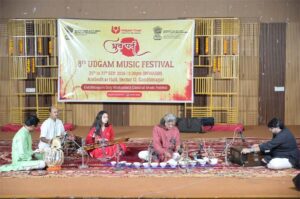
This was followed by a Hindustani classical vocal recital by Ami Parikh, representing the Mewati Gharana. Her repertoire included compositions in Raga Megh, Bhupali and Malgunji. She was accompanied by Shishirchandra Bhatt on harmonium and Madhav Dave on Tabla.
The festival reached its rhythmic finale with a group Tabla performance by Arvindbhai Vora, Tabla artiste and teacher at Arvind Kendra, Gandhinagar, along with his disciples. The presentation travelled through theka, kaida, palta, gat, tukda, rela and chakradhar compositions, bringing the three-day celebration to a vibrant close.
A celebration beyond the stage
Across three days, ‘Dhruv Parva’ brought together classical vocal music, Haveli Sangeet, Dhrupad, Khayal, Kirtan, Bhajan, Jal Tarang, Pakhawaj, Tabla and Odissi, giving audiences a glimpse of the extraordinary diversity within India’s classical arts.
More significantly, the festival created space for young artistes while reaffirming the enduring relevance of the guru-shishya legacy.
The three-day programme was compered by Parul Mehta.
With enthusiastic audiences, generous appreciation for artistes and an interweaving of melody, rhythm, devotion and dance, the eighth ‘Dhruv Parva’ concluded not merely as a festival, but as a vibrant reaffirmation of India’s living classical heritage.