NE NEWS SERVICE
CHENNAI, SEPT 28
What happens when a building that has witnessed centuries of power, colonial rule and India’s freedom struggle is asked to speak to a generation raised on smartphones and digital screens? Madurai’s Gandhi Memorial Museum has chosen not to answer by abandoning its past—but by making the past more accessible.
மாண்புமிகு தமிழ்நாடு முதலமைச்சர் திரு.ச.ஜோசப் விஜய் அவர்கள் இன்று (28.9.2026) மதுரையில், 10 கோடியே 25 இலட்சம் ரூபாய் செலவில் பாரம்பரியம் மாறாமல் நவீன முறையில் புதுப்பிக்கப்பட்ட காந்தி நினைவு அருங்காட்சியகத்தைத் திறந்து வைத்து, மகாத்மா காந்தியடிகள் பயன்படுத்திய பொருட்களைப்… pic.twitter.com/rejte0hM5r
— TN DIPR (@TNDIPRNEWS) September 28, 2026
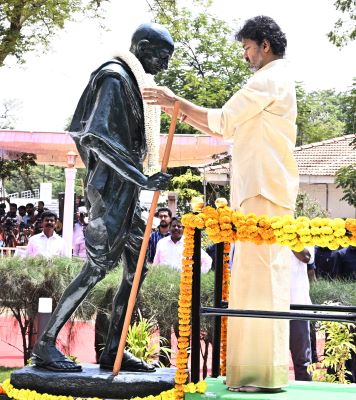
Tamil Nadu Chief Minister C. Joseph Vijay on Monday inaugurated the renovated Gandhi Memorial Museum in Madurai, upgraded at a cost of ₹10.25 crore, retaining its heritage character while introducing a range of modern exhibition and visitor facilities. The Chief Minister also paid floral tribute to Mahatma Gandhi’s statue on the museum premises before inspecting the renovated galleries and exhibits.
- ₹10.25-crore renovation blends 17th-century heritage with digital-age storytelling
- Chief Minister C. Joseph Vijay inaugurates revamped Gandhi Memorial Museum in Madurai
- Historic Tamukkam Palace retains its traditional character while gaining modern galleries
- Touchscreens, digital displays, audio-visual theatre and kiosks bring Gandhi closer to young visitors
- Museum preserves Gandhi’s relics and the story of his transformative 1921 Madurai moment
- From Rani Mangammal’s palace to a living classroom on freedom, equality and swadeshi
The renovation is significant not merely because an old museum has acquired new technology, but because one of India’s most evocative Gandhi sites is being repositioned as a living bridge between memory and the younger generation.
Where history meets technology
மாண்புமிகு தமிழ்நாடு முதலமைச்சர் திரு.ச.ஜோசப் விஜய் அவர்கள் இன்று (28.9.2026) மதுரையில், 10 கோடியே 25 இலட்சம் ரூபாய் செலவில் பாரம்பரியம் மாறாமல் நவீன முறையில் புதுப்பிக்கப்பட்ட காந்தி நினைவு அருங்காட்சியகத்தைத் திறந்து வைத்துப் பார்வையிட்டார்.#CMJosephVijay | #TNDIPR |… pic.twitter.com/vEbAqYiPI3
— TN DIPR (@TNDIPRNEWS) September 28, 2026
The renovation has consciously preserved the traditional character of the historic structure. Lime, jaggery, kadukkai, small bricks and river sand—materials associated with traditional construction—were used in the restoration. The Madras terrace and arched roofing have also been renovated without altering their heritage character. Old damaged roof members, doors and windows have been replaced with new teakwood structural elements and panels.
The earlier barriers installed for displaying artefacts have been removed and replaced with digitally enhanced display cases, opening up the exhibition spaces.
The museum has also added an eight-person lift with an adjoining pathway, a new toilet block and improved accessibility features. The dilapidated Kumarappa Cottage near the main entrance has been restored with structural grills and a new zinc-sheet roof, while the open-air theatre has received Kota stone flooring and handrails along the ramp. Electrical works have further enhanced the building’s functionality and appearance.
Gandhi, now on a touchscreen
The renovated museum introduces digital displays, touchscreen information panels, photographs of freedom fighters, objects used by Mahatma Gandhi, a rotoscope, an audio-visual theatre, digital kiosks and a puppetry presentation.
The library building, too, has been upgraded with new bookshelves and reading tables.
During his visit, Vijay viewed the digital exhibition, touchscreen displays, Gandhi’s personal belongings and a short film on the Mahatma. He also paid homage at Gandhi’s statue before touring the renovated museum.
The reopening has been reported as the culmination of around two-and-a-half years of renovation work, with the museum returning to public viewing from September 28.
The palace that became a Gandhi shrine
The museum’s power lies equally in its architecture and its association with Gandhi.
The central portion of the historic complex dates to the 17th century, when it was built during the period of Rani Mangammal. The official Gandhi Museum account identifies the building as the historic Tamukkam Palace, built around 1670, and records that the palace and its land were gifted in 1955 for establishing the Gandhi Memorial Museum. It was inaugurated by Jawaharlal Nehru on April 15, 1959.
The Tamil Nadu government release notes that different portions of the complex belong to different historical periods, including additions during the colonial era and the post-Independence library block.
Thus, the museum itself becomes a kind of historical timeline—from Nayak-era architecture and colonial transformation to the freedom movement and independent India.
The Madurai moment that changed Gandhi
But the museum’s deepest emotional connection with history comes from Gandhi’s own relationship with Madurai.
It was here, on September 22, 1921, that Gandhi adopted the simple loincloth that became one of the most recognisable symbols of his life and public identity. The Gandhi Heritage Portal records that the decision was rooted in his desire to identify himself more closely with India’s poor masses.
Gandhi himself later wrote: “Such a radical alteration — in my dress, — I effected in Madura.”
That transformation was not merely sartorial. It was a statement of identification with the poorest Indians and with the Swadeshi movement.
The Gandhi Heritage Portal records another revealing passage from Gandhi: “I adopt the change because I have always hesitated to advise anything I may not myself be prepared to follow.”
That is perhaps why the renovated museum has relevance far beyond the preservation of artefacts. Its challenge is to make visitors encounter the ideas behind the objects.
From relics to reflection
The museum houses rare Gandhi memorabilia, including a portion of the blood-stained garment he wore at the time of his assassination, along with letters and other material connected with his life and the freedom movement. The museum’s official account describes its collections as including a visual biography, photographs, paintings, sculptures, manuscripts, quotations and letters.
The renovated exhibition now seeks to make such history more immersive.
For young visitors, the question is no longer simply What happened? The new digital interface can potentially make them ask the more important question: Why did it matter?
That is the larger significance of the Madurai museum’s makeover. The building has not been stripped of its age to look modern. Instead, modern technology has been placed inside an old historical setting so that the past can remain visible—and relevant.
A new generation, an old message
The inauguration was attended by ministers, MPs, MLAs, senior government officials, the Chief Secretary, the Director of Museums, the Madurai District Collector and office-bearers of the Gandhi Memorial Museum.
The renovated museum therefore opens with two assets: the authenticity of history and the accessibility of technology.
In Madurai, where Gandhi once changed his clothes to identify himself with the poorest of the poor, the museum has now changed its own presentation to make that story intelligible to a new generation.
The building has been renovated. The real test, however, is whether its ideas are revived.