
NE HEALTH EDUCATION BUREAU
CHENNAI, OCT 10
What truly distinguishes a doctor — a degree, clinical expertise or the ability to reach a patient whom the healthcare system has left behind? That was the larger question underpinning the message to 125 newly graduated doctors as Tamil Nadu Governor Rajendra Vishwanath Arlekar urged them to put medical knowledge at the service of society, particularly people in remote and underserved communities.
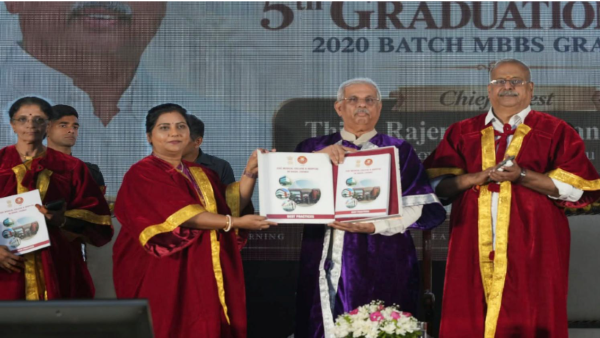
The 5th Graduation Day of ESIC Medical College and Hospital, K.K. Nagar, Chennai, held at the institution’s auditorium on Saturday, marked the entry of the 2020–21 MBBS batch into the medical profession. Arlekar, the chief guest, awarded degrees and medals to the graduating students, calling attention to the wider social responsibility that accompanies professional achievement.
- A call to serve beyond the privileged: Governor Arlekar urges young doctors to extend quality healthcare to remote and underserved populations.
- 125 MBBS graduates step into the profession: Degrees and medals presented to the 2020–21 batch at ESIC Medical College’s fifth Graduation Day.
- ‘Book Bridge’ opens a pathway to medical education: NEET preparation books presented to V. Aji, daughter of an Insured Person, under the Vidhyadhanam initiative.
- New facilities strengthen care and clinical training: Burns Ward, High Dependency Unit, Medical Gastroenterology Ward and Surgical Skills Laboratory inaugurated.
The occasion also went beyond academic recognition. The institution launched ‘Book Bridge’, a new best-practice initiative under Vidhyadhanam, and inaugurated advanced hospital and training facilities intended to strengthen healthcare delivery and medical education under the Employees’ State Insurance Scheme.
A doctor’s duty does not end with a degree
The Governor’s message placed social responsibility at the heart of medical practice. He urged the graduates to use their expertise for the welfare of society, with particular attention to people in remote areas and communities with limited access to quality healthcare.
He also advocated a balanced appreciation of traditional systems of medicine alongside modern medical science, encouraging the young doctors to pursue professional excellence without losing sight of human compassion.
The message was a timely reminder that healthcare progress cannot be measured by advanced technology or specialist expertise alone. Its real test is whether patients can access appropriate care, regardless of where they live or their economic circumstances.
For the graduating doctors, the challenge now is to translate years of study and clinical preparation into meaningful service — combining scientific knowledge, ethical responsibility and empathy in their everyday practice.
‘Book Bridge’: Connecting aspiration with opportunity
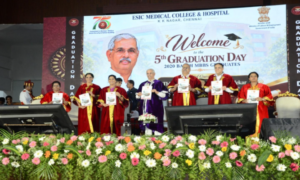
In a significant education-focused initiative, Arlekar launched ‘Book Bridge’, a new best-practice programme under Vidhyadhanam, by presenting NEET preparation books to V. Aji, daughter of an Insured Person.
The initiative seeks to support her higher educational aspirations by providing learning resources for the highly competitive National Eligibility-cum-Entrance Test (NEET).
The gesture underscored an important dimension of educational opportunity: talent and ambition need access to the right preparation resources if they are to translate into higher-education prospects. By supporting a student from an insured family, the initiative also connected ESIC’s wider social-security role with the aspirations of the next generation.
New hospital facilities widen the clinical learning landscape
The Graduation Day also marked the inauguration of four facilities designed to strengthen patient care and practical medical training:
- Burns Ward: A dedicated facility for the care and management of burn patients.
- High Dependency Unit (HDU): A specialised setting for patients requiring closer monitoring and a higher level of clinical support.
- Medical Gastroenterology Ward: Additional clinical infrastructure for the treatment and management of digestive-system disorders.
- Surgical Skills Laboratory: A practical training facility intended to strengthen clinical and procedural skills.
The additions are aimed at supporting healthcare delivery while improving the learning environment for medical professionals. The Surgical Skills Laboratory, in particular, provides an important training dimension by linking medical education with the development of practical competencies.
Hippocratic Oath marks the beginning of professional responsibility
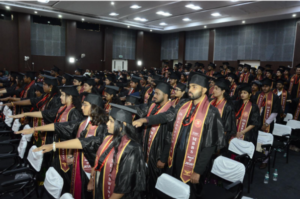
Dr. Swapnathai A. Meshram, Dean of ESIC Medical College and Hospital, administered the Hippocratic Oath to the graduating batch, formally marking the students’ transition into the medical profession.
The oath ceremony brought the day’s central message into focus: a medical qualification carries obligations that extend beyond the individual practitioner. The new doctors must uphold professional ethics, respect patients and use their training responsibly.
As 125 graduates begin their professional journeys, the Governor’s call offers a clear measure of the road ahead. Academic achievement opens the door to medicine; compassionate, accessible and responsible healthcare gives that achievement its larger purpose.