
R ARIVANANTHAM
CHENNAI, OCT 10
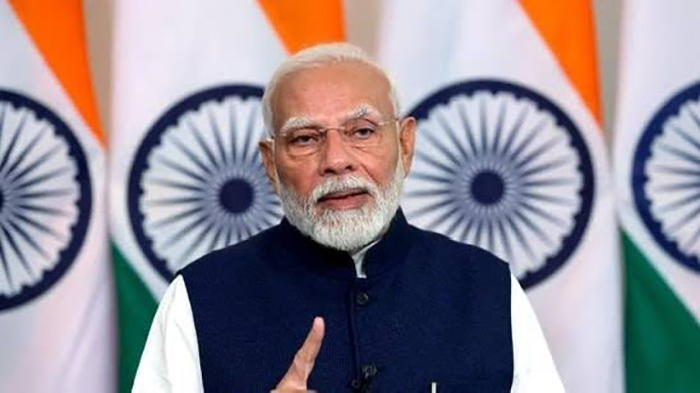
Chennai is set for a major infrastructure push spanning urban mobility, highways, railways, ports, petroleum and advanced neuroscience, with Prime Minister Narendra Modi scheduled to inaugurate, dedicate and lay the foundation stones for development projects worth over ₹13,000 crore on Sunday, October 11. The package places transport connectivity, industrial capacity, maritime logistics and scientific research at the centre of Tamil Nadu’s development agenda.
- Prime Minister Narendra Modi to inaugurate, dedicate and launch development projects worth over ₹13,000 crore in Chennai on October 11
- ₹4,900-crore Chennai Metro Phase II stretch to strengthen connectivity between western suburbs and the city centre
- Around ₹3,700 crore in National Highway projects to ease congestion and improve regional economic links
- Railway upgrades worth over ₹750 crore include the Karaikal–Peralam line, three rail flyovers and five Amrit Stations
- Major port investments to expand cargo capacity, modernise cruise facilities and strengthen maritime logistics
- ₹1,620-crore Manali refinery project and IIT Madras brain-mapping initiative add industrial and scientific heft to the development package
The projects are expected to address several critical infrastructure needs—from easing daily commutes in Chennai’s expanding western suburbs and reducing road congestion around Madurai to improving freight movement through major ports and strengthening rail connectivity across the State.
The Prime Minister’s programme will include the inauguration of the Poonamallee–Vadapalani stretch of Phase II of Chennai Metro Rail, national highway works worth around ₹3,700 crore, railway infrastructure projects worth over ₹750 crore, port development initiatives, a major lube oil base stocks project at the Manali refinery and the dedication of the Sudha Gopalakrishnan Brain Centre at IIT Madras.
The visit will also feature a ride on the new Metro stretch, a visit to Jalakandeswarar Temple and participation in the golden jubilee celebrations of Jaigopal Garodia Hindu Vidyalaya Matriculation Higher Secondary School.
Metro expansion: A new mobility corridor for Chennai
A major highlight will be the inauguration of the Poonamallee–Vadapalani stretch of Chennai Metro Phase II, built at a cost of around ₹4,900 crore.
The corridor features a distinctive 3.7-km double-decker structure and advanced signalling systems designed to support driverless operations. It is expected to reduce commuting time and improve connectivity between Chennai’s rapidly developing western suburbs and the city centre.
The Prime Minister is scheduled to undertake a Metro ride from Porur Bypass Station to Poonamallee Bypass Station and back at around 11.30 am.
For a metropolitan region grappling with growing travel demand, the new stretch represents an important addition to the public transport network. Its long-term impact will depend on seamless integration with other Metro corridors, feeder services and existing transport systems.
Highways worth ₹3,700 crore to improve regional connectivity
National Highway projects worth around ₹3,700 crore will form another major component of the infrastructure package, with the stated objectives of reducing travel time, easing congestion and strengthening economic connectivity.
The Prime Minister will inaugurate the 36-km, four-laned Vadugapatti–Therkuvenganallur section of NH-744. The project is expected to improve access to important pilgrimage, industrial and commercial centres and facilitate smoother movement of people and goods.
He will also inaugurate the 30-km, four-laned Madurai Ring Road section of NH-744A, intended to improve traffic movement around Madurai and ease congestion within the city.
The foundation stone will be laid for the four-lane Thiruvarur Bypass on the Nagapattinam–Thanjavur section of NH-83. The bypass is expected to provide an alternative route around the town, improving traffic flow and road connectivity.
Together, the road projects are intended to strengthen links between urban centres, commercial hubs and regional destinations, while supporting the movement of freight and passengers.
Railways: New links and upgraded passenger facilities
Railway infrastructure projects worth over ₹750 crore will be dedicated or inaugurated as part of the programme.
The Prime Minister will dedicate the Karaikal–Peralam railway line, strengthening rail connectivity in the region. Three rail flyovers in Coimbatore and surrounding areas will also be dedicated to the nation. These are expected to ease congestion at busy level crossings, reduce waiting times and improve road safety.
Passenger infrastructure will receive a further boost with the inauguration of five redeveloped Amrit Stations at Palani, Vellore Cantonment, Ambasamudram, Paramakkudi and Namakkal under the Amrit Bharat Station Scheme.
The upgrades are intended to improve station facilities and the overall passenger experience. Their significance will be measured not only by the physical improvements but also by accessibility, maintenance and the quality of services available to passengers.
Ports: Expanding Tamil Nadu’s maritime and logistics capacity
Port infrastructure will be a major focus, with projects at Chennai Port, Kamarajar Port and V.O. Chidambaranar Port aimed at strengthening cargo handling, improving logistics efficiency and supporting maritime development.
At Chennai Port, the Prime Minister will inaugurate four projects: a Paved Storage Yard, four EXIM Godowns, an upgraded Cruise Terminal and a Seafarers Club.
The facilities are intended to improve cargo storage and handling, expand warehousing capacity, modernise cruise passenger facilities and provide improved welfare and recreational amenities for seafarers and maritime personnel.
At V.O. Chidambaranar Port, the Prime Minister will inaugurate and lay the foundation stones for eight major development projects. These initiatives are expected to expand cargo and container capacity, develop infrastructure for cleaner maritime energy and improve cargo evacuation and logistics within the port ecosystem.
At Kamarajar Port, he will inaugurate the Coal Berth-3 project and lay the foundation stone for capital dredging works for Container Terminal Phase-I, Stage-II.
The combined port initiatives are designed to reinforce Tamil Nadu’s maritime infrastructure and improve the efficiency of cargo movement. Their wider economic benefits will depend on the pace of execution, capacity utilisation and connectivity between ports, industrial centres and inland transport networks.
Manali refinery: ₹1,620-crore investment in premium lubricants
The Prime Minister will lay the foundation stone for the Group II/III Lube Oil Base Stocks (LOBS) project at the existing Manali Refinery of Chennai Petroleum Corporation Limited (CPCL).
With an estimated investment of around ₹1,620 crore and a proposed capacity of 270 thousand metric tonnes per annum (TMTPA), the project aims to produce Group II and Group III lube oil base stocks used in manufacturing premium-quality lubricants.
The initiative is intended to strengthen domestic production capabilities in an important segment of the petroleum value chain. Its contribution will depend on project execution, operational efficiency and demand for the resulting products.
IIT Madras: A scientific mission to map the human brain
Moving beyond transport and industrial infrastructure, the programme will include the dedication of the Sudha Gopalakrishnan Brain Centre (SGBC) at IIT Madras to the nation.
The Prime Minister will also launch the centre’s scientific mission to map more than 100 human brains into three-dimensional atlases at cellular resolution, spanning the human lifespan—from the foetal stage to old age.
The initiative is intended to deepen scientific understanding of the human brain and provide researchers with detailed resources for studying its structure across different stages of life.
The Prime Minister will also release C-STROKE, a human ischaemic stroke atlas featuring more than 1,000 annotated microscopic sections from a stroke-affected brain. The resource is expected to help researchers worldwide investigate stroke-related changes and identify potential new therapeutic targets.
The brain-mapping programme adds a research and healthcare dimension to the wider infrastructure package, highlighting the importance of scientific institutions alongside physical connectivity and industrial investment.
Education and cultural engagements
At around 3 pm, the Prime Minister will participate in the golden jubilee celebrations of Jaigopal Garodia Hindu Vidyalaya Matriculation Higher Secondary School in Chennai and address the gathering.
The anniversary marks five decades of the institution’s contribution to education and its emphasis on academic development, discipline, cultural values and holistic learning.
Guided by its motto, “Sa Vidya Ya Vimuktaye” (Knowledge that liberates), the school seeks to nurture students who contribute meaningfully to society. Its journey reflects the role of educational institutions in combining academic learning with character-building and responsible citizenship.
Earlier in the day, at around 12.15 pm, the Prime Minister is scheduled to perform darshan and pooja at Jalakandeswarar Temple in Chennai before undertaking a walkthrough of the Sudha Gopalakrishnan Brain Centre at IIT Madras.
The main project programme is scheduled for around 1.30 pm.
A multi-sector push, with execution the real test
The planned investments span the infrastructure that shapes everyday life and long-term economic competitiveness: public transport for commuters, highways for regional mobility, railways for passenger and freight movement, ports for trade, petroleum facilities for industrial production and research infrastructure for scientific advancement.
For Chennai and the wider State, the challenge will be to translate project announcements and inaugurations into sustained improvements in mobility, logistics, industrial capability and public services. Timely completion of pending works, effective coordination between agencies and reliable maintenance will be essential to realising the intended benefits.
The October 11 programme therefore brings together a broad development agenda whose ultimate measure will be its impact on citizens, businesses, workers and communities across Tamil Nadu.