
- Clean-energy push: Kutch Copper plans to integrate 115 MW of renewable energy to reduce the carbon footprint of its Mundra operations.
- Capacity set to double: The company plans to expand its existing 500,000-tonne-per-annum smelter to one million tonnes.
- Water conservation in focus: The refinery says it relies almost entirely on desalinated water and follows a zero-liquid-discharge approach.
- Sulphur-emission control: The company reports treating 99.8% of sulphur emissions as it seeks to strengthen environmental performance.
NE ENERGY BUREAU
AHMEDABAD, OCT 12
Can a copper refinery scale up production while shrinking its environmental footprint? Adani Enterprises Ltd’s Kutch Copper Ltd is seeking to address that challenge by planning the integration of 115 megawatts (MW) of renewable energy into its Mundra operations, alongside measures aimed at conserving water and controlling industrial emissions.
The plan, outlined in the company’s maiden sustainability report, comes as copper gains strategic importance in the global energy transition. The metal is essential to electricity networks, renewable-energy infrastructure, electric vehicles and other technologies underpinning electrification and industrial expansion.
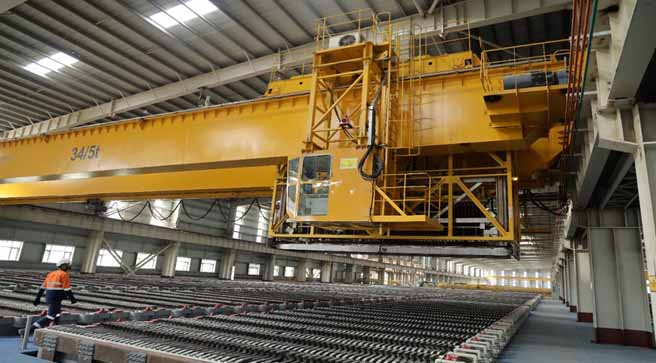
Kutch Copper currently operates a smelter with an annual capacity of 500,000 tonnes and plans to double it to one million tonnes, which the company says would make it the world’s largest single-location custom copper smelter.
“A key element of our sustainability strategy is the planned integration of 115 megawatts of renewable energy, a significant step towards reducing the carbon footprint of our operations and advancing long-term decarbonisation goals,” the company said.
Renewable power at the heart of expansion
The proposed renewable-energy integration is intended to reduce the carbon footprint associated with the refinery’s operations as the company scales up production. Its significance will depend on implementation, the proportion of total energy demand met by renewable sources and the resulting reduction in emissions.
Copper itself occupies a central place in the clean-energy transition because of its role in power transmission, electrification, renewable-energy systems and electric mobility. Yet producing the metal also requires substantial energy and resource inputs, making the environmental performance of smelting operations an important part of the wider decarbonisation equation.
Kutch Copper said it aims to incorporate environmental, social and governance (ESG) considerations into business decisions, operating practices and stakeholder engagement.
Desalinated water and zero-liquid discharge
Water management is another major pillar of the company’s sustainability approach. Kutch Copper said its operations rely on nearly 100% desalinated water and follow a zero-liquid-discharge approach, intended to reduce dependence on freshwater and limit liquid effluent discharge.
The company also reported that it treats 99.8% of sulphur emissions.
“We are currently treating 99.8 per cent of sulphur emissions, reflecting our commitment to adopting global standards in environmental stewardship and pollution control by leveraging advanced environmental technologies,” Kutch Copper said in the report.
The reported figures offer an indication of the company’s stated environmental measures. Their wider impact will depend on transparent monitoring, consistent performance as capacity expands and the disclosure of comparable data on energy use, emissions and water consumption.
Investment links copper to India’s green ambitions
The Adani Group has committed $1.2 billion to the project, according to the company. Kutch Copper sees domestic copper production as strategically important to India’s expanding requirements for electricity infrastructure, renewable energy and industrial development.
India’s long-term climate ambition includes achieving net-zero emissions by 2070. Expanding domestic copper-processing capacity could support infrastructure and electrification needs, while cleaner energy sourcing and effective pollution control will be crucial to managing the environmental costs of production.
Beyond its industrial operations, Kutch Copper said it supports community programmes focused on healthcare, education, livelihoods and social development.
The key test for the refinery will be whether its proposed renewable-power integration and environmental-management measures deliver measurable improvements as production capacity grows. For an industry central to electrification, the sustainability of the metal’s production is increasingly part of the clean-energy story itself.