

- Indospine Hospital launches #MySpineMyWorld campaign and free website for public awareness
- Patients who have experienced recovery lead the launch of a people-centric spine health initiative
- Over four in 10 new patients at Indospine are aged 20–45, hospital data reveal
- Doctors caution against self-medication and prolonged dependence on painkillers
- Posture, movement, lifestyle changes and early diagnosis take centre stage in prevention drive
- Doctor-reviewed digital resource offers practical guidance, exercises, expert insights and myth-busting information
R MANICKAVASAGAM
AHMEDABAD, OCT 15
Back pain is often treated as a minor inconvenience—something to be suppressed with a painkiller, endured through a working day or blamed on age. But when discomfort becomes persistent, numbness sets in or movement turns difficult, the body may be signalling that it is time to stop self-diagnosing and seek medical advice.
Putting this message at the heart of spine health awareness, Indospine Hospital on Thursday launched #MySpineMyWorld, a public awareness initiative and a free online resource, myspinemyworld.com, to help people understand their spine, recognise warning signs and make informed decisions about care.
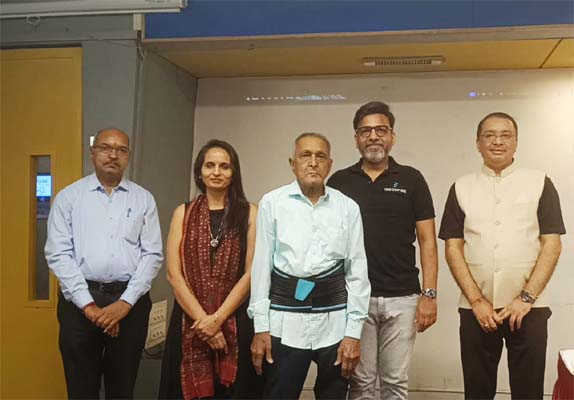
In a particularly meaningful gesture, the website was launched in Ahmedabad by patients who had undergone treatment at the hospital. Their participation brought a human dimension to a campaign that seeks to move spine health beyond hospital consultations and into everyday life.
Presented on the eve of World Spine Day, observed on October 16, the initiative was introduced by Dr Tarak Patel, Chief Spine Surgeon, and Dr Rinku Patel, Anaesthesia and Pain Management Specialist, at a press conference at the Ahmedabad Management Association.
“Every day we meet young professionals, homemakers and students who have lived with back or neck pain for months before seeking help. Our own records show that more than four in ten of our new patients are now between 20 and 45, and 94% of them were treated without hospital admission. Most spine problems do not need surgery. The right diagnosis, at the right time, lets us treat the cause instead of just the pain. With #MySpineMyWorld, we want people to understand their spine, take small steps every day, and come to a doctor before a simple problem becomes a serious one,” Dr Tarak Patel said.
Painkillers may mask the warning, not resolve the cause
A key concern raised at the interaction was the tendency to take painkillers repeatedly or buy medication without medical supervision, particularly when back or neck pain interferes with work and routine activities.
Asked whether painkillers and self-medication could turn a manageable problem into a serious one, Dr Tarak Patel cautioned against taking medicines independently.
“Self-medication and taking painkillers purchased without medical prescription will only aggravate the issue. I urge all not to anything on your own without consulting the doctor,” he said.
The broader message is clear: pain relief should not replace an assessment of persistent or recurring symptoms. Repeated use of painkillers without professional guidance can expose people to medication-related risks, while masking symptoms may delay appropriate diagnosis.
Dr Rinku Patel stressed that pain should not be ignored, particularly when it is accompanied by warning signs.
“Many people try to live with pain or rely on painkillers for too long. Pain is a signal, and it deserves attention. Through this initiative, we will share practical advice on managing pain safely and explain the warning signs, such as numbness, weakness or pain that keeps you awake at night, that mean you should see a specialist without delay,” she said.
Persistent pain, progressive weakness, numbness or pain that disrupts sleep warrants clinical assessment. New loss of bladder or bowel control, or numbness around the groin, calls for emergency medical attention.
The young are not immune
The initiative comes amid evidence that back pain is not merely a problem of ageing. Long hours at desks, prolonged sitting, poor workstation ergonomics, limited physical activity and repetitive physical strain can all contribute to musculoskeletal problems.
Indospine Hospital’s records covering 8,789 new patients between October 2022 and October 2026 show that 41% were aged 20–45 at their first visit. The proportion rose from 35% in 2022–23 to 43% in 2025–26, while the share of patients under 40 increased from 23% to 30%. Women accounted for 54% of all new patients.
The hospital said 94% of its patients aged 20–45 were treated without hospital admission. These are hospital-specific figures and should not be interpreted as representative of the entire population.
The wider public health burden is substantial. The World Health Organization identifies low back pain as the leading cause of disability worldwide. It estimated that 619 million people experienced low back pain in 2020 and projects that the number could rise to 843 million by 2050, with much of the increase expected in Asia and Africa.
The WHO also notes that most low back pain is non-specific, meaning it cannot be attributed to a single identifiable disease or structural cause. Physical activity, appropriate exercise, healthy weight management, good sleep and ergonomic adjustments can help reduce the risk of recurring problems.
A digital guide to everyday spine care
The new website aims to translate medical knowledge into accessible, practical advice. It offers doctor-reviewed information in six broad areas: Know Your Spine, Posture & Work, Move Better, Pain & Care, Myths vs Facts, and Real Stories.
The resource includes simple exercises and guidance for office workers, drivers, students and older adults, along with a two-minute self-check to help users identify habits that may place unnecessary strain on their spine.
It also features a #MySpineMyWorld pledge encouraging people to adopt one spine-friendly habit and share it with family and friends. The initiative invites public participation on social media through the campaign hashtag.
“Our website is free for all health portal containing information like yoga, lifestyle change, experts talk on spine-related issue,” Dr Tarak Patel added.
The website is intended to support public awareness and informed conversations with healthcare professionals; online information and self-checks are not substitutes for clinical diagnosis or personalised medical advice.
World Spine Day: prevention before intervention
The 2026 World Spine Day campaign theme, “Spine Health for Life”, reinforces the importance of caring for the spine at every stage of life.
The message is relevant to workplaces as well as homes. Regular movement breaks, sensible workstation arrangements, gradual strengthening exercises, safe lifting practices and attention to recurring symptoms can help people protect their mobility and quality of life.
The central idea behind #MySpineMyWorld is straightforward: spine health should not become a priority only after pain begins to restrict everyday living. By combining patient experiences with accessible, doctor-reviewed information, Indospine Hospital aims to encourage people to recognise risks earlier, avoid unsafe self-medication and seek timely professional care.