
NE HEALTH BUREAU
CHENNAI, OCT 15
Can artificial intelligence trained on medical data from other countries be trusted to deliver equally reliable diagnoses for India’s diverse patients? A new research partnership between Aarthi Scans & Labs and Ashoka University’s Koita Centre for Digital Health (KCDH) seeks to address this critical question by developing and validating AI models using Indian clinical data—with chest X-rays as the starting point.
- MADE IN INDIA, FOR INDIA: Partnership targets AI models trained and validated on Indian patients, scanners and clinical workflows
- CHEST X-RAYS FIRST: Open-source model aims to help hospitals, researchers and startups develop AI-assisted diagnostic tools
- PRIVACY BY DESIGN: Secure pipeline for de-identified imaging data to operate under ethics approvals and Indian data protection regulations
- EVIDENCE BEFORE ADOPTION: Collaboration seeks to test diagnostic accuracy, fairness and responsible use through rigorous research
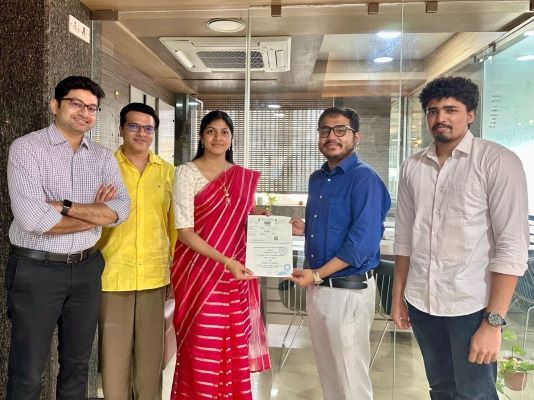
The two institutions have signed a memorandum of understanding (MoU) to collaborate on artificial intelligence in medical imaging, aiming to bridge the gap between AI tools developed using predominantly Western datasets and the realities of Indian patients, imaging equipment and clinical workflows.
The partnership will establish a secure data pipeline using de-identified medical imaging data, subject to ethics approvals and compliance with Indian data protection regulations. The data will enable researchers to benchmark and validate radiology AI models, examining their diagnostic accuracy and fairness across diverse patient populations and equipment.
Chest X-rays will be the first focus of the collaboration, given their widespread use in medical diagnosis. The teams plan to develop and validate an open-source AI model trained on Indian data. Its intended open release will allow hospitals, researchers and startups across the country to evaluate the model and build further applications on it.
The initiative also seeks to generate peer-reviewed research and contribute to standards for responsible AI adoption in Indian healthcare. By examining how models perform in real-world clinical settings, the collaboration aims to explore how AI can assist radiologists in high-volume environments and support diagnostic quality.
Dr Arunkumar Govindarajan, Radiologist and Executive Director, Aarthi Scans & Labs, said:
“Trust in healthcare AI has to be earned through evidence. This partnership brings together rigorous academic research and real-world diagnostic expertise, with privacy and ethics built in from the start. Through peer-reviewed research, we hope to contribute to standards that help the country adopt AI in healthcare responsibly. We are starting with chest X-rays and making the model open-source, because AI for Indian patients should be built in India and be available to all of India.”
Dr Suvrankar Datta, Physician Scientist and Faculty, Ashoka University, said:
“AI in radiology is only as good as the data it learns from. When tools built elsewhere are used on Indian patients, scanners and workflows without proper testing, we cannot be sure they perform as well as they should. By working with Aarthi Scans, we can test these models against real Indian clinical data and ask the questions that matter, including their accuracy and ethical use.”
The collaboration marks an effort to make medical AI more relevant to Indian healthcare needs, with data privacy, clinical validation and wider access at its core. Its eventual impact will depend on how rigorously the models perform in testing and whether their benefits can be translated into safe, dependable support for clinicians and patients.