
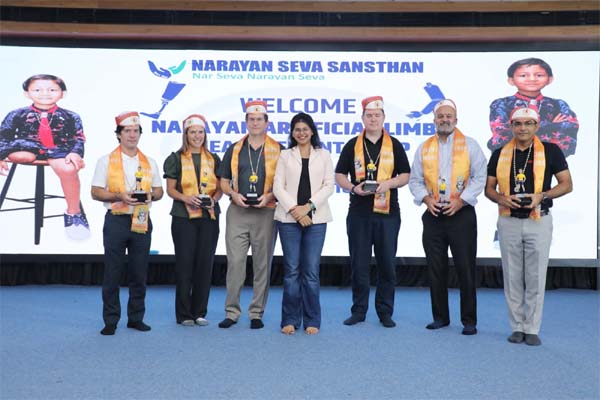
- Narayan Seva Sansthan camp, backed by Ingersoll Rand’s CSR support, draws over 128 persons with disabilities
- Measurements taken for 73 artificial limbs and 14 calipers; seven beneficiaries selected for free corrective surgeries
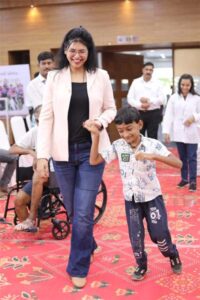
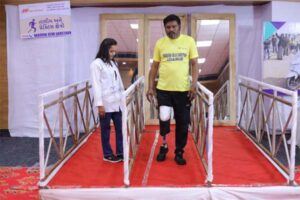
- Ten beneficiaries take their first independent steps with artificial limbs at the inauguration
- Japanese and German technologies underpin lightweight, durable Narayan Modular Artificial Limbs
- Around 25 medical and technical professionals support assessment, measurement and rehabilitation
- Free limb fittings planned at a follow-up camp in Ahmedabad in approximately two months
NE HEALTH & CSR BUREAU
AHMEDABAD, OCT 15
For a person who has spent years imagining the freedom of walking independently, a first step can mean far more than movement—it can open the door to confidence, dignity and a more self-reliant life. That promise of renewed mobility took centre stage in Ahmedabad on Wednesday, as persons with disabilities gathered at a free camp where medical expertise, assistive technology and corporate social responsibility came together to turn hope into practical support.
Narayan Seva Sansthan, with corporate social responsibility (CSR) support from Ingersoll Rand, organised a free medical assessment and selection camp for corrective surgeries, a Narayan Limb Measurement Camp and a donor felicitation ceremony at Atal Kalam Campus, Gujarat University, Navrangpura.
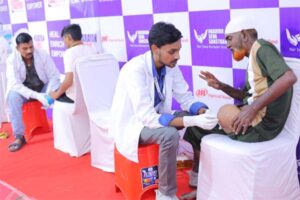
More than 128 persons with disabilities attended the camp. Following assessments by specialist doctors and the prosthetic and orthotic (P&O) team, measurements were taken for Narayan Modular Artificial Limbs for 73 beneficiaries and calipers for 14 others. Seven persons were selected for free corrective surgeries.
The occasion offered a powerful glimpse of what timely intervention and access to assistive devices can mean. During the inauguration, 10 persons with disabilities walked independently after wearing artificial limbs—an emotional demonstration of the possibilities that appropriate rehabilitation can unlock.
Corporate responsibility meets the human need for mobility
The camp was inaugurated with the traditional lighting of the lamp by Vincent Reynal, Chairman, President and CEO of Ingersoll Rand, as chief guest, alongside Vikram Kini, Senior Vice President and Chief Financial Officer of the company, who presided over the event, and other dignitaries.
Reynal said that providing free services to persons with disabilities was a true act of humanity. He appreciated Narayan Seva Sansthan for going beyond treatment to create opportunities for persons with disabilities to become self-reliant. He also expressed gratitude to Sansthan President Prashant Agrawal for his dedicated service.
Kini described the Sansthan’s commitment to free service as exemplary. He said modern artificial limbs were bringing renewed hope into beneficiaries’ lives and helping them move towards greater independence.
The participation of Ingersoll Rand reflects how corporate support can help extend rehabilitation services to people who might otherwise face financial barriers to accessing assistive technology and specialist care.
Technology designed to restore everyday freedom
Sansthan President Prashant Agrawal said beneficiaries selected at the camp would receive artificial limbs and calipers free of cost at an upcoming camp.
The Sansthan’s Narayan Modular Artificial Limbs are based on Japanese and German technology. According to the organisation, the devices are designed to be lightweight, durable and convenient to use, helping recipients improve mobility and pursue greater independence in everyday activities.
For beneficiaries, the process involves more than receiving a device. Proper assessment, accurate measurement, fitting, training and follow-up are important to ensure that an artificial limb or caliper is suitable for the individual and can be used safely and effectively.
Sansthan Director Palak Agrawal said those whose measurements had been taken would be fitted with artificial limbs free of cost at a camp scheduled to be held in Ahmedabad in approximately two months.
A team of around 25 medical and technical professionals supported the camp, providing assessment and measurement services. Meals, tea and refreshments were also arranged for beneficiaries and their family members.
Rehabilitation is a journey, not a single intervention
The camp highlighted the importance of connecting assistive technology with rehabilitation and practical support. For a person receiving an artificial limb, learning to stand, balance and walk confidently can require training and adaptation. Continued guidance can help beneficiaries use their devices more effectively and participate more fully in family, educational, social and working life.
The selection of seven beneficiaries for free corrective surgeries also underscored the importance of individual medical assessment. Surgical intervention, assistive devices and rehabilitation may serve different needs, and decisions must be tailored to each person’s condition.
By bringing specialist teams and beneficiaries together under one roof, the camp sought to make essential services more accessible while helping participants understand the next steps in their rehabilitation.
A collective effort rooted in dignity
Among those present were Elizabeth Heffelding, Senior Vice President, Corporate Development, Ingersoll Rand; Jonathan Lux, Vice President, Enterprise Storage and Growth Initiatives; Peter Eng, Business Development Leader; Sunil Khanduja, Managing Director, Ingersoll Rand India Limited; Mahadev Patel, Head of HR; Aditi Mehrotra, Head of CSR; Vishwas Deshmukh, Plant Head; and Nagraj Padki, Procurement Manager.
Social workers Vallabhbhai Dhanani, Ashutoshbhai Pandit, Kiritbhai Shah, Chinnubhai Patel and Satishbhai Baviskar also attended, along with other dignitaries.
Sansthan Director Palak Agrawal, Abhimanyu Singh Gohil from the CSR department and camp in-charge Ramesh Sharma welcomed the guests in the traditional Mewar style. The dignitaries visited the camp, interacted with beneficiaries and learnt about the treatment and rehabilitation process. Jitendra Sharma coordinated the camp.
The initiative’s larger significance lies in the opportunity it creates: access to mobility aids and corrective treatment can help people with disabilities move towards greater autonomy, participation and self-confidence. With the planned follow-up fitting camp, the effort is also intended to extend beyond a single day of assessment.
For the beneficiaries who took their first independent steps at the inauguration, the moment was a reminder that mobility is not merely about walking—it is about expanding the possibilities of life.