
- Prime Minister to visit Karnataka and Gujarat on November 13–14
- Infrastructure projects worth over ₹15,600 crore to be inaugurated, dedicated or launched in Bengaluru
- Bengaluru Metro Pink Line to open, alongside major renewable energy and power transmission projects
- India’s largest underground LPG storage cavern in Mangaluru and four redeveloped railway stations to be dedicated to the nation
- Vande Bharat Express to connect Bengaluru, coastal Karnataka and Goa
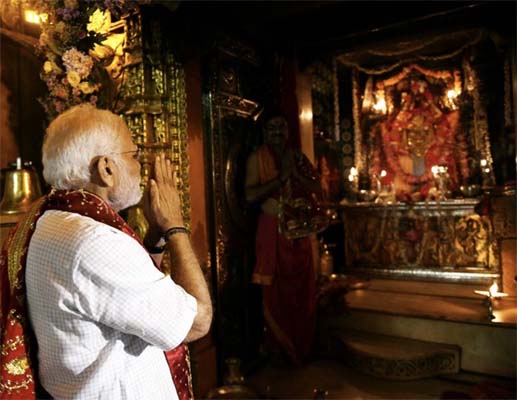
- Gujarat leg to culminate in Darshan and Pooja at Ambaji temple, one of the 51 revered Shakti Peethas
NE NEWS SERVICE
NEW DELHI, AHMEDABAD, BENGALURU, NOV 11
From a major urban mobility expansion in Bengaluru to a pilgrimage to the revered Ambaji temple in Gujarat, Prime Minister Narendra Modi’s November 13–14 visit to Karnataka and Gujarat will bring together an extensive development agenda and a significant religious engagement.
The Karnataka leg will be marked by projects worth more than ₹15,600 crore across urban transport, renewable energy, power transmission, petroleum infrastructure, waste management and railways. The Gujarat visit on November 14 will take the Prime Minister to Ambaji in Banaskantha district, where he will perform Darshan and Pooja at one of the country’s 51 revered Shakti Peethas.
KARNATAKA: A ₹15,600-crore infrastructure push
The Prime Minister will begin his Karnataka engagements on November 13 by participating in the Golden Jubilee celebrations of Prashanti Kutiram, the residential headquarters campus of Swami Vivekananda Yoga Anusandhana Samsthana (S-VYASA). He will address the gathering, lay the foundation stone of the Golden Jubilee Administrative Block and launch the S-VYASA off-campus centre at Thiruvananthapuram, Kerala.
Established in 1975, Prashanti Kutiram has sought to integrate modern science with India’s spiritual wisdom. S-VYASA was declared a Deemed-to-be University in 2002 and is dedicated to education and research in Yoga. The Golden Jubilee celebrations, scheduled from November 13 to 23, 2026, are being held on the theme ‘Towards Viksit Bharat 2047’.
The occasion will also commemorate the birth centenary of Hongasandra Venkataramaiah Sheshadri, a thinker, writer and organiser born in Bengaluru in 1926, whose guidance played an important role in shaping the growth of Prashanti Kutiram and advancing its institutional mission.
Bengaluru Metro: A new connectivity corridor
At around 12.45 pm, the Prime Minister will flag off the Bengaluru Metro Pink Line and undertake a ride from Tavarekere to IIM Bangalore metro station.
The stretch from Kalena Agrahara to Tavarekere, developed at a cost of around ₹3,470 crore, is expected to strengthen urban connectivity, ease daily commuting and reduce travel time in the rapidly expanding city.
At around 1.15 pm, he will inaugurate, dedicate to the nation and lay the foundation stone for development projects worth over ₹15,600 crore in Bengaluru.
Renewable energy: Strengthening the power grid
A substantial share of the investment is directed towards strengthening Karnataka’s renewable energy transmission network.
The Prime Minister will inaugurate the transmission scheme for integration of Renewable Energy Zones in Koppal-II and Gadag-II, developed at an investment of around ₹4,450 crore. The system will facilitate the evacuation of approximately 2 GW of renewable energy potential from the two regions for onward transmission across the national grid.
He will also inaugurate the transmission scheme for the Solar Energy Zone in Bidar, built at an investment of around ₹1,370 crore. The project, involving a Bidar Pooling Station, will facilitate the evacuation of 2.5 GW of solar power.
Two further transmission initiatives will receive foundation stones: the scheme for integrating the Davanagere–Chitradurga and Ballari Renewable Energy Zones, costing over ₹3,450 crore, and the transmission system strengthening project for additional renewable energy potential at Davanagere and Ballari, involving over ₹1,100 crore.
Energy security and cleaner waste management
In Mangaluru, the Prime Minister will dedicate to the nation India’s largest underground LPG storage cavern, constructed at a cost of over ₹850 crore. With a storage capacity of 80,000 metric tonnes, the facility is expected to strengthen the country’s LPG storage infrastructure.
The project also includes a 9.4-km LPG pipeline connecting New Mangalore Port to the main terminal. He will also dedicate the Devangonthi Marketing Terminal of Mangalore Refinery and Petrochemicals Limited (MRPL), built at an investment of ₹330 crore to strengthen petroleum product storage and distribution.
A GAIL Compressed Biogas Plant at Haralakunte, Bengaluru, will receive its foundation stone. Designed to process around 300 tonnes of municipal solid waste every day, the plant is expected to produce 12.6 tonnes of compressed biogas daily, linking scientific waste management with cleaner fuel generation.
Railways: Faster connectivity, better stations
Rail infrastructure will form another important component of the visit.
Four redeveloped railway stations—Chamarajanagar, Chikkamagaluru, Sakleshpur and Subrahmanya Road—will be inaugurated under the Amrit Bharat Station Scheme. The upgraded facilities are intended to improve passenger amenities while serving as local activity centres that can support commerce and tourism.
The Prime Minister will dedicate the 45-km Bagalkot–Wandal railway line doubling section, part of the 284-km Gadag–Hotgi Doubling Project. The section is expected to improve passenger and freight movement, support local trade and facilitate coal supply to the Kudgi NTPC plant.
He will also dedicate the electrification of the 55-km Sakleshpur–Subrahmanya Road Ghat railway section. With the completion of this challenging stretch, the entire Bengaluru–Mangaluru rail route will be fully electrified.
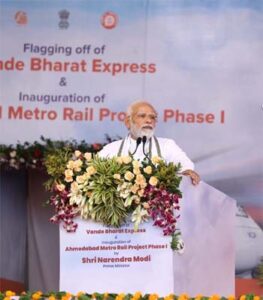
The Bengaluru–Mangaluru–Madgaon Vande Bharat Express will also be flagged off. The service will connect Bengaluru with destinations including Hassan, Sakleshpur, Mangaluru, Udupi, Murdeshwar, Gokarna and Karwar before reaching Madgaon in Goa, offering faster connectivity and a boost to tourism.
Mysuru: Green cover and a new window to the cosmos
The Prime Minister will travel to Mysuru on November 13, where he will participate in a tree plantation programme at Bharat Vann under the ‘Ek Ped Maa Ke Naam’ initiative.
Spread across 17.63 acres, Bharat Vann is an urban afforestation project designed to create a dense, self-sustaining native forest using the Japanese Miyawaki technique. It aims to nurture more than two lakh native trees. The initiative is expected to enhance biodiversity, improve groundwater recharge, reduce dust and air pollution, moderate local temperatures and support carbon sequestration.
At around 4 pm, the Prime Minister will inaugurate COSMOS-Mysuru Planetarium at the University of Mysore campus, at the foothills of Chamundi Hills. Developed by the Indian Institute of Astrophysics, it is described as India’s first LED dome planetarium.
Its 15-metre tilted dome features around 6,150 panels containing 4.2 crore individual LEDs. Unlike conventional planetariums that use projectors, the LED panels can be controlled in real time, enabling immersive visual presentations and new possibilities for astronomy education.
The facility will include a Sky Theatre, exhibition halls, an astronomy museum, a lecture hall, a training centre and interactive outdoor exhibits. Shows will be available in Kannada, English and Hindi. Its activities will complement the Indian Institute of Astrophysics’ research, telescope facilities and national outreach programmes.
Gujarat: Ambaji Darshan on November 14
On November 14, the Prime Minister will visit Ambaji temple in Banaskantha district, Gujarat, to perform Darshan and Pooja.
One of the 51 revered Shakti Peethas, Ambaji is among the most important centres of Shakti worship in the country. The Gujarat engagement will bring the two-day visit to a close after an extensive programme of infrastructure inaugurations, project launches and institutional engagements in Karnataka.