

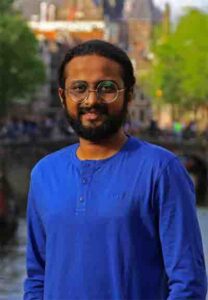
- Ahmedabad at COP31: Filmmaker and visual artist Tanmay Shah has been invited to speak at a Blue Zone session in Antalya,
- Culture meets climate action: The 19 November session will explore how storytelling can engage audiences beyond those already convinced of the need to reduce waste.
- Borrowed Earth, shared responsibility. Shah’s exhibition brought together 26 acrylic paintings and 32 photographs to explore the relationship between everyday life and the environment.
- India’s negotiating priorities. Equity, adaptation and a just transition featured in India’s opening statement.
- Climate finance accountability.India urged developed countries to fulfil their obligations under Article 9.1 of the Paris Agreement.
NE ENVIRONMENT & CLIMATE CHANGE BUREAU
AHMEDABAD / ANTALYA, NOV 11
Ahmedabad-based filmmaker, visual artist and climate communicator Tanmay Shah, Founder and CEO of FridayFictionFilms ( FFF Communications ), has been invited to speak in the Blue Zone at COP31, the 31st Conference of the Parties to the United Nations Framework Convention on Climate Change (UNFCCC), in Antalya, Türkiye.
Shah will speak on 19 November at Culture and Narrative: Taking Zero Waste Beyond the Convinced. The session is scheduled from 5.15 pm to 6 pm local time and will explore how storytelling and creative practice can bring conversations about waste and consumption to audiences beyond those already engaged with the issue.
His participation brings an Ahmedabad-based artistic practice to a summit where governments, international organisations, researchers and civil society groups are discussing how to advance climate action.

Shah’s work in environmental communication extends beyond the conference. His solo exhibition Borrowed Earth, presented at Amdavad ni Gufa in Ahmedabad, brought together 26 acrylic paintings and 32 photographs. Developed over six months, the exhibition explored how human activity shapes natural systems and how those changes become visible in everyday life.
Shah describes Borrowed Earth as an attempt to shift the conversation from ownership to responsibility. The exhibition invited viewers to pause and reconsider how they inhabit the places they depend on. For Shah, the conversations that continue after people leave the gallery are part of the work. That idea carries into his COP31 presentation, where he will consider how art can open up public conversations about consumption, waste and environmental responsibility.
India’s call for climate justice
In its opening statement at COP31, India reaffirmed its commitment to climate multilateralism and called for a fair, equitable and ambitious outcome. It underscored the importance of equity and the principle of Common But Differentiated Responsibilities and Respective Capabilities (CBDR-RC).
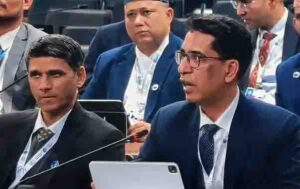
Delivering the statement, Narendra Bhooshan, Secretary of the Ministry of Environment, Forest and Climate Change, thanked Türkiye and Australia for their leadership and acknowledged the work of Parties and negotiating groups. India also aligned itself with the statements made by the G77 and China, the Like-Minded Developing Countries (LMDC) and BASIC.
India emphasised the role of the UNFCCC and the Paris Agreement as forums in which every country has a voice. It welcomed the COP31 Presidency’s emphasis on implementation through dialogue, consensus and action, pointing to their roles in building trust, securing broad agreement and putting commitments into practice.
India said the prospect of crossing the 1.5°C warming threshold made equity more urgent. It reiterated its commitment to contributing its fair share to global climate action while pursuing development and improving people’s well-being. It also highlighted adaptation and a just transition as significant challenges for countries in the Global South, where both are closely tied to development priorities.
Climate finance and the obligations of developed countries
India highlighted the importance of public finance from developed countries in supporting climate action and helping developing countries respond to climate impacts. It drew particular attention to Article 9.1 of the Paris Agreement, under which developed countries are required to provide financial resources to assist developing countries with mitigation and adaptation.
India reaffirmed its willingness to work with other Parties towards a fair, equitable and ambitious outcome at the summit.
UNESCO’s wider climate action agenda
UNESCO’s COP31 programme brings another dimension to the discussion through its focus on green digital transformation, sustainable artificial intelligence, climate information integrity and the use of technology to strengthen environmental resilience. Its approach emphasises scientific rigour, equity and the role of local communities in shaping how technology is used.
Shah’s session brings a cultural perspective to the wider question of how climate information reaches people and becomes part of public life. The summit brings that question into view alongside India’s calls for fairness and accountability in international climate negotiations.
For Ahmedabad, Shah’s invitation also has a personal dimension. The elder son of an Indian Express colleague and himself a former research associate at IIT Bombay, Shah will take work first shown to audiences at Amdavad ni Gufa into an international conversation about sustainability.