- PM Modi to dedicate India’s newest aviation hub; NMIA to rival global giants like Changi and Dubai
- The greenfield airport will open with capacity to handle 20 million passengers annually (MPPA) and 0.5 million metric tonnes (MMT) of cargo
- Industry experts believe NMIA’s scale, digital-first infrastructure, and multimodal connectivity could eventually make it a South Asian gateway airport, rivalling global leaders in efficiency and capacity
NE BUSINESS BUREAU
MUMBAI, OCT 1
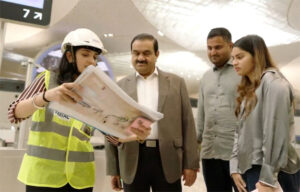
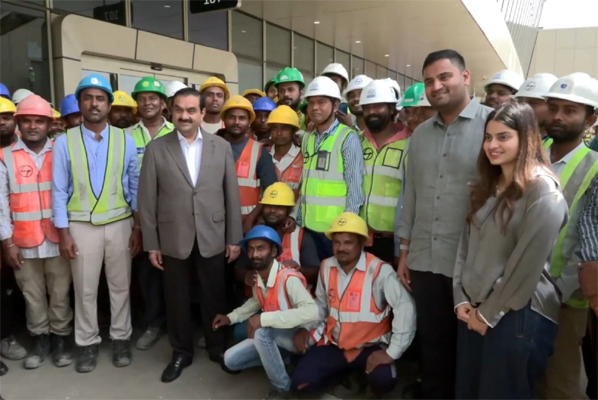
Adani Group Chairperson Gautam Adani on Tuesday reviewed the final preparations at the Navi Mumbai International Airport (NMIA), set for a grand inauguration by Prime Minister Narendra Modi on October 8.
During his visit, Adani met with differently-abled colleagues, construction workers, women staff, engineers, artisans, firefighters, and security personnel — the workforce that has built India’s next mega aviation hub. Sharing visuals from the site on social media platform X, he described NMIA as “a living wonder” and said:
“When millions of flights take to the skies and billions walk through these halls, the spirit of these people will echo through every takeoff and every step.”

Aerodrome Licence Secured
In a significant milestone, the Directorate General of Civil Aviation (DGCA) has granted NMIA its Aerodrome Licence for public use, officially clearing the way for operations to begin.
Designed on Global Benchmarks
Strategically located near Ulwe and Panvel, NMIA has been envisioned as part of a twin-airport system with Chhatrapati Shivaji Maharaj International Airport (CSMIA), akin to twin-hub models seen in Dubai (DXB–DWC), London (Heathrow–Gatwick), and New York (JFK–Newark).
Scale and Capacity

The greenfield airport will open with capacity to handle 20 million passengers annually (MPPA) and 0.5 million metric tonnes (MMT) of cargo. Once fully developed across five phases, NMIA will be able to manage 90 MPPA and 3.2 MMT of cargo annually.
This positions NMIA on par with Singapore Changi Airport (85 MPPA) and Dubai International Airport (88 MPPA), and places it among the largest aviation hubs in Asia.
Transformative Impact
Authorities expect the project to ease congestion at Mumbai’s overburdened CSMIA, while boosting trade, tourism, and regional connectivity in Maharashtra. Industry experts believe NMIA’s scale, digital-first infrastructure, and multimodal connectivity could eventually make it a South Asian gateway airport, rivalling global leaders in efficiency and capacity.