- TRAI’s 300-km rail-route drive test checks voice and data quality across four telecom operators
- RJIL records highest average download speed at 134.73 Mbps; Airtel and RJIL report zero dropped calls
- BSNL posts 3,904 poor-signal samples; TRAI shares findings with operators for corrective action
- Real-world test covers Viramgam, Dhrangadhra, Halvad, Samakhiali and Bhachau
NE TELECOM BUREAU
AHMEDABAD, AUG 4
What happens to your mobile signal when the city disappears, the train gathers speed and the journey cuts through Gujarat’s industrial and semi-arid heartland? The answer is now partly on record, with the Telecom Regulatory Authority of India (TRAI) putting mobile networks through a real-world 300-km test on the Ahmedabad–Gandhidham railway route.
The Independent Drive Test (IDT), conducted on June 30, 2026, assessed voice and data performance of Airtel, BSNL, Reliance Jio (RJIL) and Vodafone Idea (VIL) along the route under the Gujarat Licensed Service Area (LSA).
The findings offer a mixed picture: RJIL emerged as the clear leader in average download throughput at 134.73 Mbps, while Airtel and RJIL recorded no dropped calls in the calls successfully established during the test. BSNL, meanwhile, registered the highest number of poor-signal samples among the four operators.
But TRAI has also underlined an important caveat: the figures represent network performance on the particular route, day and time when the drive test was conducted, rather than a permanent assessment of network quality everywhere.
300 km of Gujarat tracked for network quality
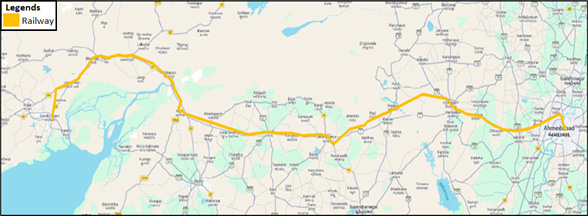
The TRAI-appointed agency conducted the drive test under the supervision of the TRAI Regional Office, Jaipur, covering approximately 300 km between Ahmedabad and Gandhidham.
The route passed through important railway points including Viramgam Junction, Dhrangadhra Junction, Halvad, Samakhiali Junction and Bhachau, providing a useful real-world test environment for mobile connectivity during rail travel.
Unlike laboratory assessments, the IDT captures network behaviour under actual usage conditions.
Live voice and data sessions were established using SIM cards of the participating telecom service providers across available 2G, 3G, 4G and 5G networks, with multiple test handsets and specialised software systems used to monitor performance in real time.
The objective is not merely to generate numbers but to give consumers a clearer picture of how networks perform where people actually use them—on roads, in trains, at public hubs and across different geographical environments.
RJIL tops download speed; AIRTel, RJIL pass call-drop test
The data performance figures produced a striking gap between operators.
RJIL recorded the highest average overall download throughput at 134.73 Mbps on 5G/4G networks.
Airtel followed at 64.47 Mbps, while VIL recorded 23.44 Mbps and BSNL 18.52 Mbps across the technologies available during the test.
For average upload speeds, RJIL again led at 14.93 Mbps, narrowly ahead of Airtel at 13.32 Mbps. VIL recorded 11.48 Mbps, while BSNL posted 7.64 Mbps.
The call-drop results were comparatively encouraging for three operators.
- Airtel: 0 dropped calls out of 96 successfully established calls
- BSNL: 7 dropped calls out of 84 successfully established calls
- RJIL: 0 dropped calls out of 96 successfully established calls
- VIL: 0 dropped calls out of 95 successfully established calls
The figures suggest that while the operators showed considerable variation in data speeds and signal coverage, dropped calls were limited during the test session, with BSNL accounting for all seven dropped calls recorded.
Coverage gap reveals a sharper divide
The coverage-gap findings provide another important dimension to the assessment.
During voice testing in auto-selection mode across 5G/4G/3G/2G, TRAI recorded samples falling below the prescribed minimum signal-strength threshold for the respective technology.
The numbers were:
| Operator | Poor-signal samples / Total samples |
| Airtel | 909 / 19,130 |
| BSNL | 3,904 / 17,085 |
| RJIL | 361 / 19,028 |
| VIL | 522 / 18,945 |
RJIL recorded the lowest number of poor-signal samples, while BSNL recorded the highest.
The assessment covered several parameters beyond simple signal availability, including Call Setup Success Rate, Drop Call Rate, call setup time, call silence rate and speech quality for voice services.
For data services, TRAI examined download and upload throughput, latency, jitter and packet-drop rate.
That makes the exercise particularly relevant for passengers who increasingly depend on mobile connectivity not merely for calls but for UPI transactions, work, streaming, navigation, emergency communication and real-time information while travelling.
From Ahmedabad-Kutch, a connectivity reality check
The Ahmedabad–Gandhidham route is more than a railway corridor. It connects Gujarat’s commercial heart with important industrial, logistics and port-linked regions of the State.
A reliable mobile network along such corridors matters increasingly to commuters, railway passengers, businesses, logistics operators and tourists.
The TRAI exercise is therefore a useful reminder that digital connectivity cannot be judged only by the number of towers or the availability of a 5G logo on a handset. What ultimately matters to consumers is whether the network remains available, stable and fast when they actually need it.
The IDT also reinforces the value of independent, route-specific testing in identifying pockets where network quality needs improvement.
TRAI said the findings have been shared with the respective telecom service providers for necessary action at their end, if required.
The detailed IDT report has been made available on the TRAI website for consumers and other stakeholders.
For passengers on the Ahmedabad–Gandhidham route, the message from the exercise is clear: the next time the train leaves Ahmedabad and the signal bars begin to fluctuate, there is now an independent network-quality record against which that experience can be viewed.