
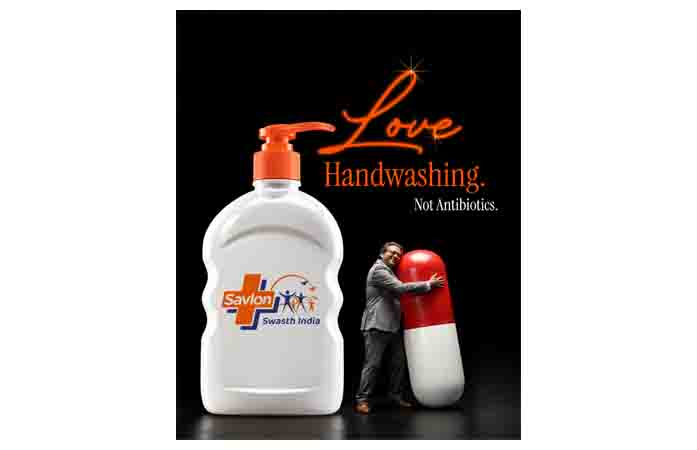
- #WeLoveAntibiotics campaign ahead of World AMR Awareness Week challenges the growing culture of antibiotic dependence
- ITC’s Savlon Swasth India Mission spotlights hand hygiene as the first line of defence against preventable infections
- Ogilvy India uses music and creative storytelling to drive home the message of responsible antibiotic consumption
- Experts underline the need to combine antimicrobial stewardship with everyday infection-prevention practices
NE FEATURES BUREAU
AHMEDABAD, NOV 17
What if the most powerful weapon against antibiotic resistance is not another medicine, but a simple habit of washing our hands? At a time when antimicrobial resistance (AMR) is emerging as a formidable global public health challenge, ITC’s Savlon Swasth India Mission is turning an everyday hygiene practice into a compelling public-health message through its new #WeLoveAntibiotics campaign. Launched ahead of World AMR Awareness Week (November 18–24), the initiative seeks to challenge casual antibiotic consumption while reminding people that preventing infections is just as important as treating them.
Antibiotics have revolutionised modern medicine, saving millions of lives and making once-deadly bacterial infections treatable. However, their inappropriate and excessive use is accelerating antimicrobial resistance, allowing disease-causing microorganisms to develop resistance to medicines that were once effective. The consequences are serious: infections become harder to treat, treatment options narrow and the risks to public health multiply.
Savlon’s campaign takes an unconventional creative route to communicate this urgent message, encouraging consumers to understand why antibiotics must be used responsibly and why hand hygiene deserves far greater attention in everyday life.
Two-pronged defence against antimicrobial resistance
The campaign underscores that tackling AMR requires action on two interconnected fronts: responsible antibiotic use through antimicrobial stewardship and effective infection prevention through proper hand hygiene.
While antimicrobial stewardship promotes the appropriate prescription and consumption of antibiotics, regular handwashing with soap or handwash can prevent the spread of germs and reduce the likelihood of infections requiring antibiotic treatment.
Scientific studies have highlighted that combining antimicrobial stewardship programmes with hand-hygiene interventions can significantly reduce the transmission of antimicrobial-resistant bacteria.
This is the ‘Butterfly Effect’ of handwashing that the campaign seeks to popularise: a seemingly small everyday habit can have a much larger impact by preventing infections before they occur. The message is particularly relevant not only in homes and public spaces but also in hospitals and healthcare settings, where infection prevention is critical.
Music and creativity give a serious message a fresh voice
Conceptualised by Ogilvy India, the #WeLoveAntibiotics campaign uses music and engaging storytelling to make a complex public-health issue accessible to a wider audience. Rather than merely warning against antibiotic misuse, it seeks to create a conversation around the apparent contradiction between people’s readiness to reach for antibiotics and their tendency to overlook basic preventive hygiene.
The campaign film is designed to reinforce a simple distinction: antibiotics are invaluable medicines that must be used responsibly, while handwashing is a habit that can help prevent infections in the first place.
ITC calls for collective action
Commenting on the initiative, Sameer Satpathy, Divisional Chief Executive, Personal Care Products Business, ITC Limited, said: “Through Savlon Swasth India Mission, we have consistently worked towards encouraging behavioural change around hand hygiene. Antimicrobial Resistance is a growing public health challenge that requires greater awareness and collective action. Hand hygiene in-home, and in hospital settings is a critical component of infection prevention and control. #WeLoveAntibiotics brings a powerful message by sparking an engaging conversation on responsible consumption of antibiotics to reduce AMR, coupled with hand hygiene to prevent infections.”
Ogilvy highlights the behavioural contradiction
Explaining the creative thinking behind the campaign, Harshad Rajadhyaksha and Kainaz Karmakar, Chief Creative Officers, Ogilvy India, said: “For over a decade, Savlon Swasth India Mission has worked towards making handwashing an everyday habit by addressing the barriers to its adoption. This year, our research revealed an interesting contradiction: while we are quick to reach for antibiotics, we often overlook handwashing, one of the simplest ways to prevent infections.
“This insight inspired #WeLoveAntibiotics. We chose music as a familiar, engaging way to spark a conversation with India and deliver a serious message: antibiotics are invaluable medicines that must be used responsibly, but it’s time we fell in love with handwashing instead.”
They also acknowledged the collaboration of the creative team and partners in bringing the campaign to life, adding that the continued partnership with Savlon Swasth India Mission provided an opportunity to push creative boundaries while advancing meaningful behavioural change.
Expert voices take the AMR conversation further
Complementing the campaign, Savlon Swasth India Mission’s Doc’s Pod series, hosted by Faye D’Souza, seeks to demystify antimicrobial resistance through expert perspectives and encourage greater understanding of infection prevention.
The podcast extends the campaign’s message beyond advertising, offering audiences an opportunity to understand the public-health implications of AMR and the importance of everyday preventive practices.
As World AMR Awareness Week approaches, the campaign makes a timely appeal for a change in public behaviour. The fight against antimicrobial resistance cannot be confined to hospitals, laboratories, doctors and policymakers. It must also begin in homes, schools, workplaces and communities.
The message is unmistakable: use antibiotics responsibly, never resort to self-medication, follow qualified medical advice and make handwashing an everyday habit. Preventing an infection is always better than having to treat one.