NE HEALTH BUREAU
CHENNAI, OCT 15

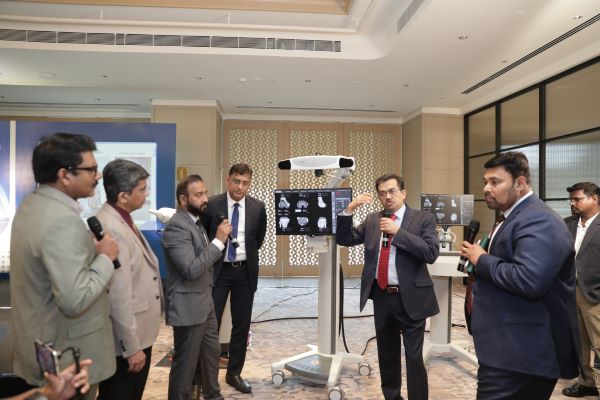
Marking a major stride in precision joint care, Apollo Speciality Hospitals, OMR, has successfully completed 150 Robotic Total Knee Replacement (TKR) surgeries in just 150 days, setting a new benchmark in advanced orthopaedic surgery. With this achievement, Apollo OMR emerges as one of South India’s fastest-growing Robotic TKR centres, reaffirming its leadership in high-tech healthcare delivery.
- Next-Gen Mako Smart Robotics redefines joint surgery — faster recovery, minimal pain, enhanced mobility
- “A Game-Changer in Orthopaedic Care”: apollo surgeons lead India’s leap toward technology-driven joint health
- The robotic-assisted total knee replacement is not just a technological upgrade but a game changer in orthopaedic care: Dr. Venkataramanan Swaminathan
The cutting-edge Mako Smart Robotics, developed by Stryker (USA), enables surgeons to perform customised, minimally invasive procedures that reduce pain, blood loss, and recovery time. Unlike conventional knee replacements, which depend on manual alignment, robotic-assisted TKR uses 3D imaging and computer-guided tools to tailor every step to the patient’s unique anatomy—ensuring superior accuracy and long-term implant performance.
“The robotic-assisted total knee replacement is not just a technological upgrade but a game changer in orthopaedic care,” said Dr. Venkataramanan Swaminathan, Senior Consultant Orthopaedic Surgeon, Apollo Speciality Hospitals, OMR. “With robotic-arm assistance, we can now handle complex cases once considered unfit for conventional surgery. This technology ensures reduced pain, faster recovery, improved mobility, and better quality of life—especially for our ageing population.”
Dr. Ilankumaran Kaliamoorthy, Chief Executive Officer, Apollo Hospitals, Chennai Region, added, “Completing 150 robotic knee replacements in just 150 days is both a clinical milestone and a reflection of our commitment to innovation and patient-first care. At Apollo OMR, we strive to stay ahead by integrating next-gen technologies that merge precision with compassion—ensuring our patients return to active living sooner.”
In traditional TKR, patients typically regain mobility within 2–4 days and achieve total recovery in 6–8 weeks. With robotic-assisted procedures, patients often begin walking within 24 hours, experience minimal post-operative pain, and return to normal activities in under four weeks. Moreover, the procedure duration has reduced from about three hours to less than two hours, thanks to robotic precision.
As Apollo OMR continues to pioneer robotic orthopaedic care, this milestone underscores a larger message — that technology, when guided by expert hands, can restore not just movement, but also confidence and quality of life.