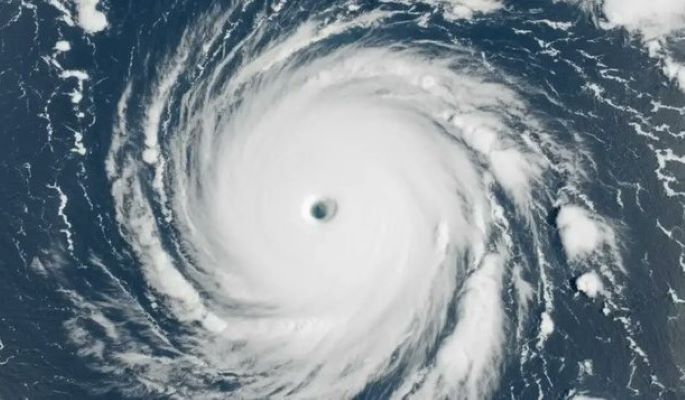
- Navy, Air Force, and Coast Guard mobilise rescue teams and assets; Gujarat, Arabian Sea sectors also monitored for spillover weather impact
- Cabinet Secretary calls for ‘zero casualty’ target as States activate evacuation drills and disaster mitigation networks
- Naval bases in Visakhapatnam, Chennai, Kochi, and Porbandar have activated joint coastal operations rooms
NE ENVIRONMENT & DEFENCE BUREAU
NEW DELHI, OCT 25
With a severe cyclonic storm brewing in the Bay of Bengal, India’s armed forces and disaster response agencies have swung into coordinated action under the National Crisis Management Committee (NCMC), chaired by Cabinet Secretary Dr. T. V. Somanathan, to review and reinforce preparedness across coastal States.
Armed Forces Lead from the Front
At the high-level meeting, the Chief of Integrated Defence Staff (CISC) briefed on the tri-service disaster mitigation measures, confirming that Indian Navy, Air Force, and Coast Guard units are in full readiness to conduct evacuation, relief, and emergency repair missions.
- Navy has pre-positioned warships and aircraft for rapid deployment along the eastern seaboard and is also monitoring Arabian Sea weather systems, given the seasonal turbulence that may affect Gujarat and western coastlines.
- Air Force bases in southern India have earmarked transport aircraft and helicopters for aerial reconnaissance and supply drops.
- Indian Coast Guard, which has already shepherded over 900 fishing vessels safely to shore, continues to alert remaining boats to return immediately.
Sources said naval bases in Visakhapatnam, Chennai, Kochi, and Porbandar have activated joint coastal operations rooms to enable real-time coordination with NDRF, SDRF, and local disaster control cells.
Cyclone Path and Preparedness
(A) Deep Depression over Southeast Bay of Bengal:
The depression over southeast Bay of Bengal moved nearly west-northwestwards with a speed of 10 kmph during past 6 hours, intensified into a Deep Depression and lay centred at 0000 UTC of today, the 26th October 2025, over the… pic.twitter.com/1xCUy4lFaf
— India Meteorological Department (@Indiametdept) October 26, 2025
According to the India Meteorological Department (IMD), the depression over the southeast Bay of Bengal is expected to intensify into a severe cyclonic storm by October 28, likely crossing the Andhra Pradesh coast near Kakinada with wind speeds of up to 110 kmph.
Chief Secretaries of Tamil Nadu, Andhra Pradesh, Odisha, and Puducherry briefed the NCMC on evacuation drives, activation of district control rooms, and readiness of cyclone shelters, medical units, and relief stockpiles.
Nationwide Readiness and Command Coordination
Dr. Somanathan underscored the national objective of “zero loss of lives” and rapid restoration of power, telecom, and transport infrastructure post-impact.
The Union Home Secretary confirmed that the Ministry of Home Affairs, NDMA, and IMD are in continuous coordination with State governments and armed forces for synchronized response.
Senior officials from the Ministries of Petroleum & Natural Gas, Fisheries, Power, Telecommunications, and Shipping, as well as representatives of Ports & Waterways, attended the meeting to ensure continuity of critical services.
Western Coast Vigil and Lessons from the Arabian Sea
Even as eastern India braces for impact, the Gujarat coast remains on weather watch with the Indian Navy and Coast Guard at Okha, Porbandar, and Diu maintaining alert status to counter spillover cyclonic effects or storm surges in the Arabian Sea.
These precautions align with the post-Tauktae coastal resilience plan, which integrates armed forces’ maritime surveillance systems with civilian disaster databases for faster response.
Unified Disaster Mitigation Framework
In a significant development, the meeting reinforced India’s ‘Whole-of-Government’ and ‘Whole-of-Forces’ approach, where civil authorities, armed forces, and scientific agencies act as a single national disaster management grid.
“The aim must be to protect every life and restore normalcy in the shortest possible time,” Dr. Somanathan said, lauding the inter-agency synergy that has become the cornerstone of India’s disaster resilience model.
As Cyclone impact windows widen across the Bay of Bengal and the Arabian Sea, the Indian Armed Forces’ forward deployment, joint command mechanisms, and coastal radar integration stand as a testament to India’s growing ability to anticipate, adapt, and mitigate natural disasters through strategic readiness and technological precision.