NE DEFENCE BUREAU
NEW DELHI, NOV 22
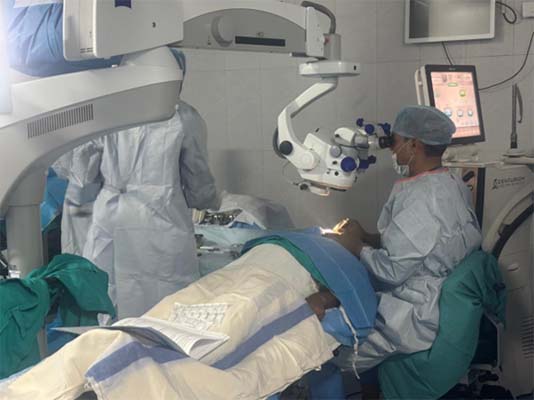
In a landmark healthcare initiative, ‘Op Drishti’, a first-of-its-kind advanced surgical eye camp conducted by Command Hospital, Northern Command, Udhampur, has delivered unprecedented impact across Jammu & Kashmir. Held from November 18–22, 2025 in collaboration with specialists from Army Hospital (Research & Referral), New Delhi, the camp witnessed over 2,000 screenings and more than 400 surgeries, many of them complex procedures for cataracts, glaucoma and retinal disease.
What made this effort extraordinary was its reach: people travelled from remote villages across Udhampur, Doda, Rajouri, Poonch, Kishtwar, Ramban and beyond — including serving personnel, dependents, Veer Naris and local civilians seeking critical care often inaccessible in conflict-prone terrains.
Leading the surgical mission was Brig SK Mishra, Head of Ophthalmology at Army Hospital (R&R), a surgeon of national distinction who has operated on two Presidents of India. His team of senior ophthalmologists and trained support staff handled a surgical load rarely attempted in such challenging terrain.
The closing ceremony was virtually addressed by Raksha Mantri Rajnath Singh, who praised the Northern Command and Armed Forces Medical Services (AFMS) for their continued humanitarian outreach. Chief of Army Staff Gen Upendra Dwivedi also addressed the gathering online, commending the scale and precision of the initiative. Lt Governor Manoj Sinha attended the ceremony in person, along with Northern Army Commander Lt Gen Pratik Sharma.
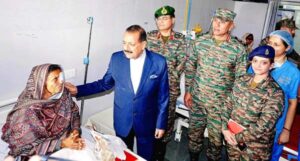
Union Minister Dr Jitendra Singh, who reviewed the camp on November 20, lauded the Army’s dual role — unmatched courage in conflict and unwavering compassion in peace. He noted that the Armed Forces’ healthcare outreach in remote regions remains a lifeline for vulnerable populations.
Human stories of transformation defined ‘Op Drishti’
Among them was 72-year-old Surinder Singh of Poonch, who had lived in darkness for nearly three years — his blindness deepened by the trauma of losing neighbours during Pakistan’s shelling in Operation Sindoor. After regaining his vision, he became a selfless mobiliser, persuading fellow villagers scarred by conflict and grief to seek treatment.
Similarly, Abdullah Shafeeq, a 56-year-old retired soldier from Mendhar, played a crucial role in coordinating access for dozens of families affected by recent cross-border hostilities.
Perhaps the most poignant moment came when 96-year-old Rajkumari Devi, after years of fading sight, opened her eyes post-surgery to clear, vivid vision — a moment that left the medical team and her family overwhelmed.
The genesis of Op Drishti lies in a directive from the Raksha Mantri, responding to a request from the Lt Governor of J&K. Acting swiftly, the Chief of Army Staff tasked the DG AFMS and DGMS (Army) to create a specialised, full-spectrum surgical camp right within Udhampur’s operational area — ensuring world-class clinical precision amid remote, high-security conditions.
Op Drishti has now set a national benchmark for military-led humanitarian healthcare — restoring not just vision, but dignity, resilience and hope across J&K’s most underserved communities.